Showing posts with label research. Show all posts

Monday, May 15, 2017

"Gender Bouquet (Stronger Together)" - In Progress 1

Now that I've finished my colored pencil drawing "Race Bouquet (Stronger Together)," it's time to begin my next one. I am using the same basic concept - showing many different types of flowers, representing different types of people, together in a single flower bouquet - but with a different focus. This time, instead of race, I'm looking at gender.

(For an explanation of gender and some important terminology that goes along with that, please read my last post.)

Even though "pink" and "blue" have completely arbitrarily been assigned to girls and boys respectively, using those colors to symbolize the two ends of the gender spectrum seemed the most logical option to me. And so I researched different types of flowers and selected ones that would fill out the entire spectrum of pink (light pink and dark pink) to blue (light blue and dark blue) with plenty of shades of purple (light purple and dark purple) in between.

I tried to make sure that all (or at least most) of the flowers I selected had symbolism associated with them that represented positive qualities. I further wanted some stereotypical "masculine" traits to end up in the pink flowers and some stereotypical "feminine" traits to end up in the blue flowers - because individuals who identify as female can also have "masculine" traits, and individuals who identify as male can also have "feminine" traits, and that fact does not make them more or less male or female (unless they choose to identify otherwise).

Here are the flowers I chose to use for this bouquet, as well as the color I will draw them in, and the qualities they symbolize:

  • lupine - light pink - happiness, inner strength, recovery from trauma, new opportunities, positivity
  • hibiscus - light pink - delicate beauty, femininity, perfection, womanhood
  • geranium - pink - love, folly
  • amaryllis - pink - pride, worth beyond beauty, splendor, strength, self-confidence
  • hollyhock - pink - ambition, abundance, fertility
  • gerbera daisy - pink - cheerfulness, joy, high esteem, admiration
  • dahlia - dark pink - diversity, elegance, inner strength, creativity, change, dignity
  • snapdragon - dark pink - fascination, concealment, deception, graciousness
  • lavender - light purple - purity, silence, caution, serenity, calm, devotion, virtue, wishes coming true, grown-up femininity, refinement, grace, elegance, delicateness, preciousness
  • chrysanthemum - light purple - cheerfulness, lasting friendship, support from friends and family, rest and recovery after a challenge, enduring life and rebirth, loyalty and devotion
  • protea - pinkish purple - change, resourcefulness, daring, transformation, diversity, courage, keeping thoughts/knowledge to yourself
  • peony - pinkish purple - bashfulness, shame, good marriage, good life, compassion, bringing honor to one's family, wealth and riches, romantic love, beauty
  • carnation - blueish purple - capriciousness, impulsivity, whimsy, changeability, unreliability
  • african violet - blueish purple - love, affection, modesty, faith, nobility, intuition, dignity, perseverance
  • iris - dark purple - wisdom, compliments, eloquence, good news, royalty, faith, hope, bridge between heaven and earth
  • pansy - remembrance, admiration
  • lithodora - light blue - stoniness, frigidity, unexpected gifts in unlikely places
  • sweet pea - light blue - pleasure, bliss, sweet departure after having a good time, gratitude
  • azalea - blue - womanhood, fragility, gratitude, passion, femininity, softness
  • hydrangea - blue - gratitude at being understood, frigidity, spurning the opportunity for love, apology, heartfelt and honest emotions, deep understanding between two people
  • cornflower - blue - young men in love, tenderness, fidelity
  • anemone - blue - luck and protection against evil
  • lotus - dark blue - wisdom, knowledge, perfection, enlightenment
  • delphinium - dark blue - open heart, ardent attachment, lightness, levity

Before I started this drawing, I had a little internal debate with myself. Did I want to mix up the flowers representing different genders, as I did in the Race Bouquet drawing? Or did I want to segregate them by color, to better make the point that gender is a spectrum? In the end I decided on the second option.

Race (especially with regards to skin color) is also a spectrum, but perhaps a more obvious one. Furthermore, at least in the U.S., we've done enough segregating of people by race - both historically and to this day - and I didn't want to "segregate" the different races in my drawing, which is why I mixed up the different colored flowers into an integrated bouquet. But for this Gender Bouquet, my point is less about different genders interacting (this already happens easily, frequently, and often happily) and more about the different aspects of gender that are less obvious at first glance - the "hidden" genders we might not be aware of or have much day-to-day exposure of. And I thought that by arranging the flowers by color it would get this point across better - that gender is a spectrum, and that "pink" and "blue" are not the only two options.

Once my research was complete, I started planning the composition of the drawing. Though I will do the final drawing on black paper, I drew the early sketches on newsprint, just to work out the composition and where each plant would go in the bouquet.

I did a quick mini-sketch first, to work out the order of the flowers. I decided to put pink on the left, blue on the right, and purple in the middle.


Then I drew a larger sketch on the newsprint, trying to draw it more or less to scale, so that drawing on the black paper would be easier.


I didn't quite how it worked out - it seemed that my placement only used the middle of the page, leaving the top 1/4 and bottom 1/4 too empty. So I made some notes to myself for how to stretch the bouquet out vertically more when I draw it on black paper - small changes like adding more lavender, moving certain flowers up a little, and making other flowers (like the lithodora) smaller.


Then I drew another quick mini-sketch in the corner, as a reminder for where the flowers should lie so that more of the black paper will be used. The bottom 1/4 of the paper will be the vase, but some of the flowers should creep into that top 1/4. I drew a four by four grid to make notes to myself for how to arrange each flower.


Now that these first sketches are done, it's time to tackle to actual drawing. My next blog post will show the first steps I took to start drawing on the black paper.

Tuesday, January 17, 2017

Taking Responsibility For Your Ignorance

One of my biggest pet peeves is when people have the means to do something but choose not to do it - either out of laziness or a lack of confidence in their own self-sufficiency.

And, just to be clear, when I say "pet peeve," I mean something that frustrates me because it makes me sad to see. It doesn't make me angry (very little actually makes me angry) - but it does make me sad. When I see people do this, I pity them. I want to ask them why they don't think enough of themselves to care about the image they're putting out there, or why they don't think enough of themselves to believe in their abilities.

For example, when someone egregiously misspells a common word. I am not the best speller myself (I was always in the lowest spelling groups in my elementary school classes), but I do read a lot and I write a lot, especially on the computer, and over time my spelling has improved. And if I'm typing, and that little red line appears that tells me I've misspelled the word, I don't leave it like that. I figure out how I spelled it wrong - either by using Chrome or Firefox or MS Word's suggestions for the word I meant or, if I spelled it so wrong that whatever app I'm using has no suggestions, by going to Google and typing in a few different ways I can think of to spell it and checking that against the definition to make sure that I find the correct spelling and am using the word as I intended to use it. It does take some time (an entire minute or two), but it's not that difficult and it's important to me to make sure the words are spelled correctly, so I am willing to put in that effort.

It is not so easy to do on a phone, I know. It's harder to run spell check, it requires closing the app you're in and opening a new one to search for the correct spelling, and sometimes even if you do all of those things, your phone thinks it knows better and "autocorrects" to a different word you did not intend to use at all. I don't fault someone for not caring about spelling or grammar as much as I do, and I certainly don't fault them for auto-correct mistakes. In fact, if it's a difficult-to-spell word, chances are good I won't even notice if it's misspelled. But if it is a short, common word, and your spelling is so far off that it takes me extra time while reading it to figure out what you actually meant to say, it feels like you're essentially saying to everyone else that your time is more important than theirs. You don't need to take the time to make your status easy to read; it is up to the person choosing to read it to figure out what you meant and do that extra minute of work.

I'm thinking of a particular case where I was following a Facebook friend who was complaining about a visiting friend being a generally horrible house guest, and abusive to boot. It was a very serious post, voicing a serious complaint, and looking for serious advice on what she should do. He had grabbed her arm at one point and left bruises there. Except that she spelled the word "broozes," which instantly made me think of "booze." It made the sentence confusing and took me awhile to figure out what it actually said - and the spelling "broozes" looked so comical that it completely underscored the seriousness of her post. It is possible that she honestly did not know that "broozes" was wrong, and so did not know better than to leave it like that. It is also possible (probable, I would think, in her case), that she was typing quickly, on her phone, and did not have the time nor care enough to stop what she was doing and find the correct spelling. She was stressed out and in a difficult situation, and the spelling of her status was the last thing on her mind.

But I have seen people do this kind of thing again and again, and often it is not that they are in a difficult or potentially dangerous situation at all. They are just going about daily life, writing something innocuous or mundane or silly, and they misspell an easy word. Or they share or retweet something that is simply not true but that they did not take the time to verify. Or they are having a discussion with someone and something comes up that they do not recognize or do not understand, and they just continue the discussion anyway, or ask the person they are talking with to stop to explain that thing to them.

To these people, I want to say: you have the ability to fix this. You can look up a word you don't know how to spell, or a word you aren't sure of the definition of. It is as easy as going to Google and typing in the word, or typing in "define" and then the word. You can verify the legitimacy of something you see on the Internet by clicking on it and seeing where it came from and what sources it cites or who wrote it. You can look up a phrase that you don't know the meaning of. We live in a world of easy information. We have Google. You don't have to not know things anymore.

I would think that it was just people being lazy, and not wanting to do the work themselves. But I don't think that's always it. I think a lot of people genuinely do not believe themselves capable of taking charge of their own education like this. It is literally as easy as typing a word into Google, but people don't know how to do it. I worked as a substitute teacher for almost two years, and a lot of the classes I did were middle school classes. These kids were not lazy; they were willing to do the work and were trying to work on the assignments that the teacher had left for them to accomplish in her absence. And they had easy resources at their disposal to help them finish the assignments. They had smartphones, they had tablets, they had laptops. I subbed a lot in the Romeo district, where every middle schooler had a school-issued Chromebook (laptop) to use. They used these every day, in every class. And yet, they still did not know how to use Google. They were so uncertain in their abilities to take charge of their own education that they didn't know where to begin. They wanted me to just tell them the answer, because then they would not be culpable. "That's what the sub said," they could say as an excuse if they got it wrong. They did not want the responsibility of doing the work themselves.

They would be doing a vocabulary worksheet and come across a word (not one of the vocab words) that they didn't know and they would raise their hand and call me over and ask me what it meant. I would point to their Chromebook. "Did you look it up?" They didn't even know what I meant. They knew how to find the correct definitions of the vocab words, because they were in their digital textbook. But if they had to look up a definition of another word, they had no idea. I told them to go to Google and they looked at me like I was crazy. It's a Chromebook! The whole thing is literally just Chrome. There is a Google search bar RIGHT THERE, on every page. I told them to type the word into the search bar and see what came up. "But this isn't what I want, this doesn't answer my question." Okay, then put "define" in front of it. If they tried something once and it didn't work immediately they just gave up. They had no self-sufficiency for finding answers to their questions on their own.

When I subbed in high schools, it was the same way. Kids would literally be holding a smartphone in their hand and ask me to define a word for them. You have the internet right there in your hand! Look it up yourself! They had no confidence.

It just made me really sad to see, that by the time these kids were 11 or 12 they had already given up control of their education. They didn't want to figure it out themselves. "Just tell me the answer," they would say. "It'll be easier." What they meant was - it would be more likely they would get the answer right. They didn't care if they learned anything, they just wanted to get it right.

You get out of education what you put into it. If you don't care, you won't learn.

I don't know. I like learning new things. I haven't been in school for 6.5 years now, but I still go out of my way to learn things. If I'm reading an article and I can't figure out what a word means by context clues, I'll probably look it up. Maybe not every time, but if it's something I care about and want to know, I look it up. I don't ask anyone else what it means. I know I'm capable of using Google, capable of figuring things out. If I want to know more about something, I read up on it. If I want to know how to spell a word, I look it up. If I'm writing something and a word pops into my head that I'm not sure about, and I want to know if it's the correct word to use, I look it up.

I think this is one of the biggest problems for the future... It's not just kids. It's adults too. This is why "fake news" is such a problem, why people share and retweet things that are blatantly false. People don't trust themselves to know things or know how to go about knowing things. They want other people to tell them. When other people tell them, they assume it's legitimate. They don't believe in themselves, but they believe in strangers. We all have so little self-confidence in our critical thinking skills, in our ability to look things up, to arrive at the right answers, that we rely too heavily on others - others who are also not self-confident, others who just got their answers from someone else, too.

You just need one person to say something - anything - and say it with conviction, and so many people will follow. Because we don't think for ourselves. We don't have the confidence to. It's pitiful, and it makes me sad. To see that even middle schoolers have this problem, that already they've lost all confidence in themselves - it was really disheartening. When I see people my age do these things, or older adults, or elderly people - it's still disheartening. At what point do we start gaining that confidence back? At what point do we learn how to be responsible for our own education, our own words?

People give up on themselves too easily.


Sunday, January 17, 2016

EMU Symposium (2007)

I was very fortunate with my time at Eastern Michigan University. The year I started there (2006) was the first year they implemented a new "Symposium Undergraduate Research Fellowship" program ("SURF" for short) and before I even took my first class, I received a call from the SURF organizer inviting me to be a part of it. I did not apply, or indeed do anything but register for honors classes and take part in their Presidential Scholarship competition (where I was awarded the "Regent Gold" level scholarship, which included full tuition for four years).

I don't know how the SURF organizer got my name, or why they selected me and the other few incoming freshmen that they did - but I suspect I was one of the few considering an art major who had the academic credentials they were looking for, and perhaps that helped. Many of the other SURFs were in the sciences, or other departments with obvious research-based projects; they were paired up with a faculty member with the understanding that they would develop these research-based projects for their four years at EMU. As an art student, I was given more leeway. Instead of a "research" project, it was decreed that I would be allowed to showcase my art at the annual Undergraduate Symposium. I could choose whichever faculty member I wanted to be my "research mentor," I could essentially choose to do whatever art projects I wanted (even changing my focus every year), and to top it all off I would receive a scholarship, renewable every year.

Some of this scholarship money was roped off for me to use as "expenses" for my project - and was held at the art department office. But because I could argue that almost anything counted as an "art expense," I was able to use even that money for things I really wanted. I used the money to pay for typical art supplies (paint, brushes, pencils), but also Adobe software, mats and frames for my largest watercolors, a really nice digital camera (to help me get the "source photography" I worked from), and even to help fund part of my study abroad trip to Europe in 2008. To continue getting this allowance, all I had to do was 1) make art, and 2) display and talk about that art at the Undergraduate Symposium every March. I did this all four years that I was at EMU (who wouldn't?!).

Freshman year, I was kind of at a loss for what exactly to do for my art project. I was still in all of my intro art classes, and had not yet selected a concentration. (I would eventually go on to do a double concentration in Watercolor and Graphic Design, but Sophomore year, I was actually registered in the Drawing concentration, and as a Freshman I wasn't officially in the art department at all - but still an "undeclared" major.) "Selfies" weren't really a thing yet (this was the 2006-2007 school year), but I was living away from home for the first time and trying to figure out exactly who I was - so self-portraiture seemed like an obvious direction to explore.

I took self portraits of myself with a digital camera (my phone did not take photographs). I played around with Photoshop to alter these photos. And I used some of the photos as source material to make drawings (graphite, ink, charcoal) and paintings (acrylic). Over the course of the year, I amassed several of these self-portraits, and it was these that I displayed at my first ever Undergraduate Symposium in 2007.

Here are some photographs from that display:

A wall of self-portraits ranging from acrylic paintings, ink, charcoal, graphite, and colored pencil drawings, photographs, and Photoshopped images. EMU Symposium 2007.

A printed poster (designed in Adobe Illustrator) that paired an artist statement with text pulled from my journals and a collage of photographs.

I also laid out pages and pages of printed photographs on the table for guests to flip through if they wished.

Here I am (the blonde) showing the display to my husband (to my left, who was my boyfriend at the time - we had just started dating a few weeks prior) and his college roommate (to my right, who also happened to be one of my closest friends from middle school/high school - which is, in fact, how I met my husband).


The truth is, I used a variety of media and played around with a variety of lighting techniques and poses in the source photographs because I was experimenting. I didn't have a plan; my goal wasn't "to showcase a variety of emotions" or to show how one's opinion of oneself can change from one month to the next (or one day to the next, or one hour to the next) - though that is how I discussed this oeuvre at the symposium. I created a body of work - which included a lot of experiments and mistakes - and then came up with a narrative to explain the choices I made.

I feel like that often happens to artists. They go along making their art and then someone wants to understand an "overarching theme" or make an exhibition of work, and a narrative is created that might not have been conscious on the artist's part during the actual creation of the works. Art exists (people exist), and then later, that art (those people) are labeled and put into boxes.

I was encouraged by my research faculty mentor, one of my drawing teachers, to include everything - even the ones I wasn't as pleased with - because they worked together as a whole. She was a very positive person and wanted me to feel able to make mistakes. I think I grew a lot that year - in general, living away from home and trying to figure out who I was in college, but also as an artist and a self-confident person, and I credit my faculty member and the SURF program for helping me do that.


Friday, January 8, 2016

More Latin Quotations

I started posting some of these quotes yesterday, but there were just too many good ones, so I split it up into two posts. So here are some more of my favorite Latin quotations that I came across in researching for my novel (some of which made it into my novel(s) and many which probably won't):

Non est ad astra mollis e terries via - There is no easy way from the Earth to the stars. (Seneca the Younger)

Non nobis solum nati sumus ortusque nostri partem patria vindicat, partem amici - We are not born, we do not live for ourselves alone; our country, our friends have a share in us. (Cicero)

Nos numerus sumus et fruges consumere nati - We are but numbers, born to consume resources. (Horace)

Non omnia possumus omnes - We cannot all do everything. (Virgil, Eclogues)

Non qui parum habet, sed qui plus cupit, pauper est - It is not the man who has too little, but the man who craves more, that is poor. (Seneca the Younger)

Non satis est puris versum perscribere verbis - Tis not sufficient to combine well-chosen words in a well-ordered line. (Horace)

Nullum esse librum tam malum, ut non aliqua parte prodesset - No book was so bad but that some good might be got out of it. (Pliny the Younger, repeating what his father, Pliny the Elder, used to say)

Nullumst iam dictum quod non dictum sit prius - Nothing is said that has not been said before. (Terence, Eunuchus)

Omnia fert aetas, animum quoque - Time bears away all things, even our minds. (Virgil, Ecologues)

Otium et reges prius et beatas perdidit urbes - Often has leisure ruined great kings and fine cities. (Catullus)

Quae fuit furum pati, meminisse dulce est - Things that were hard to bear are pleasant to remember. (Seneca the Younger)

Qui e nuce nucleum esse vult, frangat nucem - He who would eat the kernel must crack the shell. (Plautus, Curculio, I.1)

Quidquid multis peccatur inultum est - The sin of thousands always goes unpunished. (Lucan)

Rarum id quidem nihil enim aeque gratum est adeptis quam concupiscentibus - An object in possession seldom retains the same charm that it had in pursuit. (Pliny the Younger)

Sapiens vivit quantum debet, non quantum potest - The wise man will live as long as he ought, not as long as he can. (Seneca the Younger)

Satius est supervacus acire quam nihil - It is better to know useless things than nothing at all. (Seneca the Younger)

Scribimus indocti doctique poemata passim - Learned or not, we shall write poems without distinction ("Fools also write").

-

What I love most about these quotes (and all of the research I ended up doing about Ancient Rome) is noting how little has changed between then and now, despite the passing of two millennia. Humans still ponder these same questions, repeat these same words, make the same mistakes, have the same insights, make the same arguments...

Even back then, they were saying that everything had already been said, that there was nothing new under the sun. And yet - it is new. Over and over again, it's new again. Just because someone already realized something two thousand years ago doesn't diminish the excitement we feel when we realize it again in our own lives in 2016.

I don't know - when I read quotes like this, it makes me feel really small/insignificant but at the same time an important, significant piece of a cyclical, multi-layered world. (Somehow those feelings aren't contradictory. They coexist rather peacefully.) And that's why I was drawn to do all this research in the first place.

Thursday, January 7, 2016

Latin Quotations

As I mentioned before, I ended up doing a lot of research into Latin and famous Latin quotations in working on writing and editing my novel(s).

Here are some of my favorite quotations that I came across in that research (some of which made it into my novel(s) and many which probably won't):

Cedit item retro, de terra quod fuit ante, in terras - What once sprung from the earth sinks back into the earth. (Lucretius)

Collige virgo rosas dum flos novas et nova pubes - Pick the flowers, girl, while they are still fresh and youth is new. (Ausonius, Epigrammata Rosae 2:49)

Expedit esse deos, et, ut expedit, esse putemus - It is convenient that there be gods, and, as it is convenient, let us believe that there are. (Ovid)

Homo sum humani nil a me alienum puto - I am human; I consider nothing human alien to me. (Terence, Heauton Timorumenos, I.1)

Homo unius libri timeo - I fear a man of one book. (Thomas Aquinas)

Idque apud imperitos humanitas vocabatur, cum pars servitutis esset - Because they didn't know better, they called it "civilization," when it was part of their slavery. (Tacitus)

Inter urinas et faeces nascimur - We are born between urine and feces. (St. Augustine)

Intret amicitiae nomine tectus amor - Let love steal in disguised as friendship. (Ovid)

Ita res accedent lumina rebus - Truths kindle light for truths. (Lucretius)

Mundus vult decipi, ergo decipiatur - The world wants to be deceived, so let it be deceived. (Petronius)

Nec alii obest aut prodest alterius religio - One man's religion neither harms nor helps another man. (Tertullian)

Necessitas etiam timidos fortes facit - Necessity makes even the timid brave. (Sallust)

Nemo enim est tam senex qui se annum non putet posse vivere - No one is so old as to think that he cannot live one more year. (Cicero)

Nequam illud verbum'st, bene vult, nisi qui bene facit - That expression 'He means well' is useless unless he does well. (Plautus, Trinummus, II.4)

Nescire autem quid ante quam natus sis acciderit, id est semper esse puerum - To be ignorant of the past to be forever a child. (Cicero)

Nihil tam absurde dici potest, quod non dicatur ab aliquo philosophorum - There is nothing so ridiculous that some philosopher has not already said it. (Cicero)

Non aetate, verum ingenio apiscitur sapientiai - Not by age but by capacity is wisdom acquired. (Plautus, Trinummus, II.2)

-

Please note that my posting these quotes is not necessarily an endorsement of the words. There are a few of these I find interesting enough to momentarily consider, but don't/can't ultimately agree with.

Ovid's argument for believing in god(s), for instance, is interesting but ultimately unsatisfying. I don't believe in things because it is convenient to do so; I believe in things (or don't) because I actually believe in them (or don't). It is in fact often inconvenient to believe the things I believe. I've found myself more than once thinking that it would have been so much easier/more convenient if I had continued believing in God - but that convenience alone is not enough to pursue me back to Christianity.

Similarly, Tertullian's assertion that "One man's religion neither harms nor helps another man" is ideal, but complete bullshit in practice. One man's religion shouldn't harm another, and yet - so often - they do.


Thursday, October 22, 2015

Feminist Fiction

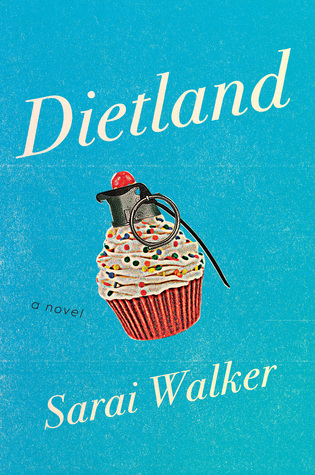
I recently read a fantastic feminist novel called Dietland by Sarai Walker.


But perhaps it seemed particularly fantastic because I feel like I've read so few feminist novels at all. Philosophy texts and essays and memoirs and other nonfiction, sure - I took a couple Women's and Gender Studies courses in college, after all - but feminist fiction is so hard to find! And I love me a good novel.

In her author's note at the end of Dietland, Walker commented that she was inspired by feminist novels of the 1970s/80s (the second wave feminist movement). This immediately caused two questions to spring up in my mind -

1) What are these feminist novels of the 1970s/80s? I would like names please, so I can find them and read them!

And

2) Have there been feminist novels since the 1970s/80s? Where are the contemporary feminist novels??

Basically, I just want all the feminist novels. Gimme gimme gimme.

And if I don't know where to find these books (when I read 70-90 books a year), there must be others also struggling. So I decided I wanted to start a list, which I would come back through and update as I discovered more books to include. The list is pretty short now, but I will be adding to it periodically. Hopefully it'll grow into a much more comprehensive list!

--

Note 1: Checkmarks indicate which ones I have personally read. Mild SPOILERS may be in some of the descriptions.

Note 2: I am using an "umbrella" definition of feminism which includes all aspects of intersectional feminism, including discussions of racism, classism, ableism, homophobia, transphobia, etc. I am looking for books that make a CLEAR point about the importance of equality, either by setting up a utopian/dystopian world that comments on socio-cultural issues, or by following a character through an "awakening." Books that simply "have a strong female lead" (i.e. a woman who figures out how to balance her work and love life, or a woman who cleaves herself from dependence on a man) are not exactly what I have in mind, although I may include such books on this list if they do a *particularly* good job and attempt to raise social commentary on other feminist issue(s) as well.

Note 3: This list is organized by year (most current year first), and alphabetically by author within each year.

If you have a suggestion for something I'm missing that I should include, please let me know - in the comments below, on Twitter, etc.

--

FEMINIST FICTION

Ally Hughes Has Sex Sometimes - Jules Moulin (2015) [Contemporary, Romance, Mother-Daughter Relationships] - Single mother and college professor Ally Hughes does not have time for sex - but she makes an exception for Jake, a surprisingly mature student in one of her classes. Ten years later, Jake comes back into her life as her daughter's friend - at the same time that her grown daughter finds herself so desperate for a nose job her mother won't help pay for that she's willing to work as a "live sex cam girl." Reads like chick lit/romance, but does confront issues such as female sexual empowerment (though with the goading of a man) and some of the problems of the sex industry.

√ * Dietland - Sarai Walker (2015) [Contemporary, Humor, Satire, Revenge Fantasy] - Plum Kettle has always believed her weight is an abomination - until she meets an underground community of women who live life on their own terms, and realizes she's been living the life others expect of her. Meanwhile, a dangerous guerrilla group called "Jennifer" is terrorizing a world that mistreats women, slicing this fast-paced and often funny satire with delicious moments of revenge fantasy.

An Untamed State - Roxane Gay (2014) [Contemporary]

Americanah - Chimamanda Ngozi Adichie (2013) [Contemporary]

 * Life After Life - Kate Atkinson (2013) [Literary, Historic, Philosophical, Reincarnation] - As Ursula Todd lives many lives, she suffers tragedies on a personal scale (rape, crude 1930s abortion, domestic violence) and international scale (World War II). Using the "practice makes perfect" mentality to adjust her existence, she confronts the changes that one person - herself - is capable of producing.

 A Tale for the Time Being - Ruth Ozeki (2013) [Historic, Contemporary, Philosophical] - This book is about strong women spanning generations: an elderly Buddhist Japanese nun, her Japanese-American granddaughter Nao, and a Japanese-Canadian novelist named Ruth (very meta) who finds Nao's diary washed up on the shore of her Vancouver island residence and believes it's an artifact carried across the Pacific by the 2004 tsunami. But what really makes it feminist is the struggles Nao goes through at her Japanese high school, where she is mercilessly bullied.

Cinnamon - Samar Yazbek (2013)

The Round House - Louise Erdrich (2012) [Contemporary]

The Flamethrowers - Rachel Kushner (2012)

Why Be Happy When You Could Be Normal? - Jeanette Winterson (2011)

The Nightingales of Troy - Alice Fulton (2008) [Connected Short Stories]

√ * The Disreputable History of Frankie Landau-Banks - E. Lockhart (2008) [YA, Contemporary, Humor] - In this fun Young Adult novel, sixteen-year-old boarding school student Frankie is absolutely unwilling to act "appropriately" for her gender. She hates being excluded from her boyfriend's all-male secret society - especially when she knows she's smarter than any of them - and uses both her intellect/creativity and the boy's utter dismissal of her to her advantage to plan a series of pranks with socio-political commentary right under their noses.

The Dark Abode - Sarojini Sahoo (2008)

A Thousand Splendid Suns - Khaled Hosseini (2007)

Tales from the Town of Widows: And Chronicles From the Land of Men - James Canon (2006)

Snow Flower and the Secret Fan - Lisa See (2006)

The Joy Luck Club - Amy Tan (2006)

The Red Tent - Anita Diamant (2005)

√ * The Birth of Venus - Sarah Dunant (2004)

The Secret Life of Bees - Sue Monk Kidd (2003)

Y: The Last Man, Vol. 1: Unmanned - Brian K. Vaughan (2003) [Graphic Novel]

Fingersmith - Sarah Waters (2002)

√ * Speak - Laurie Halse Anderson (1999) [YA, Contemporary] - Melinda is cynical about high school. She has no friends, and she spends the entirety of her freshman year withdrawing into herself, refusing to talk about - or think about - the rape she survived over the summer. This heartbreaking book flawlessly demonstrates what the aftermath of such trauma looks like for many young women - women who are forced to relive the experience every day that they see their rapist walking the hallways of their school, and who struggle to process the event, pushing away family and friends at precisely the moment when they might need them most.

√  Matilda - Roald Dahl (1998) [Children's]

The Poisonwood Bible - Barbara Kingsolver (1998)

Push - Sapphire (1996)

√  * Wicked: The Life and Times of the Wicked Witch of the West - Gregory Maguire (1995) [Reimagining of The Wonderful Wizard of Oz]

So Far From God - Ana Castillo (1993)

A Thousand Acres - Jane Smiley (1991)

Dirty Weekend - Helen Zahavi (1991)

Paradise - Toni Morrison (1988)

√ * The Handmaid's Tale - Margaret Atwood (1985) [Dystopian] - This cautionary (and, unfortunately, prophetic) book features a world where a totalitarian Christian theocracy has overthrown the U.S. government and taken away the bodily agency of all women. Women are not allowed to do anything that would make them independent - they can't vote, have a job, read, or even own any personal belongings. Their finances and bodies are controlled for political purposes; they are turned into baby factories. Women who are sterile, lesbians, feminists, or politically dissident are labeled "unwomen" and exiled from society. The true horror comes from the realization of how easily this "speculative fiction" could become a reality.

House on Mango Street - Sandra Cisneros (1984) [Children's]

The House of the Spirits - Isabel Allende (1982)

The Color Purple - Alice Walker (1982)

Kindred - Octavia E. Butler (1979) [Sci-Fi]

The Bloody Chamber and Other Stories - Angela Carter (1979) [Short Stories, Magic Realism]

The Women's Room - Marilyn French (1977)

Kinflicks - Lisa Alther (1976)

Lover - Bertha Harris (1976) [Lesbian Romance]

Woman on the Edge of Time - Marge Piercy (1976) [Sci-Fi]

The Female Man - Joanna Russ (1975) [Sci-Fi]

Free to Be... You and Me - Marlo Thomas (1974) [Children's]

Fear of Flying - Erica Jong (1973)

Are You There God? It's Me, Margaret - Judy Blume (1970) [Children's]

The Left Hand of Darkness - Ursula K. Le Guin (1969) [Sci-Fi]

Wide Sargasso Sea - Jean Rhys (1966) [Re-imagining of Jane Eyre]

The Bell Jar - Sylvia Plath (1963) [Mental Illness, Semi-Autobiographical]

The Golden Notebook - Doris Lessing (1962)

√  * To Kill a Mockingbird - Harper Lee (1960)

A Tree Grows in Brooklyn - Betty Smith (1940)

A Room of One's Own - Virginia Woolf (1929)

The Age of Innocence - Edith Wharton (1921)

Moving the Mountain, Herland, & With Her in Ourland - Charlotte Perkins Gilman (1911-1916) [Sci-Fi, Trilogy, Utopian]

The Secret Garden - Frances Hodgson Burnett (1911) [Children's]

Sultana's Dream - Rokeya Sakhawat Hussain (1905) [Sci-Fi, Short Story]

√  * The Wonderful Wizard of Oz - L. Frank Baum (1900) [Children's]

The Awakening - Kate Chopin (1899)

The Yellow Wallpaper - Charlotte Perkins Gilman (1892)

--

FEMINIST MEMOIR

I know these aren't fiction, but I just had to include a space for memoirs, too. :)

How to Be a Woman - Caitlin Moran (2011)

Whipping Girl: A Transsexual Woman on Sexism and the Scapegoating of Femininity - Julia Serano (2007)

Zami: A New Spelling of My Name - Audre Lorde (1982)

I Know Why the Caged Bird Sings - Maya Angelou (1969)


Sunday, September 13, 2015

Positive Symbolism

Yesterday I was talking about the negative symbolism of flowers, and how they could be used to depict the absence of female sexuality. Today I'd like to look at the other side of the coin: positive symbolism, or using flowers to demonstrate the presence of female sexuality.

We need only to look at the English language for a rudimentary understanding of this kind of symbolism. The definitions/etymology of several words show our culture's strong connections between flowers and female sexuality/female sexual organs. The first dictionary definition of deflower is "deprive (a woman) of her virginity." Old terms from menstruation include "being sick of her flowers" (Leviticus 15:33, King James Version); Game of Thrones uses the same terminology ("flowering") in its books/television show. The verb "to bloom" may have the same roots as "to blow," which we see in Shakespeare's A Midsummer Night's Dream... and obviously "to blow" has sexual connotations even today. (In Shakespeare's time, derivatives of "to blow": blowze, blowzy, blousy, meant a whore, a woman who was "overblown," a woman who had "bloomed" too much.) For centuries, female sexual/reproductive maturity has been associated with flowers.

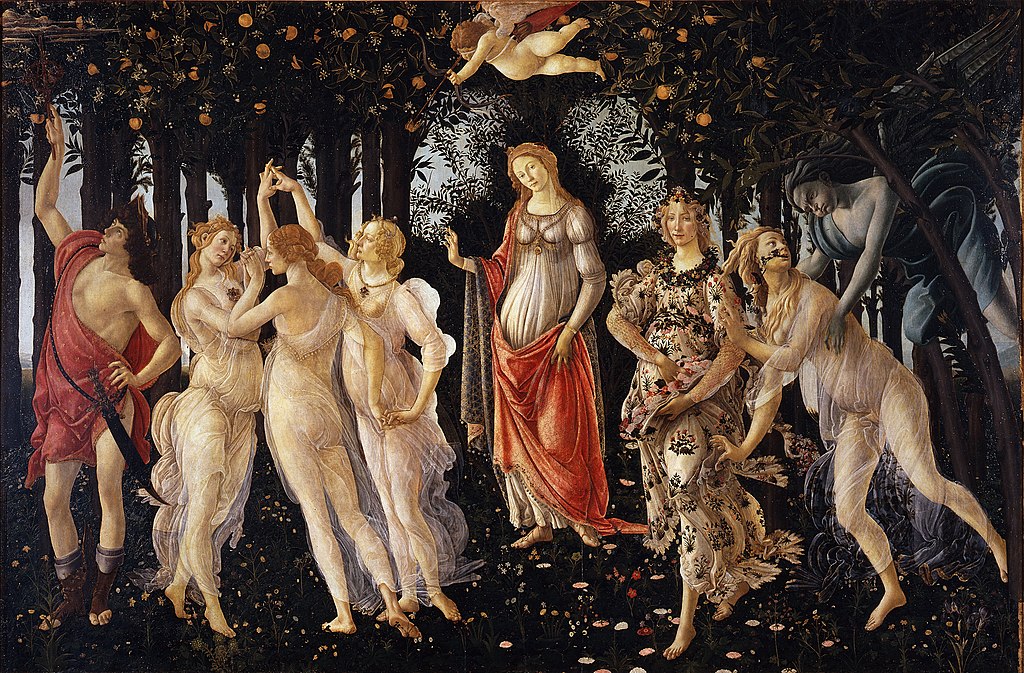
In Renaissance Italy, this positive symbolism was often used in the depictions of scenes from Greek/Roman Mythology, as we see in Botticelli's painting Primavera. The two figures on the far right are the Zephyr, the Greek god of the west wind, and the Roman goddess Flora, naked and garlanded with flowers. In Ancient Rome, Floralia, or "floral games", were annually celebrated in the honor of the goddess Flora. It was basically an orgy festival, and Flora was basically a deified prostitute.


Sandro Botticelli - Primavera (1477)

Positive symbolism like this was also popular in the early twentieth century, thanks in large part to Freudian theory. Hutchins Hapgood, a journalist and occasional member of photographer Alfred Stieglitz’s circle of artists and friends, reflected upon the age’s preoccupation with Freudian interpretations as follows: “Psychoanalysis has been overdone to such an extent that nobody could say anything about a dream, no matter how colorless it was, without his friends’ winking at one another and wonder how he could have been so indiscreet.”

Georgia O'Keeffe (painter and Alfred Stieglitz's wife) was one of the artists during this time period whose works were consistently interpreted in such a way. As I say in my thesis, "her close-up paintings of floral forms from the 1910s-1930s have been almost exclusively read as sexual metaphors, despite her continuous denial of such an intent." She once threatened to quit painting if Freudian interpretations of her work continued to be made. (She didn't follow through on her threat.)

Georgia O'Keeffe - "Flower Abstraction" 1924
picture from the Whitney Museum of Art

Mexican painter Frida Kahlo also used sexual flower symbolism in her work - though she did so consciously and intentionally. Kahlo had injuries from a horrific bus accident that caused her complications with attempted pregnancies; she often alluded to the emotional and physical pain those injuries caused her in the self-portraits she painted. She was married to Diego Rivera, the Mexican muralist famous for his Detroit Industry paintings (shout out to Michigan!), and worried that she was at fault for Diego's infidelity because she was unable to bear him a child. In "The Flower of Life," she uses a mandrake both for its visual similarity to female sexual anatomy and for its long reputation as an infertility cure. One critic wrote: "Here, Kahlo presents a woman's genitals, available to gratify a man's pleasure but unable to experience pleasure or conceive."


Frida Kahlo - "The Flower of Life" 1943 (fridakahlo.org)

During the Feminist movement of the 1970s, we again see a lot of flowers being used as positive symbolism for female sexuality. British feminist scholars like Griselda Pollock argued strenuously for "replacing realism with representational strategies… on the grounds that the female body when directly imaged is too easily co-opted for male viewing pleasure."

In 1974, Feminist artist Judy Chicago began her series of painted porcelain miniature, which included "Cunt as Temple, Tomb, Cave or Flower." According to Chicago, the porcelain miniatures transform the female sexual organs into "every possible thing the vagina [can] become… the vagina as temple, tomb, cave, or flower, [or] the Butterfly Vagina which gets to be an active vaginal form." Chicago criticized the passivity of O'Keeffe's vaginal forms, calling them a form of imprisonment. Chicago depicted female sexuality as more dynamic, more active - often more like a butterfly than a static flower.

(image from feministart.blogspot.com)

As I was doing my research into these artists for my thesis paper (which is available for free on EMU's website if you'd like to read more about these and other artists), I found the examples of positive symbolism much more interesting than I did the examples of negative symbolism - because, as I've stated before, I wanted to feel more comfortable with myself and my sexuality. I was envious of the Feminist art scene in the 1970s, the community those women had with each other, the support, their ability to celebrate their sexuality and their femaleness in the ways they wanted to. Negative symbolism made sense to me - flowers as feminine, domestic decoration, flowers as symbols of purity and chastity and innocence and docile female beauty. It was the positive symbolism that was new to me, something I hadn't thought of before, something I wanted to emulate - but wasn't sure if I felt entirely comfortable doing so.

That's sort of where I'm still at now, five years later. I want to be confident and boisterous and run around unafraid - in many areas of my life - but that's simply not who I am. I'm an introvert. I'm cautious. Even when I hold a firm opinion about something, I am not likely to shout it. Instead, I hold it close to me and try to meaningfully radiate it out from my heart. I try to be confident enough that I am willing to let my opinions be heard - but I still require people to seek them out. I have a blog, for god's sake. Not a TV show. I'm not standing on a street corner, or behind a pulpit. To find me, you have to search for me, stumble upon me. I'm trying to put myself out there more - trying to market myself, trying to get people to look at my art, and buy my art - but it's work, not something that comes naturally to me.

When I paint or draw a flower, I think of both negative and positive symbolism. I want to celebrate my sexuality and be comfortable in my skin. But I also want to be defined by more than my sexuality, my womanhood. I want my art to reflect my personality - my shyness, my interest in the aesthetically pleasing. A lot of my work seems purely decorative - it's a colored pencil drawing of a flower, or a watercolor of a flower with some curly, feminine patterns around it. And I do intend it to be pretty. But I also don't want people to think it's "just kitsch art", or that I just make what I think others will like, or that I don't put any thought into it. I put a fucking lot of thought into it. It's just subtle - because I'm kind of subtle.

"Rose Stems" by Andrea Arbit - Watercolor on paper, 15"x22"

This painting, for instance - I wanted to use the color combination pink and green, I wanted to focus on the part of a flower that is not considered conventionally pretty, I wanted to make the rose look a little abstract (by emphasizing lines and shadows, by focusing on the curves of the petals) so that it also sort of resembled a vulva, I wanted to acknowledge the beauty of female sexuality (positive symbolism), I wanted to demonstrate how my own confidence often hides a bit in the shadows (negative symbolism), and I wanted to create a beautiful, dynamic painting.

Do you have to know that I was thinking of flowers as a symbol for female sexuality to appreciate my painting? No. But it does add another level to it, if one is so inclined to listen to its whispers.


Thursday, September 10, 2015

Pinned for Safety & Stabbed

In case you're new to this week's series of blog entries, I've been talking about my honors thesis, which consisted of several watercolor paintings and a companion written artist statement.

In the first several paintings, I was using flowers (roses in particular) as a symbol for female sexuality and female genitalia. Once I had created the "hesitant" flowers (the ones with caution tape) and the "healing" flowers (the ones with bandages), I started to realize how I could use the symbolism I had established to maybe raise awareness about certain feminist issues that were weighing on me. And so I created paintings that allude to rape, sexual assault, and female genital mutilation.

Here is where using a symbol for female genitalia, instead of a depiction of an actual vulva, became very important. In my early paintings, I was dealing a lot more with the psychology of having a vagina - or, at the very least, my psychology. The roses were not physically injured, and so were "only" emotionally or mentally scarred. For those paintings, it might not have mattered if I'd chosen to use the flower symbolism or an actual vulva. (As it was, I chose the symbolism, because, as stated in previous entries, I was not too comfortable with my own sexuality and needed that "crutch" of a symbol because I wasn't ready for something explicitly graphic.) But for the paintings in the rest of my thesis, I believe in does matter.

Because I am showing physical harm - roses that are being actively assaulted, or roses that are obviously damaged from a past assault - I wanted to be very careful that I was not seeming to encourage or glorify sexual violence. It was very important to me that the viewer would be sympathetic towards the injured rose - not turned on by it. There were times, even using a flower as a stand-in for female genitalia, when I was still concerned about this, when I feared that a "beautiful" color palette would seem to beautify the act done to the rose. I hope these paintings are not interpreted in this way; I hope instead that the viewers seen the beauty in the rose itself. The rose carries the potential for strength and beauty despite the trauma that has been done to it, NOT because of the trauma it has endured.

I do this to myself sometimes. I need to remind myself not to romanticize pain. I get to thinking that in order to be a great artist or a great writer, I need to suffer - and so I hold myself back and make myself suffer. I would never hurt someone else, would never tell someone else that her life would be more beautiful, more poetic, more meaningful, if there was a bit more trauma in it. But I tell it to myself, and it's something I'm trying to work on changing. If I wouldn't allow a friend to hold those self-sabotaging beliefs, I shouldn't let myself hold them either. I should treat myself like my own friend.


"Pinned for Safety" by Andrea Arbit - Watercolor painting on paper, 20"x22"

Pinned for Safety is the first painting I made that showed violence actively directed toward the rose. I purchased and destroyed real flowers with safety pins, straight pins, tape, staples, and clips. I later used photographs taken while mutilating the flowers as references to create these watercolor paintings.

I wrote in my thesis: "Safety pins are everyday tools that we to hold something together with minimal damage. In this work, however, the rose petals are so fragile that the term “safety pin” becomes an oxymoron. One cannot pin a rose without damaging it, whether the intent is merely to keep the rose safe and together or to force its petals to close. I intended this to serve as a commentary on how even the best intentions can do more damage than good."

Female genital mutilation (FGM), also known as female genital cutting and female circumcision, is unfortunately seen as legitimate, beneficial, and justifiable in many parts of the world. "Like a well-intentioned attempt to hold something together with safety pins, in cultures where FGM is practiced, it is defended under the grounds that it is for the female’s own good. Reasons cited are numerous and varied, including aiding in genital cleanliness (for the sake of the woman and for her future children, who could supposedly die if they came in contact with “unclean” external female genitalia) and removing the “male” part of female genitalia – the clitoris – to create a clearer indication of a woman’s sex, which in turn is thought to enhance the female’s femininity (e.g. docility and obedience). FGM is also performed to cure females of depression, hysteria, and insanity; and to prevent sexual promiscuity and excessive masturbation by eliminating a female’s ability to experience sexual pleasure or decreasing her libido. Other reasons include proving virginity at the time of marriage to ensure an honorable union; increasing fertility; and even making the female genitalia more aesthetically pleasing. Women who undergo this procedure are told that it is done for their safety, health, social status, and virtue, but FGM 'has no health benefits and harms girls and women in many ways.'"

“In countries where it is practiced, mostly African, about two million youngsters a year can expect the knife – or the razor or a glass shard – to cut their clitoris or remove it altogether, [and] to have part of all of their labia… sewn together with catgut or thorns.” FGM can lead to urinary and reproductive tract infections (caused by obstructed flow of urine and menstrual blood), scarring, infertility, epidermal inclusion cysts, increased risk of acquiring sexually transmitted infections (including HIV), bladder and urethra stones, kidney damage, and death from excessive bleeding. Initially, sexual intercourse is often extremely painful for women who have undergone this procedure; a second cut of their genitals often needs to be made at this time – usually performed by the sexual partner with a knife – to allow the labia majora to be opened for intercourse. This second cut can also lead to medical complications. Many women never experience sexual pleasure after FGM. Many women who have had their genitals cut experience difficulties in childbirth. All types of female genital mutilation pose an increased risk of death to the baby, with some types also increasing the risk of postpartum hemorrhage in women. Finally, because many FGM procedures are performed on young girls who are not given a choice in the matter, psychological and emotional stress is common, with comparable symptoms to post-traumatic stress disorder. Since 1997, the World Health Organization (WHO), the United Nations Children’s Fund (UNICEF) and the United Nations Population Fund (UNFPA) have spoken out against the practice of FGM.

(If you want references for any of that above information, there is a wealth of research cited in the thesis this is pulled from, and you can check there.)

Likewise, the rose in Pinned for Safety is clearly harmed by attempts to pin it shut. The flower petals have started to tear, and the pile of petals in the background suggests that the pins will eventually destroy the flower, rather than protect it.


"Stabbed" by Andrea Arbit - Watercolor painting on paper, 20"x22"

Of course, FGM is not something that is generally practiced in Western countries, so much of my audience probably doesn't know a lot about the procedure and would not immediately think of FGM as a way of interpreting my paintings. But sexual violence toward women is not limited to FGM. In this second violent painting, Stabbed, I held two roses shut with straight pins, which were more effective than safety pins in keeping them closed. Also, as I added in my thesis, "the straight pins lent themselves more easily to stabbing the flowers. Because they did not have to be held in place by safety pin latches, they could penetrate into the roses in a quicker, jerkier fashion." This painting, therefore, seems less like an invasive (yet careful) surgery, and more like rape or sexual assault - a problem that is, unlike FGM, prevalent throughout the entire world.

From my thesis: "Statistics show that one out of every three or four women experience sexual violence, so it is likely that everyone knows someone who has experienced sexual trauma or rape. Most often a woman is raped or assaulted by someone she knows (such as a significant other, relative, neighbor, or adult in a position of authority), but these 'acquaintance rapes' are very rarely reported. The National Organization of Women estimates that every year 1.2 million women are forcibly raped by their current or former male partners, some more than once. Similarly, a Ms. magazine survey in 1994 found that eighty-four percent of those raped knew their attacker. According to this data then, acquaintance rape and date rape are more common than left-handedness, heart attacks, and alcoholism. Women are taught to be wary of strangers and avoid walking alone at night, but these strategies do not take into account the reality of the majority of rape situations. By showing how easily flowers are torn and damaged with safety pins, I am trying to raise awareness of the alarming frequency of sexual assault and rape."

(Once again, if you want references for any of that above information, there is a wealth of research cited in the thesis this is pulled from, and you can check there.)

Now, rape is being talked about a lot on social media, and even on the news. But when I made this painting in early 2010, there weren't activists carrying their mattresses around campuses. I didn't see nearly as much discussion about rape statistics in 2010 as I do today - and maybe that's partly because I wasn't yet on Twitter following feminist accounts, and was still living a sheltered college student's life, not watching much news or generally staying abreast with the goings on of the world - but I don't think that adequately accounts for the huge jump in discussion I've seen in the last few years. I think we've gotten better about talking about some of this stuff. I hope I'm right; I hope we have.

When I showed these two paintings at an event at Eastern Michigan University in 2010 next to a display of rape and sexual assault statistics, there were several people who seemed shocked at the numbers. Many men would stop reading my artist statement, would stop looking at my watercolor paintings, as soon as they realized that I was talking about female genitalia, but there were some men who not only kept reading, but engaged me in conversation. One such man listened to everything I had to say, read my statistics, and left - only to return an hour or so later, as the event was wrapping up, to tell me he couldn't stop thinking about what he'd learned. He told me he had two daughters, both in high school or college. He said he'd never thought about it before, how likely they were to experience rape or sexual assault in their lifetimes. Given the 1 in 4 statistic listed above, he has a 50% chance that at least one of his daughters will be raped or sexually assaulted.

Chances are that we all know someone who has been raped, or is the victim of attempted rape. I know for a fact that I know a few such people - and those are only the women who have told me. It's awful to think about, that something so horrible could still be so common.

But no, we've reached gender equality. Give me a break.

Don't forget to check out my Etsy shop for others in this thesis series! (I have these particular two currently hanging in my dining room, but the rest of this series is available for purchase on Etsy.)