Friday, December 25, 2015

Norfolk Botanical Garden (Post 1)

Every summer, my husband's family goes to Virginia Beach for a week. It's a tradition they started when my husband and his sister were young. Every year his parents would take them to the beach to meet up with a family friend and her two daughters, and they would spend a week in the surf and the sand.

This is very different from any vacations I went on with my family growing up. For one thing, we never went to the same place twice. Every vacation was different. For another, the goal was more to see and do as many things as possible, rather than to relax and do as little as possible. So our family vacations would often be road trips, where we'd stay in one town for no more than a couple days before driving to the next one. One year when I was in high school we did a road trip to visit Chicago for one day, the campuses of a couple Midwest universities, and Mammoth Cave in Kentucky. Another year, when I was in middle school, we did a road trip that included a visit with a friend who had moved away from Michigan to a town near Pittsburgh, the Hershey theme park, Gettysburg, and Washington D.C. My mom and brother probably would've preferred a "sit around and chill" vacation, but my dad and I liked exploring new places.

If I lived a different life - one that was more frantic, with long away-from-home work hours, I'm sure a relaxing vacation would seem more appealing. But where I am right now, I already spend a lot of time just sitting around and reading, or writing, or thinking, or playing with my puppy. (Sorry if I sound like I'm bragging. I do love it though.) I don't feel like I need to get relaxation out of a vacation, because I try to do a bit of that every day anyway. And if I'm spending time and effort and money to go on a vacation, I like to do things I couldn't do at home - like seeing new places and doing touristy things.

That said, obviously there is more to my husband's family's annual beach vacation than just relaxing. There is the tradition of it, which is nice. And now that they don't see each other every day (his parents and sister live in Maryland, while we're in Michigan), it's really the only time of the year when they get to see each other for more than a couple days at a time around holidays. When you're enjoying the company of family or friends you haven't seen in awhile, just hanging out is enough - and indeed running around trying to do touristy things might take away from some of that rare time you have together.

So I get it. I do. But at the same time, I also enjoy leaving behind the relaxing beach every once and awhile to see something new in the area. To that end, a couple years ago on this annual vacation, my husband and I took a few hours to make the short drive to Norfolk, VA and explore their Botanical Garden.

And if you know anything about me and taking photographs of flowers, you can imagine how much I loved it - and how many photos I took. I'll post more photos tomorrow, but here are just a few of my favorite photos from the gardens to get started:


Thursday, December 24, 2015

A List of Christian Privilege in America

I think very few people would argue against the idea that Muslims face overt discrimination and oppression right now in America (and other countries). But many people don't recognize that Christians actually have privilege on top of that.

[Side note: Yes, Christians as a whole or as individual sects/groups have also been discriminated against and overtly oppressed in the past. But not in the last couple of centuries in America. I am talking about contemporary American culture right now - the way America is in 2015. Christian oppression that occurred in previous generations but that is no longer occurring is unrelated to this discussion. Christian oppression that is still occurring around the world but not in America is also, similarly, unrelated to this discussion. These things are horrible (as all oppression is), and I am not denying that. But oppression against past generations of Christians or against non-American Christians does not impact the privilege American Christians do have in contemporary American society. Imagine if I were talking about a store that sold canned peaches and you brought up, as counterpoint, a store across town that refused to sell canned peaches. What does that have to do with my comments about the canned peaches at the store I was talking about? It doesn't. It's unrelated. It contributes nothing helpful to the discussion.]

Anyway, here is the list of just some of the ways Christians (mainstream Christians, who belong to a denomination that is recognized as legitimate by a majority of other denominations) have privilege in contemporary American culture.

In America today, a Christian can say all or most of the following statements as true, while a non-Christian can not:
  • My elected representatives are mostly people of my own religion
  • I am confident that I will never have to cast a vote on election day at a place of worship intended for a religion other than my own
  • I can easily find religious commentary on local, state, and federal politics that I agree with or understand. If I want to listen only to news anchors or visit only news websites who subscribe to my religious beliefs and share my opinions, I can easily find such opportunities.
  • When I ask to see "the person in charge," odds are I will face a person of my own religion
  • When my religion has a major holy celebration, odds are that I will automatically receive that holiday as a vacation day from work or school; if I do not receive it automatically, it is easy to request it off and have that request accepted
  • If I work in a career that requires 24-hour shifts (such as hospital employees, law enforcement, etc.) and can not request time off for my holiday, it is only because my holiday is so ubiquitous that all or most of my fellow employees would also request that day off, and they cannot grant all of those requests. If I do have to work on my holiday, I will likely receive extra monetary compensation (overtime pay), as well as other forms of compensation (free food, office celebrations, holiday decorations) to make up for having to spend the holiday with coworkers instead of with family. (Even employees who may not consider such a day important might receive these "compensations" for having to work on that day; because the default assumption is that it is a holiday for everyone.)
  • There is little chance I will be ridiculed or harassed for my religious beliefs
  • I can be loud or assertive about my religious beliefs without fear of being shamed, ridiculed, demonized, or seen as "other"
  • I do not have to worry about "the message" my religious clothing, decorations, music, or language might be sending about my ethnicity, heritage, customs, beliefs, citizenship, behavior, or intentions
  • Artifacts, clothing, and decorations of my religion can easily be purchased at any nearby store (Just try to find Hanukkah candles or Kosher-for-Passover matzoh in an area of the country without a sizable Jewish population... It's like searching for a needle in a haystack.)
  • I can easily find music of my religion on the radio (especially true this time of year, but even all year round there are Christian radio stations)
  • I can easily find "inspirational" novels and movies that prominently feature my religion or my religious beliefs
  • Should I wish to send someone a greeting card with an inspirational/religious message, I can easily find one to purchase that incorporates the beliefs and wording of my religion
  • I can be confident that the ordinary language of day-to-day existence will include terms and practices favored by my religion (i.e. a moment of prayer at the start of a ceremony)
  • When I am asked to take an oath in court or at an inauguration ceremony, I am given a holy book from my religion to rest my hand on
  • I can reference something from my religion in conversation with the confidence that everyone will understand what I am referring to, whether they subscribe to my religion or not (every American knows the basic story of Jesus, even if they don't believe in it; everyone will know what you mean if you say "Sunday School" or "Mass" or "Priest"; everyone will know what the cross symbol or fish symbol on the back of your car indicates)
  • If I want to purchase a religious bumper sticker for the back of my car - or religious-themed wrapping paper, or paper plates, or invitations for my child's religious event (i.e. a Christening/baptism/dedication) - these products are readily available
  • I can refuse to learn the language, or practices of other religions without worry of being ostracized for my ignorance or left behind in a conversation (especially in a classroom setting, where even the most secular literature in an English class might inspire talk of "Jesus allegories", etc.)
  • I can walk into a public building or inspect a piece of government money and expect to see words or symbols associated with my religion (i.e. "In God We Trust")
  • If there are religious themed displays at a public building (such as a Nativity scene at Christmastime on the lawn of a school, city hall, library, etc.), it is likely that it is my religion being displayed
  • I can be confident that I will learn the history of my religion and read literature written by people of my religion in public school
  • Should I want to, I can easily find private, accredited schools for my children to attend which incorporate my religion into its daily curriculum
  • If I want to marry someone of my religion, I can easily find a partner who shares in my beliefs, and can easily find a nearby venue to get married in that will follow the marriage customs and language of my religion
  • If I want to find a new place of worship within my religion, I can easily find several options to explore
  • If I want to compare programs at local places of worship (especially around the holiday season), I can open up any local newspaper and find a list of churches of my religion
  • Magazines, billboards, television, movies, and virtually all of media is catered to people who share my religious beliefs/upbringing (even if religion is not a specific, blatant, referenced part of a TV show, you can bet every sitcom family puts up a Christmas tree, and every sitcom wedding follows the traditional Christian format and customs - even if its a slightly more secularized version)
  • I will most likely never be asked to speak "on behalf of" my religion as a whole, or to explain my religion's customs and beliefs, or to defend or explain the actions of someone else who subscribes to my religion 
  • My ability to make important decisions and my (moral) capability in general will never be questioned as dependent on my religious upbringing
  • If I were to carry a gun, it would not be interpreted as an act of evil intent or religious zealotry
  • If I were to commit a crime, my religion would not be called into question

I'm sure there are even more ways I haven't even thought of... If you think of something, leave a comment and let me know!

Obviously some of these are a lot more dangerous than others. Adding together just the more "mundane" privileges (i.e. the availability of Christian radio stations and Christian bookstores) creates a culture that makes anyone who does not self-identify as Christian feel left out, ostracized, excluded, and ignored. Many Christians, I am sure, do not mean to make others feel left out, ostracized, excluded, or ignored. Many do not even realize others feel this way at all. But it is exactly because they have Christian privilege that they can go about their lives not realizing the privilege they have.

Wednesday, December 23, 2015

The Most Wonderful Time of the Year: Christian Privilege at Christmastime

I love the holiday season. I love the songs, the decorations, the baking, the gift buying, the gift wrapping, the gift receiving, the family togetherness - all of it. I've always loved it. I was born on December 20 and was brought home from the hospital on Christmas Eve. My parents brought me inside in my car carrier and put me right underneath the Christmas tree in the living room - their little Christmas present. I don't remember that, of course, but I like to imagine that it was a formative experience because I was enthralled by the twinkling lights and the love in the room.

Growing up, my parents were always careful to separate my birthday from Christmas so that my birthday wouldn't be overshadowed by the mammoth holiday. I got a birthday party separate from any Christmas parties planned, I got separate birthday and Christmas gifts. It was like a week of celebration - my birthday merging with all the holiday parties at school and the holiday traditions with my family. I absolutely loved it. I liked to pretend everyone was hanging up lights to celebrate my birthday with me.

This is still my favorite time of year - made even more celebratory since meeting my husband. His birthday is coincidentally the same day as mine (though a year earlier). And his family is Jewish, so he grew up celebrating Hanukkah. So now we get to share traditions for Hanukkah and Christmas, and stretch the holiday season out even longer.

I never thought much about Christian privilege growing up (why would I? I was Christian), but since stepping away from Christian beliefs and meeting my husband, I've become keenly aware of it.

For example - he teaches at a public high school here in Michigan, and a couple years ago expressed his feelings about the office's holiday display. There was a menorah to represent Hanukkah, a kinara to represent Kwanzaa, and even some written notices about cultural traditions of other religions, including some words about Islam, posted with sensitivity toward the sizable Muslim population at the school. But the majority of the display was a nativity scene for Christmas - and it was precisely this part of the display that bothered my husband. Hanukkah is not a particularly important holiday to the Jewish religion, and the menorah is just a candle holder, which is not in itself a particularly religious symbol. In fact, there is no Hanukkah equivalent to the Christian manager display that has a comparable "level of religiousness." Christmas is widely celebrated in the U.S. among Christians and non-Christians alike, and has many symbols associated with it that are less religious - wreaths, Christmas trees, poinsettias, Santa Claus, reindeer. And yet, the school chose the most religious aspect of Christmas and paired it with the practically secular menorah, kinara, and flyers.

It could be argued that it's not Christianity's fault that Hanukkah has no symbol that is particularly religious (although, let's be honest - if Jews have ever "toned down" their religious symbols to make them more generic and acceptable looking, it was because of persecution and genocide and diaspora, and Christianity is to blame for most of the instances of Jewish persecution, genocide, and diaspora throughout history). But even if Christianity had no influence on Judaism and how Hanukkah is celebrated, the office administrators that put together the display could have chosen more secular Christmas symbols. Including a nativity scene complete with angels and a baby Jesus and a praying Mary and Joseph was a clear choice, and one they could have opted not to make in an effort of religious sensitivity.

True, this was a display in the office, not in the lobby or the front lawn of the school; it's main purpose was probably similar to a worker decorating his or her cubicle with the items of their religion. Such displays are permitted (and should be) within our Constitution. But the display was also facing out, rather than in, and was clearly meant to be seen and appreciated by anyone coming through the office - administrators, teachers, students, and parents. The flyers that were printed up included a suggestion that visitors should "tell us about your religious beliefs!" - presumably so that the office employees could update the display if it was found lacking, for the benefit of everyone. It was hard to tell whether it was just an office employee decorating her workspace, or a decoration for the school, and thus seemingly endorsed by it. The school lobby, by the way, has the words "In God We Trust" engraved on the wall in big letters - so it wouldn't be out of the realm of possibility that the school might sponsor a display of religion.

A lot of schools - and other public buildings - do just that. City halls and police stations have giant life-size nativity scenes on their lawns, same as churches. It is precisely these displays of church on buildings that function for the state that upsets my husband - because we are supposed to have a separation of church and state in this country, yet instead often seem to have a state-sponsored religion (Christianity).

So my husband expressed his concerns on Facebook (probably not the best place to do so, in retrospect), and the result was that a bunch of other teachers and students and administrators jumped down his throat. Some cited the amount of time the office employees spent trying to make a nice display that was open to everyone's holidays (as if effort and good intentions were sufficient excuse). The flyers in particular were lauded as proof that the secretaries were trying to be as inclusive as possible. And yet, it is the flyers that (to me) most point out the Christian privilege on display. The secretaries had a nativity scene ready to go (whether it was the schools or was brought in from one of their homes is not really the point) - and they placed this nativity scene literally right next to a sign pointing out the secretaries' ignorance of "other" religions. If Christianity were not America's default religion, the secretaries wouldn't have to ask what other religious traditions there were this time of year, because they would already know those other traditions instead. Growing up Christian in America means that you can be ignorant of other traditions - because your traditions are the ones catered to. It might seem nice and tolerant and inclusive to ask other people to contribute their own religious beliefs to your display, but it also puts the onus on them to come forward and explain them to you - and after you've pointed out that their religion is "other," is "unknown," which really puts them on the spot.

As the only Jewish teacher in the school, my husband is often asked questions by his students when they're taking a Humanities class and learning about religions or when they're reading a book about the Holocaust in an English class. Sure, it's nice of them to "think of him," but it also requires of him to represent an entire religion/ethnicity. Black people are similarly asked to speak "on behalf of" all black people, or women to speak "on behalf of" all women. Like all black people or all women or all Jews are the same, and have the same opinions. My husband isn't even religiously Jewish anymore (like me, he has stepped away from the belief system he grew up in), and yet Humanities students come to him to ask about Judaism.

(On a similar note, the one black teacher at his school is often asked for help with discipline issues for black students - whether or not she actually knows the students personally. It is assumed that because she is black and the troublemaking kid is black, she will know what to do with them. It's absurd.)

But back to the office holiday display - the amount of backlash my husband received for airing his grievances was enormous. Some of his colleagues stopped talking to him. He felt ostracized. Yeah, he probably could have gone about it better - like talking to the office secretaries instead of posting something on Facebook. But it's like none of them even listened to what he was trying to say. They didn't bother to consider his viewpoint because they felt so personally victimized. (Never mind that seeing a nativity scene in his workplace kind of made him feel personally victimized in the first place, which is why he took to Facebook to complain.)

It's like the outrage over Starbucks' red cups this year. There is no "war on Christmas," guys. The fact that some people ASSUMED their favorite coffee chain would have decorations on its cups for the religious season that they personally celebrate in fact proves just the opposite. It was perfectly within the realm of possibility that there would be Christmas imagery; it was something those people were expecting, because their religion is so ubiquitous that they have seen their Christmas imagery depicted on the paper products of this and other companies before. This year, for whatever reason, their religion was not specifically pandered to (or not pandered to enough - because, let's face it, red is still a Christmas color, and other winter holidays from other religions do not use red as their symbolic color). Next year, perhaps Christianity will be pandered to again (or more obviously). But the chances of a different religion being pandered to are basically nil. It's Christianity or secularism in this country, and often a mix of the two. It is never any other religion. And even if it were secularism all the time (as, I would argue, it should be, given the wording of our Constitution), that would still not mean that Christianity was being "warred" upon. It would just mean that it was not specifically allowed to tout its privilege, or maybe even that (gasp!) some of its privileges were being taken away.

For true equality to be reached, some groups are going to have to lose their privilege. Losing privilege is NOT discrimination, though - the two are completely different. Losing privilege is like expecting you'll win the lottery, but then you don't actually win after all, and so you do not receive the money you were counting on. Discrimination is like having money that is rightfully yours  taken away from you, because somebody else decided it shouldn't be rightfully yours, or that they deserved your money more than you do, or simply because they wanted to be a bully or demonstrate their power or strength or cunning and they didn't care who they might hurt in the process.

Yeah, losing privilege can suck; not winning money you expected to win, that you perhaps needed to win (to continue the lifestyle you were accustomed to) is a major bummer. But it's not a personal attack, it's just an inconvenience - and it's only considered an "inconvenience" because it's something you were accustomed to that you are no longer receiving, not because it is actually necessary or prudent or even good for you.

It's hard to see your own privilege; this is true for any privileged group. But make no mistake - Christians (especially those belonging to a mainstream Protestant denomination) do currently have privilege in this country. This post is getting long enough, so I'll include my List of Christian Privilege in tomorrow's blog post. It will be a fitting list to consider on Christmas Eve.

As for me and the holidays - I think I'll always love this time of year. It's just too engrained in me to give up, and if it's something that makes me happy, why should I give it up anyway? I enjoy the Christmas season more or less as I always have - with family, with friends. I bake cookies, I wrap presents, I put up a Christmas tree. But I have sloughed off many of the more religious parts of Christmas over the years since I've stepped away from my Christian beliefs, as I once sloughed off believing in Santa Claus, or waking my parents up at six in the morning to run downstairs and open gifts. I do still like the religious music, and sing along when I hear one I particularly love. But it's the sentiment I'm attached to, not the specific words, or the specific message.

Even when I was a devout Christian, I didn't go around rubbing Christmas in other people's faces, though. (At least, I tried not to.) I was encouraged by some at my church to make a point of saying "Merry Christmas" - especially if a store employee wished me "Happy Holidays" when I was checking out with my Christmas purchases - but I don't remember too many times when I actually did that. Probably mainly because very few store employees wished me a "Happy Holidays" - they all just said "Merry Christmas" anyway, and so I had nothing to complain about. I had friends who did not celebrate Christmas because they subscribed to a different religion; it was more second nature to tell people at school "Happy Holidays" - or even simply, "Enjoy break!" or "I'll see you NEXT YEAR!" when it was time for the two weeks off school.

There are ways to celebrate your own religion, your holidays, your traditions without making other people feel bad for not having the same traditions as you do. Don't assume other people are celebrating what you're celebrating. It's not hard if you actually try. The real reason some Christians act as though everyone is celebrating Christmas is because they think everyone should be. 

I imagine a particularly obtuse Christian might say: "But I do want others to feel bad for not being Christian, because I want them to become Christian! I want us all to belong in one big Christian group together because I want us all to hear the truth, and believe in Jesus and go to Heaven! It's a noble cause, my alienation and discrimination and exertion of Christian privilege! And it's not like religion is gender or race - you can choose what religion you subscribe to, you can choose what to believe in! Anyone can - and should become Christian. It's not like I'm saying that I'm better than non-Christians naturally or biologically or indefinitely. I want equality, I want everyone to have the same privileges I have! How is that a bad thing??"

To which I would reply: We have freedom of choice in this country. As long as it does not infringe on other people's pursuits of happiness, we have the freedom to our own pursuit of happiness. Let other people make their own choices and celebrate what they want to celebrate - their celebrations in no way involve you or infringe upon your own celebrations. Your celebrations, on the other hand, do often infringe on other people's celebrations, because your celebrations have the power, have the privilege in this country. Do you really want someone to become a Christian just to belong - or do you want them to come because they want to be there and came willingly, without coercion? And wouldn't it make "the choice" to be Christian, to believe in Jesus, less significant if literally everyone made the same choice? How much of a choice would it be if it were mandatory, or nearly so?

Get off your fucking high horse and recognize that other people believe just as ardently in the tenants of their religion as you do in yours. They believe they are right; you believe you are right - and there is literally NO WAY to prove which one of you (if either of you) are right - at least no way to prove that on this planet, in this life. Why can't you enjoy your time with your family, and enjoy your holiday celebrations in the privacy of your home (as Jews and Muslims and Hindus, etc. do with their holidays)? Isn't that what the holiday is about anyway - the family traditions? You do yours, and let other people do theirs. They've been doing just that for generations in this country; why don't you repay the favor and give them the same courtesy?

Tuesday, December 22, 2015

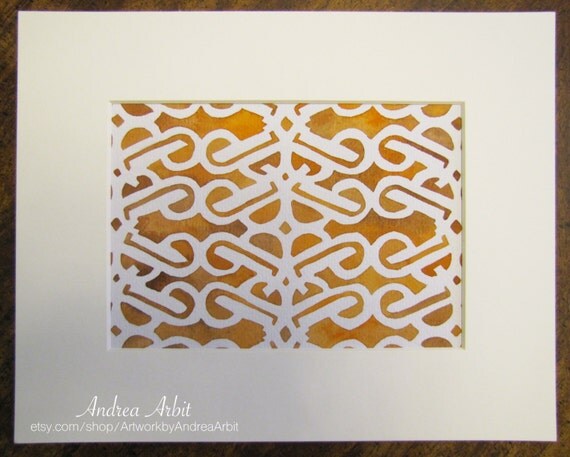
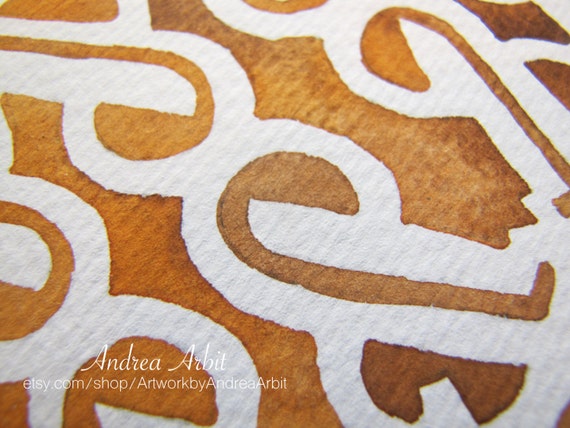
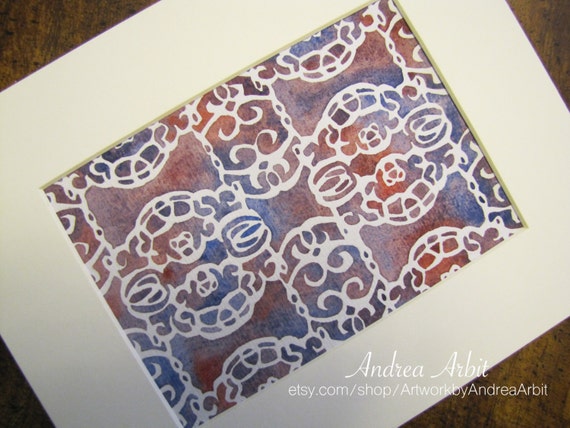
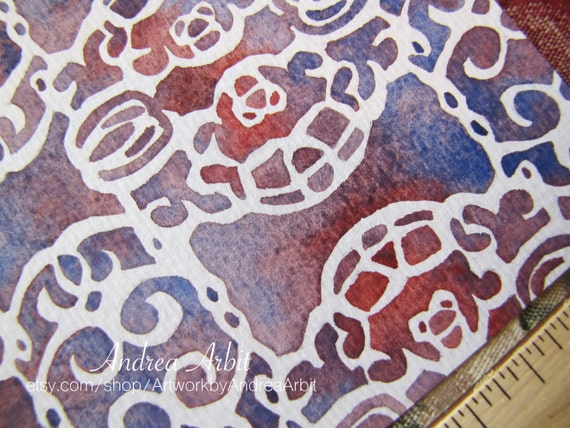
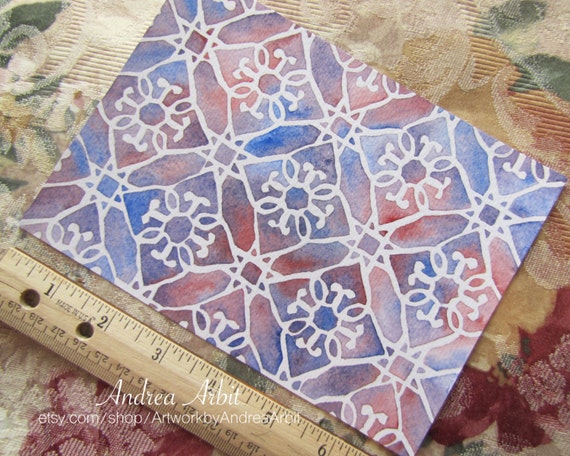
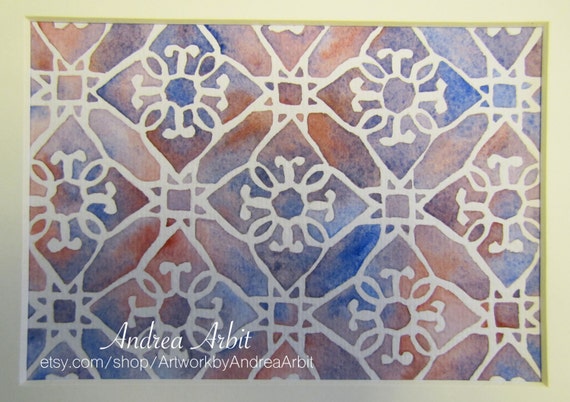
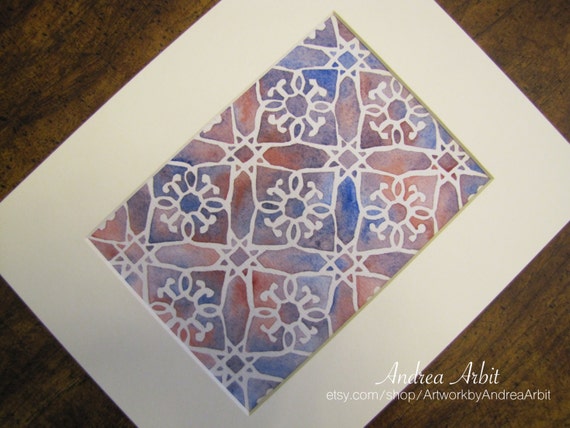
Lacey & Aylin: 5x7 Watercolors

These two 5"x7" watercolor paintings are available for purchase through my Etsy store.

First, some "in progress" photos of the painting process:


-

Pattern Lacey is for sale here.


-

Pattern Aylin is for sale here.


-

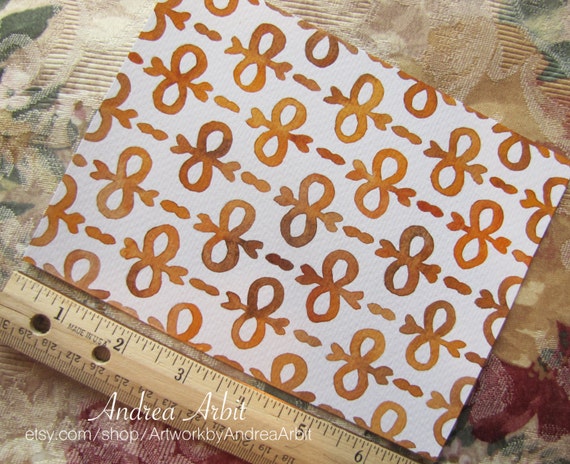
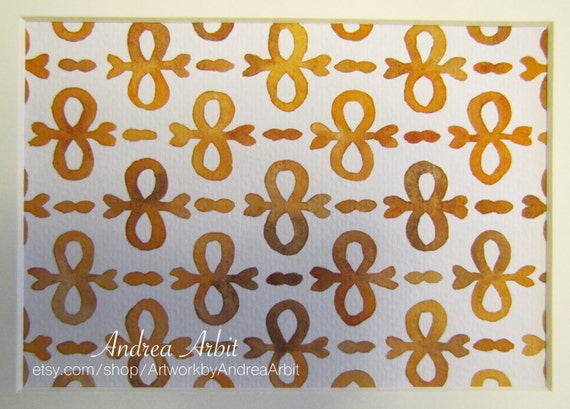
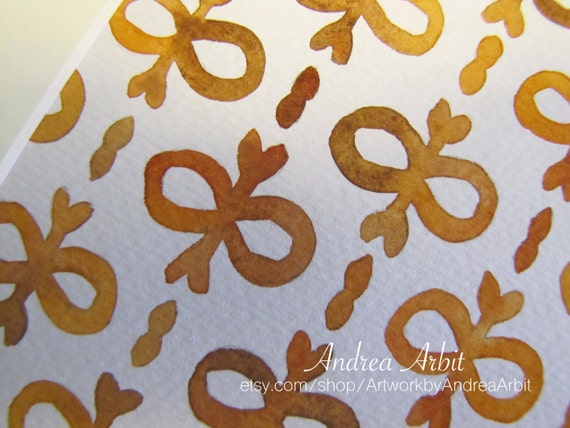
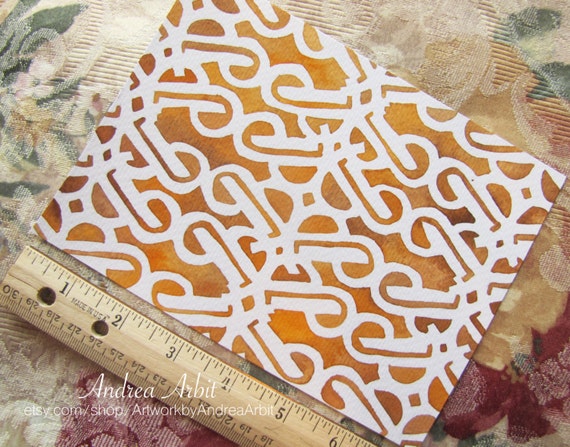
These paintings would look great displayed together, or mixed and matched with some of my other patterned watercolor paintings (available in 5"x7", as well as 4"x6" and 8"x10" sizes). All of these watercolors are original paintings - NOT prints! - and they each come with a white mat suitable for framing. My 5"x7" paintings have a 8"x10" Crescent mat and mat backing including in the Etsy price.

Shown with Patterns Virginia and Orchistrina in Red and Blue:


All of my artwork can be found through my Etsy store - Artwork by Andrea Arbit.

Monday, December 21, 2015

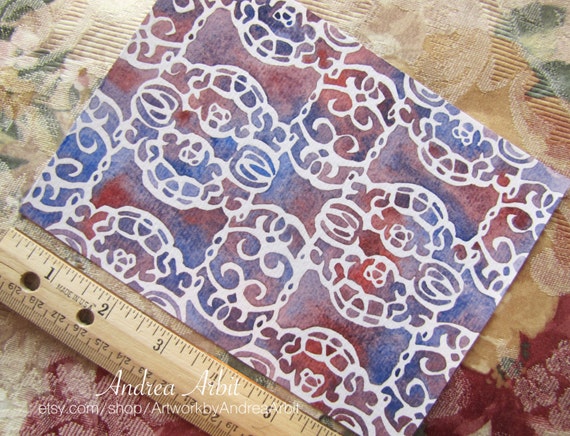
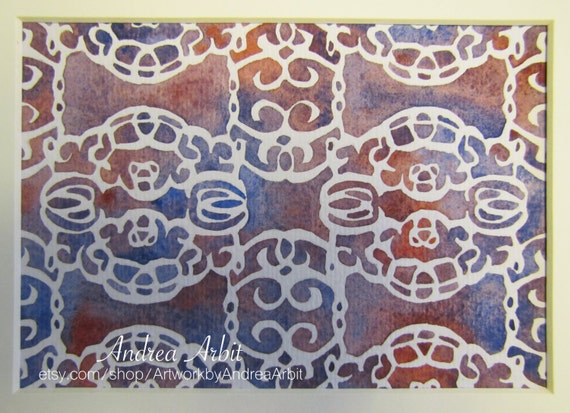
Virginia & Orchistrina: 5x7 Watercolors

These two 5"x7" watercolor paintings are available for purchase through my Etsy store.

First, some "in progress" photos of the painting process:


Pattern Virginia in progress - 5"x7" on watercolor paper
by Andrea Arbit

Pattern Virginia in progress - 5"x7" on watercolor paper
by Andrea Arbit
Shown with Pattern Orchistrina

Putting the finishing touches on Pattern Orchistrina - 5"x7" on watercolor paper
by Andrea Arbit

Pattern Orchistrina (top) and Pattern Virginia (bottom)
by Andrea Arbit

Pattern Orchistrina (left) and Pattern Virginia (right)
by Andrea Arbit
Shown with the two Daniel Smith watercolors pigments used 


-

Pattern Virginia is for sale here.


-

Pattern Orchistrina is for sale here.


-

These paintings would look great displayed together, or mixed and matched with some of my other patterned watercolor paintings (available in 5"x7", as well as 4"x6" and 8"x10" sizes). All of these watercolors are original paintings - NOT prints! - and they each come with a white mat suitable for framing. My 5"x7" paintings have a 8"x10" Crescent mat and mat backing including in the Etsy price.

Shown with Patterns Lacey and Aylin in Orange and Brown:


Shown with Patterns Flora and January in Blue and Green:


All of my artwork can be found through my Etsy store - Artwork by Andrea Arbit.

Sunday, December 20, 2015

Rose Stems Watercolor

Today I'd like to feature a watercolor I have for sale on Etsy. 15"x22" in size, this painting is half an entire sheet of Arches watercolor paper.

"Rose Stems" -


Here are some details of the painting:


This painting was done in 2012 and features an extreme closeup of the stems, leaves, and the bottoms of pink rose petals of a few flowers in a rose bouquet. I chose to focus on the stems and leaves rather than the typical flower viewpoint to showcase parts of the plant that are often overlooked because they aren't as "beautiful." I wanted to show that there is still beauty in the lines and arcs of the stems and leaves, even though we often neglect to notice.

As with most of my artwork, this painting was created by looking at a source photograph I took of a rose bouquet. I played up the contrast by darkening the shadows so that it seems as if the roses are stepping out of the darkness and into the light. Several times larger in size than a real rose would be, the scale of the painting also adds to the drama.

This is for sale through my Etsy store.


Saturday, December 19, 2015

Zurich, Switzerland

In 2008, I went on a study abroad trip to the Mediterranean. We spent most of the five weeks in Italy (three weeks) and Greece (two weeks), but we did spend a couple days in Zurich, Switzerland. I managed to have a layover in the Zurich airport during another trip, but those two instances remain the only time I've been to Switzerland - and neither was as long or intensive as I'd like.

On my dad's side, my family comes from Fraunfeld, Switzerland (many, many years ago - my ancestors came to America prior to the Revolutionary War), and it'd be cool to go back and explore that little town - not to mention the rest of the country that I didn't get a chance to see. It's definitely on my bucket list to return.

Anyway, here are some of my favorite pictures of Zurich. Because it was seven years ago, the picture quality isn't always great. I thought they were amazing at the time, but camera technology has, of course, advanced since, to the point where some of these look a little pixelated to me.

Fraumunster Church

Grossmunster Church

Lake Zurich

Lake Zurich

View of Zurich from the top of the Lindenhoff

View of Zurich from the top of the Lindenhoff