Showing posts with label business. Show all posts

Friday, January 4, 2019

Organizing Art Closets

In the spirit of celebrating the New Year, I thought I'd share a recent organization project I completed for my finished artwork, invitation samples, frames and mats, and shipping and packing supplies.

Over the summer, my husband and I worked on organizing our second floor. We needed to clear out the "future nursery" bedroom - which we'd been using as an office/random storage room for the last six years - before we could paint it (a task I wrote about in this previous blog post). This entailed organizing our other extra bedroom-cum-office into a space that could house both our desks and computers, which in turn necessitated reorganizing all of my "art stuff" - something I'd truthfully been meaning to do anyway, so that I knew where to easily find finished artworks when something sold on Etsy.

I use a room in our basement as my in-home studio space - but the humidity levels are uncontrollable down there, which makes me worry that any artwork down there will warp a bit with time. I do still store all of my art supplies and artwork-in-progress in my basement studio, but I prefer to at least move my finished pieces up to the second floor, where the art will be safer. So over the course of several weeks last summer, I came up with a way to better organize my finished artwork, my supplies for framing and matting finished artwork, and my supplies for shipping finished artwork, utilizing our main hall closet upstairs as well as part of the closet in our guest bedroom.

Our guest room is occupied right now by my sister-in-law (and many of her things), who is in the process of moving back to Michigan and buying furniture so she can live in her newly purchased house - so I didn't grab a photo of the whole guest room closet, since she's using the closet rod to hang up her clothes. But there are two small sections of the closet that my finished artwork is living in - my larger pieces (many of them framed) in the right corner, leaning against the wall; and my mid-sized framed pieces (the pattern watercolors I grouped and installed into multi-opening frames) stacked in protective boxes horizontally in the left corner, coupled with smaller unframed pieces stacked in a box on a shelf above them (not pictured).


Then in our main hallway closet, we installed some new shelves, leaving an opening in the middle so that the attic hatch can still be accessed when needed. The floor has our suitcases and carry-on bags for travel, but the eight shelves above that hold items I use for my "art business" or graphic design business - including bubble mailers and envelopes, air bubble bags, bubble wrap, and packing paper on the top four shelves, which I use for shipping Etsy purchases domestically and internationally.


The two lower shelves on the left side house extra unused frames and mats for future finished artwork, as well as clear bags and boxes for my art print notecards. The clear bags fit one notecard and envelope; I deliver these individually priced notecards to Paint Creek Center for the Arts to add to their art market inventory. For my sets of 4, 6 or 10 notecards, I use the clear boxes. They're laying flat in the cardboard box, but they easily pop into a box shape and then stay closed with a small clear circle sticker when I'm ready to use them.


On the right side of the closet, the lower two shelves hold a plastic bin of past invitation projects and sample invitations, as well as extra brochures and business cards (with plenty more room to spare, as you can see).


Inside the plastic bin, I sorted past projects into their individual clear zip-sleeves. You can see my own personal wedding stationery in the top large sleeve in this first picture here. Keeping them in these individual sleeves helps me keep all the parts of one design together (invitations, save the dates, thank you cards, menus, ceremony programs, table numbers, place cards, etc.) for easy access when I want to refer to a past project or show samples to a future client.


Beneath all the plastic sleeves are stacks of sample invitations I created in 2011, before I had any "real client" projects to show off instead - invitations and other custom stationery with fake names at fake venues for fake events. They show the potential of what could be done to any future clients who want to utilize pocket envelopes.


The hallway closet obviously still has a lot of room to grow - allowing me to easily find space for more shipping or framing materials as I need to, or perhaps add another plastic bin of invitation projects stacked on top of this first one, once I complete more projects.

It's very convenient to have all of my finished artwork upstairs, as well as my "Invites by Andrea" samples and shipping and packing supplies next to my iMac and printer, where I work on graphic design projects and print notecard sets when someone makes an Etsy purchase. It doesn't always look nice (hello dented cardboard boxes, being reused for the third or fourth time) but it's effective, and that's what matters. :)

Thursday, December 20, 2018

Turning 30

30 is a big one - simply because our society likes base ten and thinks of any age or anniversary ending in zero as "a big one," and not actually because anything TRULY changes. Still, I'm not above such sentimentality, so I've taken turning 30 as an excuse to reflect back on my 20s and make plans for my next decade.

Turns out when you look at an entire decade, it's easy to feel accomplished. You can do a LOT in ten years! My 20s were no exception; they were certainly my most accomplished decade yet, if not likely my most accomplished decade I'll ever have (depending on how you define such things). I experienced many milestones that are universally considered significant in my 20s - as many do - but I also had some great experiences that were meaningful on a more personal level, too. 

My 20s included*:
*a non-exhaustive list

SCHOOL & PROFESSIONAL ADVENTURES
  • Finishing my thesis and earning the thesis award
  • Graduating with highest honors from EMU and earning a double-concentration BFA in Graphic Design and Watercolor, with a minor in Art History
  • Working at EMU Campus Life
  • Working at Charming Charlie
  • Working as a substitute teacher
  • Working as a graphic designer at Temple Israel
  • Working as a freelance custom invitation designer for several weddings and bar/bat mitzvahs
  • Being flown to Denver to be interviewed for L'Art Erotique, a Quebec art TV show
  • Selling my artwork on Etsy and at Paint Creek Center for the Arts
  • Creating artwork commissions for family, friends, and strangers
  • Showing work at EMU art galleries, the Detroit Scarab Club, the Canton Village Theater, the Carr Center, and the Grosse Pointe War Memorial
TRAVEL ADVENTURES
  • Going on a Mediterranean cruise with my soon-to-be-husband's family
  • Honeymooning on the Greek islands of Santorini and Mykonos
  • Taking a road trip out west with friends
  • Nearly annual trips to Virginia Beach
  • Visiting Universal Resort's Harry Potter World in Florida
  • Spending eight days visiting museums and seeing plays in New York City
PERSONAL ADVENTURES
  • Getting engaged
  • Planning a wedding and getting married
  • Buying a house and moving to Rochester Hills
  • Completing lots of home improvement projects, including new bathrooms, patio, roof, siding, insulation, and windows
  • Adopting a puppy
  • Prioritizing self-care and self-esteem building
  • Being diagnosed with diabetes and starting insulin
  • Getting a tattoo
  • Getting pregnant
Of course, there were some not-so-great experiences with the great ones. Some of the items on the list above were challenging times (or led to challenging times) - but I wanted to include those moments as well, because they have helped shape me into the 30-year-old I am. Of course I wish I was never diagnosed with diabetes, or that my first pregnancy hadn't ended in miscarriage - but I can't change those things; I can only change how I feel about them. As for things I DID have some control over, even at the time - things like jobs I worked or decisions I made or paths I pursued: I don't tend to feel regret about my past; I don't tend to think of anything as a "mistake." Instead I romanticize challenges as Things I've Survived, focusing on what I gained or learned from them. If I had my 20s to do over again, I'd probably do it all over again in a very similar, if not identical, way. Sure, there are some things I wish I'd figured out earlier - like how to prioritize and take care of myself more - but I'm getting there. It's all part of my journey, which, being MY journey, I get to do at my own pace.

I started trying to make a list of things I'd like to accomplish in my 30s, but it's hard to think that far into the future. There are some obvious choices for things to put on the list - things I want immediately or soon, and hope to accomplish in the next few years. But then what goals should I make for the REST of my 30s, after I complete those? It's hard to imagine what my goals will be for the years I'm 37, 38, 39... 

But here are my immediate goals and priorities, the things I'm already working towards, thinking about, planning, setting the stage for, etc.:
  • Having artwork shown in more galleries/exhibitions
  • Getting a novel published
  • Getting pregnant again; having children
  • Doing "short vacations" around North America (e.g. returning to Stratford, Ontario for more theater experiences; finally seeing the Tulip Festival in Holland, Michigan; taking long weekend trips to interesting cities around the U.S. I haven't been to yet)
  • Doing more home improvements (e.g. adding built-ins to the living room and/or dining room; renovating the kitchen)
I'm sure I will add so much more to the list as my 30s wear on and I come up with more ideas, more things to pursue.

A lot of people fear turning 30 (or 40, or 50, or 60, or whatever they've decided is their arbitrary designation of Real Adulthood or Old Age), but I'm not one of those people. I'm not immune to the existential anxieties that come from starting a new decade; I just try to find other things to focus on instead. I find things to look forward to, things to dream about, goals to write down. And I also like to send presents into the future to myself - things that can help me get through potentially challenging times. When I was 23, I wrote myself a letter to open on my 30th birthday. I wrote another such letter when I was 26. I sealed these letters in envelopes and put them in my desk drawer; I see them every time I open that drawer to grab a stamp or address label. By now, I've totally forgotten what I wrote, and I'm really excited to read them all again. I am so anxious to see what stupid and wise things I wrote to myself, what questions I wanted to know, and what I was hoping to accomplish by 30 or feel at 30. It will be like rediscovering a lost corner of my mind, it will deepen and bolster my sense of self, and it will contribute to the narrative of my life I am continually writing and rewriting. As a result of those time-traveling letters, then, my primary emotion associated with turning 30 is not anxiety about growing older, but excited anticipation.

So naturally I'm doing it for when I turn 40 as well. Just today I wrote a letter and sealed it in an envelope: "Do not open until your 40th birthday - December 20, 2028!"

Saturday, June 11, 2016

Downtown Rochester Gallery Stroll - Recap

On Friday, June 3, I participated in the Paint Creek Center for the Arts Gallery Stroll in downtown Rochester, MI. It was a lot of fun displaying my colored pencil drawings, acrylic paintings, and watercolors in Smith Jeweler's downtown, and talking a bit to the people who came out.

I even had a few people express interest in purchasing - some who I directed toward my Etsy shop to see my larger watercolor paintings that I did not bring, or what downloadable coloring pages I had available, and one who even set up a time to come over to my studio to see all my work in person. If you're ever in the area and want to stop by to see my artwork, don't hesitate to let me know! I love inviting people to my home studio to look at what I'm working on or what I have available for sale.

Here are some photographs I took of my countertop displays from the Gallery Stroll event. Some were put up on Instagram and got a great response there!


Two of my 11x15" watercolors on display near the wine & snacks table: "Waterlilies" on top; "Splattered Dahlias" on the bottom

5"x7" colored pencil drawings were propped up on tabletop easels around the store. This one is "Radiant Dahlia."

Three recent 5"x7" colored pencil drawings - "Purple Rose Trio," "Norfolk Succulents" and "Pink Impatiens"

I also put several stacks of business cards around for anyone interested. This colored pencil drawing is "Detroit Riverwalk Petunias"

Some colored pencil drawings on display were on black paper; others, like these, were on tan or gray paper. Here we have "Rose with a Hint of Aqua" and "Roses with a Hint of Orange & Yellow"

"More Roses with a Hint of Orange & Yellow"

My 8"x10" colored pencil drawing "Rainbow Crassula"

Patterned watercolor paintings took up another table display. These were 8"x10" and 5"x7" in size.

More patterned watercolors

My recently finished six acrylic paintings (look for an upcoming blog post about those!) as well as a couple watercolor/colored pencil mixed media pieces with stamped leaves

A table of colored pencil drawings, as posted on Instagram

My recent "magic pencil" architecture drawings, with a floral watercolor painting ("When Fear Gets in the Way") in the background

Me posing with my artwork


As always, check out my Etsy shop to see more of my work! :)

Thursday, June 2, 2016

Tomorrow is the Pop Up Gallery Stroll in Downtown Rochester, Michigan!

In addition to the ongoing Scarab Club Exhibition, I will also be showing my artwork at the Downtown Rochester Gallery Stroll on Friday, June 3 (that's tomorrow)!

My location is Smith Jewelers (406 Main Street, Rochester, MI), and the event is from 5 - 8 pm.

I will have my newly completed series of six 8"x10" acrylic paintings on display, as well as several smaller pattern-themed watercolors (4"x6"-8"x10" in size), some slightly larger works (11"x15" watercolors) and my current selection of original floral colored pencil drawings (5"x7"-8"x10" in size).


Everything on display will also be for sale, plus I'll be hanging around the whole time if you would like to just stop by and chat about my artwork.

(For a preview of the artwork you can see at this event, visit my Etsy page!)

This is an event that is put on by the Paint Creek Center for the Arts in Rochester - where I currently have several watercolor paintings available for sale in their Art Market.

For one evening and one evening only, several downtown locations put up artists' work to showcase local artists and draw customers into their stores. These "pop-up galleries" will be in 12 different downtown businesses. Stop by any of the businesses to grab a postcard, then visit all of the pop-up galleries and get your postcard punched. Return it at the end of the night for a chance to win a $50 downtown Rochester gift card!

Plus, I've heard rumors that many locations will also have nibbles available - so you can snack while you check out all the cool art! ;)

For more information about the different locations showing artwork, visit the PCCA website here.

Friday, January 22, 2016

Studying Art in College

Art is one of those subjects that you really don't have to go to college to learn - because so much of it is just based on practice and doing some art experimentation every day, there's a lot you can do at home. And with the rising costs of college (at least here in the U.S.), it can start to seem a little futile to go spend all that money (and likely go into debt) to study something that will bring you little job prospects. (The term "starving artist" doesn't exist for nothing.)

Creative writing is another field like this. There's a big debate among contemporary literary writers about the importance of the MFA - some insist that a good MFA program is crucial to learning how to write good stories; others insist that it's not necessary.

I can certainly see both sides. I pursued a BFA in watercolor and graphic design at EMU, and can speak to the great experiences I had there that I wouldn't have gotten anywhere else. Of course, on the other hand, I'm currently writing a novel (without ever having pursued an MFA), and thus hope that I can find success with my writing without going through this step.

A lot of it depends, I think, on your financial situation. Given today's economic climate, I don't know if I'd recommend going into massive debt for either sort of degree. The financial pay out will likely not be worth it. On the other hand, if you have the resources to cover it (or most of it), there are definitely positive aspects to pursuing higher education in a field you love. The networking opportunities (if you take advantage of them) will likely be helpful, as well as opportunities for building up your CV.

My CV would be a lot shorter if I didn't have all my projects at EMU to showcase - from the yearly symposiums I talked about in recent posts to the senior art exhibitions EMU set up in its student and university galleries. Furthermore, because I wanted to graduate with "highest honors," I wrote a senior honors thesis - which has probably given me the most exposure of anything, due to its free availability online. I got to do that interview for the Montreal TV series "L'art Erotique" because the producers found and read my thesis online, and I have also been contacted by others (college students, fellow artists, fellow feminists, etc.) from around the world who have read it.

I was lucky enough to have scholarships to attend EMU, and to have family (my uncle in particular) kind enough to help pay for many of my remaining expenses, including room, board, textbooks, and art supplies. I did accumulate a small amount of debt - but it was small enough that I was able to pay it off soon after graduation (despite having no steady income). I realize this is not the case for everyone (which is why I am hesitant to say "Go to college! It's worth the cost!" without knowing others' specific situations). But I did give a lot of thought to my finances in choosing to attend EMU. I also got accepted into the University of Michigan - a school with a vastly greater reputation, but a higher tuition. It was difficult to turn that down - especially given that many of my high school friends were attending U of M. But U of M did not give me the amount of scholarships EMU was willing to (EMU gave me a full-tuition scholarship for four years), nor did they promise the same sorts of opportunities. At U of M, I would've been a small fish in a big pond. At Eastern, I was a big fish in a small pond. I was guaranteed opportunities to showcase my artwork at the symposiums every year. I chose EMU because I knew it would mean I could skate by with very little debt; if I had chosen U of M, that might've (probably would've been) a different picture.

I do have to say - one of the drawbacks of the amazing opportunities at EMU was that I got a little spoiled. So many things were offered to me without my having to put forth much effort to seek them that I had very little experience scouting opportunities after I graduated, and little confidence to try. College is a beautiful, protective bubble - which is great while you're there, because it gives you room to try new things, figure out what you really want to study, and begin to define who you are. But it's not so great after graduation, because then you're faced with a rude awakening when you enter the real world.

It was harder to stick with art once I didn't have assignments to complete, or quotas or deadlines to meet. I didn't have professors (or anyone else) expecting artistic output from me. It was also harder to find ideas, harder to find critique groups, and harder to find places to show my work or try to sell it. This is also true for writing. Though I didn't take advantage of many creative writing classes in college (I only took one), I'm sure if I'd prioritized it, there would have been greater opportunities to find in college than outside it. Critiques would be built into classes, and fellow writers would be easy to find and befriend. Outside that protective college bubble, none of that is the case anymore.

For awhile, I didn't really try to find places to show my art, or try to network much at all. I just didn't know what to do, or where to start. And so now there's this gap on my CV, between when I graduated in 2010 and when I started trying to put myself and my art out there more this past year. I wish I'd made more connections earlier, talking to local art councils or art galleries. But at least I'm doing it now.


Wednesday, January 13, 2016

Why Are You So Quiet?: A Modern Double Standard

It used to be that men had no qualms about verbally disparaging (or physically abusing) womenfolk if they spoke "out of turn," voiced opinions, or socialized - with other men, or even with each other. A well-behaved woman was meek and silent; like a child, she was allowed to speak only when spoken to, or only in certain places. The specific customs varied depending on location and historic era, but a popular one was that women could only speak at home, and that their voices were unwanted in public.

In the Bible (1 Corinthians 14:34-35), for instance, Paul said: "Women should remain silent in the churches. They are not allowed to speak, but must be in submission, as the law says. If they want to inquire about something, they should ask their own husbands at home; for it is disgraceful for a woman to speak in the church." (NIV)

In some religions or cultures even today, women are discouraged from speaking. An overly loud, gregarious, or social female is seen as dangerous, unruly, and impolite. Often, it is a seen as a reflection of other "moral failings," such as sexual promiscuity. A woman who speaks freely also probably has sex freely; a sociable woman is therefore a bitch and a whore.

This is an extreme opinion. It is not usually said so harshly - at least in modern America - and yet some of this idea remains and permeates our culture more subtly. Women do not generally fear physical abuse or being called a whore if they were to voice an opinion in public or interrupt a man - and yet it's statistically observable that in many gender-integrated public spheres (classrooms, business meetings), women are less likely to raise their hands or speak up. They're less likely to be called upon to speak up. And they're less likely to interrupt their male counterparts, compared to how often women are interrupted by men. Women don't participate in public in the same way that men do - because we've been conditioned not to. We've been raised that interrupting others is impolite.

The standards of "good behavior" are different for girls and boys - "boys will be boys," we're told, and so they are allowed physical and verbal freedoms like running through the house, making a mess, interrupting each other, and speaking loudly. I could see how someone might even try to argue that it is the boys who are discriminated against with such cultural allowances - because girls are seen as more capable of good, polite, restrained behavior, at a younger age, and so are given a higher standard. A boy is going to have a hard time believing he has a capacity for patience to wait his turn or to sit still in his seat if such behaviors are not modeled for him or encouraged, or if he is met with a laugh or a shrug or a "oh well, we tried" attitude when he missteps from this desired behavior. He comes to believe instead that he can't help fidgeting, that he can't help playing rowdy, that it's in his very nature to do so. When he gets away with interrupting others, he comes to believe that his words are important, that his opinions are important. He learns that a louder voice can be heard over a softer one, and if he speaks up, if he yells, if he interrupts, people will pay attention.

Similarly, girls often learn that their gender is predisposed to politeness, to empathy. They care about others, and so they care about listening to what others say, and they're willing to put others first. They will listen to someone else complete his or her thought before voicing a response. They have the capacity to wait their turn, to be patient - and indeed embody the positive qualities of their gender when they do so.

I've said it before, and I'll say it again - gender roles hurt both genders. Boys who are not loud or rambunctious might feel ashamed for not acting like a boy is supposed to; he may then purposefully act like the other boys to fit in. And girls who are too harsh or too loud or too opinionated or too rambunctious are called tomboys or bitches.

Of course, at a certain age, these prejudices about how boys act more or less fall away. Men are expected to conduct themselves with politeness and good behavior in college lecture halls and business meetings. While they may get away with interrupting colleagues on occasion, it would be noticeable (and potentially worthy of an HR write-up, or a chat with the boss) if he interrupted constantly, or acted particularly rudely when doing so.

Furthermore, while there is an expectation that women are quieter than men in professional settings, there are other public settings where women are expected to be more talkative than their male counterparts. When surrounded by other women, women are in fact "known" for their socializing. There are myriad jokes and (derogatory or derisive) phrases about their tendency to talk: gossiping, chatting, prattling, "clucking hens." In private, it's a well-known trope that wives "nag" their husbands, or just in general try to talk to their husbands about their day. (It's no wonder men are so reluctant - they spent all day at work getting a chance to talk, and now that they're home, they only want quiet, relaxing time.) At parties, women often engage both sexes in conversation, often doing the brunt work of moving a conversation forward, trying to engage those at the fringes of conversation, prompting others with questions about how they're doing, etc. If there is a person in your family who takes on the role of keeping track of everyone and updating the rest of the family on the goings-on of the others, chances are it's a woman - a mother, a grandmother, an aunt, a female cousin.

Even as girls, females are expected to be social - but only during "social times." I went to three different elementary schools growing up, and anytime I started at a new building and had to make new friends, I would go through a period of transition where I would be particularly quiet and shy. Recess monitors came up to me that first week to ask if something was wrong. Why wasn't I talking with or playing with the other girls? I was shamed for not talking, for not being social. Yet later, after I made friends, I was told off for being too social. For those who know me now, it may be hard to believe - but my third grade teacher in particular had so much trouble keeping me quiet during class that she regularly kept my assigned seat away from those of my other friends. I have the report card to prove it - she wrote in the comments section that I talked too much in class, when I wasn't supposed to.

To be fair, I don't think this is necessarily gendered - we all have to learn growing up when we are and aren't allowed to do things. There is a time and place for socializing; this is true for everyone, regardless of gender. Additionally, I think the lines become more blurred, more subtle as we age. Men and women don't talk or act so differently as adults as they do as children. We all interrupt each other sometimes, we all speak loudly sometimes, and we all stay silent sometimes. We find our own rhythm, and it's often more individual and based on where and how we feel comfortable, than about gender specifically. I'm very reserved with strangers, or in large groups, but I'm comfortable talking a lot with my husband and other close friends and family members.

Yet what I do think is gendered is the policing of one's decision of where and when and how to socialize or speak up. A man can speak as loud and ardently as he wants with few repercussions; a woman does not have the luxury of always speaking her mind unless she's comfortable with being called a bitch. A man can also be as quiet and reserved as he wishes with few repercussions - if a man isn't social, he's painted as the "strong, silent type" (stoic, unemotional, manly), or it's assumed that he has "better things to do"; he's not talkative because he's busy, he's tired, he's been working hard all day. A woman who isn't being social is seen as out of the ordinary. "Why aren't you talking?" "Is something wrong?" "Are you unhappy?"

I would be remiss here if I didn't make this discussion more intersectional. A white man probably gets away more with voicing opinions and speaking loudly than a black man does. When a white man interrupts, he's eager and has strong convictions; when a black man interrupts, he's being a bully or a thug, or his parents never taught him proper manners.

I speak from my own experience when I write of quiet women being called out on their quietness; it happens to me all the time. It's not always a question. ("What's wrong?" "Are you okay?" "Why are you so quiet?" "Do I intimidate you?") Sometimes it's a statement. ("You're so quiet." "You're so reserved." "You don't have to be scared to speak up.") But the questions are still there, still implied. It's wrong, it's weird for someone like me to be quiet or reserved. It must mean something's wrong. I must be unhappy, or uncomfortable, or scared. Maybe I'm just shy and thoughtful. Maybe I'm more comfortable with silence than with talking just to talk, with saying nothing just to fill space; maybe you're the one making me uncomfortable now that you've pointed out my "unnatural silence." I hate when people say these things. What? You think this is news to me? I know I'm quiet; you don't have to tell me.

I suspect that many people point out that I'm being quiet because they wish to draw me into conversation. Instead, it often makes me retreat more, because pointing it out makes me self-conscious about how quiet I was being, and I turn even quieter to reflect on how I was acting or how I am being perceived.

On the other hand, other people may point out that I'm being quiet because they are uncomfortable with my silence - and, for some reason, think their discomfort is my problem. What they're really saying is: "I didn't expect someone who looks like you to be quiet, and you not being how I expect you to be is making me uncomfortable - which is your problem, not mine, so please get around to fixing it and acting more like how I expect you to act, so that I can be comfortable again."

Many women complain that they are told to smile - by complete strangers. They are policed on their apparent happiness and told to smile - not because the stranger is trying to make the woman feel better or feel happier, but because the stranger is uncomfortable and wants the woman to smile, to pretend that she is happy or at ease, so that the stranger can feel secure. I don't think this has happened to me; I can't think of a time (other than when I was child throwing a pity party or a temper tantrum) when I was told by someone to smile, or act happy. I certainly can't think of a time that a stranger has approached me to harass me about not smiling. But I do hear a lot of comments about how quiet I am (from people close to me and strangers or near-strangers alike), and I think these are related. Maybe it's a level worse than "not smiling." I'm not smiling and I'm not talking, not engaging socially with the world, and it's the worst offense that people pick up and try to call me out on.

I wonder, too, if it's not because I'm blonde. I'm a 20-something blonde woman, and young women and blonde women are particularly stereotyped as social, as extroverted, as talkative, as friendly, as perky, as happy. We're supposed to all be cheerleaders, sorority girls. I'm sure Black and Hispanic women who are quiet, introverted, shy, or bookish have similar stories. Because these groups (like blondes) are particularly seen as loud, extroverted, and social, with a love of raucous parties and/or dramatic displays of emotion, a Black or Hispanic woman who does not embody the expected stereotype might hear similar "concerns." What's wrong? Why aren't you friendly? Why aren't you talking? Asian women on the other hand, are not expected to be loud or talkative, so they probably don't see similar surprise from strangers when they act quiet and reserved. I can't imagine an American woman in a hijab being told: "You're so reserved. I hardly ever hear you talk." But someone like me does.

Being a woman - even an American woman - is not a universal experience. Double standards are going to be slightly different among different groups of women. But as a young blonde white woman, I am exposed to these double standards:

- If I talk a lot, I'm seen as gossiping and idly pilfering time on silly chats; yet if I'm quiet and choose not to take advantage of opportunities for small talk, I must be unhappy or uncomfortable, because a blonde anti-social female is unnatural.

- If I'm too friendly, I'm a social butterfly, a ditz not to be taken seriously - or, even worse, a flirt, a whore, a slut, sexually promiscuous, "asking for it," begging for attention; yet if I'm not friendly enough - if I prefer solitude to parties, if I'm reluctant to smile or share personal stories - then I'm uptight, uncool, rigid, old-fashioned, I have a "stick up my ass" or my "panties in a wad," I'm a prude, a tight ass, a virgin, a bitch.

- If I interrupt someone else (especially a man, especially in a professional setting), I'm rude, I'm selfish, I'm impolite, I'm a bitch; yet if I never speak up, I'm seen as weak, scared, intimidated, and unwilling or unable to stand up for myself: a doormat, a wimp, a pussy.

- If, in the process of continuing or sparking a conversation, I ask too many "personal" questions, I'm a nag, I'm nosy, I'm a bitch; yet if I don't play this role and inquire how others are doing - or if someone else were to ask for an update on my life and I were to give what they consider a short, unrevealing answer - I'm a brat, I'm snotty, I'm not feminine or empathetic enough, I'm rude, I'm uptight, I'm a bitch.

Double standards are, by definition, a "damned if you do, damned if you don't" situation. Because there is no way to win, I've gravitated over the years to one end of the spectrum. I decided it was safer or more comfortable for me to be thought of as uptight or unfriendly than it was to be seen as sexually promiscuous or flirty, or seen as a frivolous, vapid, unintelligent ditz. I decided I'd rather be too quiet than too loud. I was okay with being thought of as snobby or rude; I told myself I was being mysterious and unknowable, that it was a virtue, that men get away with it all the time. And so I played up my introversion more. I policed myself, I made myself quieter. I think I was predisposed to some shyness and reserve, but I definitely became more shy, more reserved, and more quiet, starting in high school and college.

I've taken the Myers-Briggs personality test a few times, and though I've nearly always come out at INFJ (and always I, in particular), for many years the amount of "I" I was on the Extroverted-Introversion spectrum only increased. I went from being like upper-60s% Introverted to high-90s% Introverted from the beginning of high school to the end of college. No wonder I seemingly lost my ability to make new friends and started giving off more austere and less friendly first impressions.

I'm not trying to be rude or impolite, and I'd rather not be called a bitch (who would?) - but what hurts me more is when my reserve is interpreted as me being a doormat, or weak, or scared, or intimidated, or sad. Maybe because there's a bit of truth in there, and that's why those words hurt more. I don't see myself as rude (on the contrary, I think I'm one of the nicest people I know); but I do worry that I don't stand up for myself enough, that I don't think enough of myself. I do worry that I'm too sad, or too anxious, or too easily intimidated. Isn't the whole reason that I became more introverted because I was afraid? I was afraid of being seen as a ditz, as unintelligent, as flirtatious, as "asking for it." Being quiet seemed like it could be my protective shell.

So to all of those who have ever asked me "Why are you so quiet?" - feel free to pick your favorite answer from the ones provided below:

- Because being quiet often feels safer to me than the alternative.

- Because being quiet often feels more comfortable to me than the alternative.

- Because by now being quiet is a habit.

- Because I'm tired of being asked why I'm quiet.

- Because I'm just tired in general.

- Because I'm mysterious and unknowable. Because still waters run deep.

- Because you wouldn't ask me that question if I were a man and I'm silently protesting your belief that you have the right to police whether or not I engage you in conversation.

- Because I'm actually not paying attention to the conversation and have zoned out and am thinking about my novel or some other much more fascinating thing.

- I actually don't owe you an explanation at all. And I suspect you weren't really looking for a thoughtful response anyway - you just wanted to get me to say something in response.


Saturday, November 28, 2015

Small Business Saturday


It's "Small Business Saturday"! Might I make a couple quick suggestions?

1) If you live in the Metro-Detroit area, visit the Paint Creek Center for the Arts Holiday Art Market, which is open on Saturdays from 9 AM - 4 PM and is located at 407 Pine Street in downtown Rochester, Michigan.


I have several original Michigan watercolors (not prints!) for sale there at the moment - 8"x10" size with a white 11"x14" mat included for only $49. There are also lots of other holiday gift ideas - paintings, ceramic tiles, notebooks, blown glass ornaments, jewelry, scarves, etc. If you can't make it today, they're open every day (except Sunday) and the Holiday Art Market will be up until December 23. It's a great way to support local Michigan artists AND a local arts center.


2) If visiting the Holiday Art Market isn't an option, look to Etsy! Etsy itself may not qualify as a "small business" (I don't know what the cutoff is) but most of the money you spend on that site goes to the artists. You can even narrow your search and look for artists in your state or city specifically if you want to support local artists. And of course, I'd love it if you'd check out my Etsy store while you're there - etsy.com/shop/ArtworkbyAndreaArbit. I know I'll be searching for gifts for other people from other artists there - there are some amazing projects!

A quick sampling of some of my artwork:


"White Rose" 5x7 colored pencil drawing with 8x10 white mat ($39)

"Pattern Flora in Blue-Green" 5x7 watercolor painting with 8x10 white mat ($39)


"Debris" 22x30 watercolor painting ($399)

"Rainbow Crassula" 8x10 colored pencil drawing with 11x14 white mat ($59)

"Splattered Dahlia" 11x15 watercolor painting ($199)
"Flowering Herb" 5x7 colored pencil drawing with 8x10 white mat ($39)

Best of luck with all of your holiday shopping!

Thursday, September 24, 2015

Manuscript Editing

I've started following authors and agents and accounts with writing tips on Twitter and I'm so glad that I did.

I saw mention the other day that descriptions of body language during dialogue is a big no-no for fiction writing. You know - sighing, staring, blinking, frowning, fidgeting, shrugging, breathing, rubbing chins, crinkling foreheads, biting lips, and the like. It doesn't add anything meaningful and a lot of people tend to skim over such descriptions anyway, focusing instead on the actual words being said.

When I write dialogue, it bothers me to leave that stuff out - the page looks too sparse with short paragraphs, quotation marks, and 'he said's/'she said's. But when I read a book, I prefer conversations that are quick and easy to follow.

I need to be thinking about the potential reader now. After going through two drafts and getting input from friends on content, characterization, and flow, my story is fleshed out enough that I can focus on this type of editing. So I've been going through my manuscript recently and "killing my darlings," as they say - finding all the places where I made those newbie mistakes and hitting the "delete" button a lot.

I copy-pasted my entire manuscript into a free text analyzer online to see what words/phrases I overused. In addition to those dialogue issues, I found that I'd made several other offenses.

Here are some of them:

1) First-grade adjectives like good, bad, happy, sad, warm, cold, young, old, kind, beautiful, afraid, large, small.

I'm trying not to use these words at all - nor any of their synonyms. I should be able to convey that emotion without coming out and saying that the character feels sad (or disappointed, or pessimistic, or destitute, or somber, or whatever).

2) Colors that are found in the Crayola-eight.

Why say "brown" or "red" when molasses, henna, bronze, cinnamon, raw hamburger, merlot, and even "recycled paper bag" paint such a clearer picture?

3) Unspecific nouns like people, someone, anyting, everything.

There has to a better way to say these. What kind of people are we talking about? Adults? Students? Babies? Firefighters? Southerners? Millenials? Dog lovers? Chain smokers? Feminists? Specificity is so much more interesting.

4) First-grade verbs like go, come, leave, keep, hit, give, eat, cry, bring, put, show, work.

Go/Come/Leave --> Advance, Proceed, Progress, Approach, Decamp, Withdraw
Give --> Contribute, Deliver, Donate, Provide, Dispense, Endow, Issue
Show --> Demonstrate, Exhibit, Reveal
etc.

5) Cliches and other extraneous/uncreative phrases.

- All on ... own: "The skin repaired itself all on its own."
- Fall to / down on / brought to ... knees: "He fell to his knees"; "She was brought to her knees."
- The world: "When the world is crashing down"; "His favorite possession in the world."
- What to do: "I can show you what to do."
- No idea why / Don't know why: "I have no idea why he's suspicious." "Why is he suspicious?"
- With a press of a button
- On the other hand
- On behalf of
- Without thinking / Without asking
- Particularly / In fact / The truth is / Actually
- Really / Very / Quite / Only / Just / Still - These are there for emphasis and are completely unnecessary.

I'm trying not to feel bad that I made such Writing 101 mistakes - and forgot to check for them before starting to send out query letters. Instead, I'm choosing to focus on the things I have to be proud of - that I started following the right accounts, that I listened to good advice, that I'm willing to go through my manuscript again to look for these things, that I'm not daunted by the task and eager to put forth the effort.

And thankfully, I only sent out four queries so far, so I have plenty more names to send my improved manuscript to once I finish making these changes.


Wednesday, September 23, 2015

Do Mats Matter?

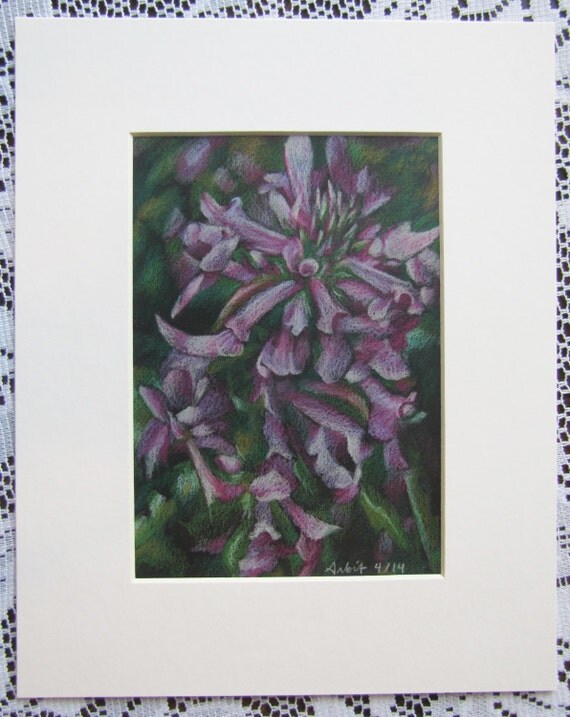
I recently spent a bit of money to purchase several standard white mats - 5x7 mats with 4x6 openings for artwork, 8x10 mats with 5x7 openings, and 11x14 mats with 8x10 openings - so that I can include a mat with the purchase of any artwork of those sizes in my Etsy store. I always had mats for my colored pencil drawings, but now I have them for all my small watercolor paintings as well.


3 - 4"x6" Watercolor Paintings by Andrea Arbit (displayed in 5"x7" white mats)
From left to right: Pattern Organza, Pattern Eloise, and Pattern Roya
All are available on Etsy for $29 each: etsy.com/shop/ArtworkbyAndreaArbit


I think the mats help my work look more professional, and give potential buyers an instant understanding of how they could display my artwork in their home (or business). I'm not sure how well that comes across in the photographs on Etsy, but in person the difference is obvious.


5"x7" Watercolor Painting by Andrea Arbit (displayed in 8"x10" white mat)
"Pattern Cobalt in Blue, Pink, and Purple"
Available on Etsy for $39: etsy.com/shop/ArtworkbyAndreaArbit

Especially because most of my small watercolors are edge-to-edge patterns, they look like they could be almost anything without a mat. Are they tiny rectangles for wrapping paper? Dinner placemats or tablecloths for dolls? Coasters? Really wide bookmarks? But as soon as I put a mat on it, it elevates it. Now, immediately, it's obvious that it is hung on the wall, or framed and propped on a bookshelf.


3 - 4"x6" Watercolor Paintings by Andrea Arbit (displayed in 5"x7" white mats)
From left to right: Pattern Valencia, Pattern Aurelia, and Pattern Victoria
All are available on Etsy for $29 each: etsy.com/shop/ArtworkbyAndreaArbit


Plus, the crisp white mats look so fantastically sleek and modern with the pattern watercolor paintings - many of which have a lot of white paper visible, either in the background or the "negative image" of the pattern, if it is the background that is painted.


2 - 5"x7" Watercolor Paintings by Andrea Arbit (displayed in 8"x10" white mats)
From left to right: Pattern Emmeline & Pattern Turina
All are available on Etsy for $39 each: etsy.com/shop/ArtworkbyAndreaArbit

I don't know if including mats will increase my sales on Etsy or not. But if I were to ever take these to an art fair or try to sell them in a store or have them on display in a gallery or library or theater lobby or wherever - anywhere that someone could see them in person - I think the mat does make a huge difference in presentation.

And in the meantime, matting each painting makes them a lot easier to store, and makes sure to keep them flat and protected. :)

Friday, September 4, 2015

What is Art? Am I an Artist?

Most people (and dictionary websites) agree that the definition of an artist is something along the lines of: "a person who produces works of art."

Of course, "art" itself is subjective - does it include only fine arts (like painting and sculpture), and traditional performing arts (like playing the flute and singing opera and dancing ballet and acting on stage)? Or do more modern productions also count as art (things like television shows and digital photographs and video game design)? Then there are those who believe there is (or should be) a distinction between "high art" and "commercial art" - that is, art created for art's sake, and art created to make a profit or promote a business. And still others who put value on art based on the artist's level of experience, or the apparent visual complexity of the piece; people who look at Picasso's fractured imagery or Rothko's color fields and derisively say "my three-year-old could paint that" - as if that is an obvious insult, as if a three-year-old is inherently incapable of producing art, or at least art that could be worth a monetary amount, art worthwhile enough to hang in a museum and copy onto t-shirts and fridge magnets. Is art only art if other people like it? If someone who has spent years of their life devoted to perfecting their craft created it? If the creator has a certain "artistic IQ"? If it was created as a labor of love?


Colored Pencil Drawing "Radiant Dahlia" - Detail


Art - as a field of business, as a field of study - is really weird. People discount artists who make art only as a hobby - calling them "Sunday Artists," calling their art "amateurish" or "folk art," not taking them seriously because they haven't invested in their talent, their interest, and taken any "real" art classes. But they also discount artists who do do those things - artists who dare to sell their work, or who seem to tailor their work toward styles and subjects that might sell. Artists are supposed to make art because they want to make art; they aren't supposed to actually make money at it. In what other business would it be okay to make that argument?

(Side note, because I work as a substitute teacher and my husband is a high school math teacher, and I see/hear these kinds of comments every day - I think the profession of teaching, actually, is starting to go in this direction, at least in some circles. Teachers who complain about low salaries, working without a contract, or ridiculous administration requirements are told time and again that they "knew what they were getting into" when they chose to be a teacher, that teachers are supposed to do what they do because they love kids, because they want to better society, because they want to help mold the next generation - and not, heaven forbid, because they want to make a living wage, or get good benefits, or have a job with guaranteed security from year to year. Are these things mutually exclusive? Does wanting to earn an appropriate amount of money for the time and effort you put into your job mean that you don't also enjoy some of the aspects of your work? No!)

While it may be true that people do not become teachers - or artists - to strike it rich, it is hardly fair to expect those in these professions to want to - or be able to - do their work only out of the goodness of their hearts or the passion of their souls. We can't live off the smiles of children or the exhilaration of putting paint to canvas. We also need real sustenance - food and medicine and houses to live in.


The house I live in


For awhile, I didn't think of myself as an artist simply because I hadn't made any money off of my art. Now that I've sold a few paintings and colored pencil drawings, now that I've made some money designing custom invitations, I focus on the amount of money I've made. I tell myself I'm still not a real artist - because I haven't made very much money, because I haven't had any of my work shown in a prestigious gallery, because I'm not famous and people don't know my name or recognize my work, because I can't make a living off of selling my artwork. But where in the dictionary definition of "artist" does it insist that it applies only to those who earn enough money making art to sustain the life they'd like to have? It's not fair to myself - or to other artists - to withhold that label from myself because I feel like I've yet to earn it. For one thing, who's to say I'd feel better if I made more money? There's that double standard that looms over my head, that tells me I'd also not be a real artist if I made too much money making art, that I don't want to be a "sell-out," that it would be better, more romantic, to be a "starving artist." It's hard to win for anyone trying to fill the "artist" role - because there are so many conflicting opinions on what it even means to be an artist, what it means to create art, what art can even look like - but it's especially hard for a perfectionist like me, someone who is always in her own head, worrying that she's falling short of her own impossible standards.

The truth is - I have credentials I can list. I have a BFA in graphic design and watercolor. I displayed paintings at EMU's galleries while I was a student there, and I earned scholarship money for my artwork. I wrote an honor's thesis that placed a specific series of my watercolors into a tradition of artists who used floral imagery as a symbol for female sexuality. I have sold artwork - to family and friends, but also to strangers. Recently, I've been interviewed for a Montreal-based TV show on that same thesis (more on that in a future post). I haven't made very much money, and I've only gotten limited exposure - but that's pretty good for someone who is only 26, someone who, I'll be honest, hasn't even tried that hard, especially since graduating in 2010. I don't think there are many who would argue that I haven't earned the right to call myself an artist if I want to self-identify with that term.

And yet, I still often feel like I'm not an artist, that I'm not good enough, that I'll never be good enough. Some of that is my self-esteem, I know. And some is the nature of being a professional artist, where there is that double standard that says making money and not making money are equally damnable. And some of that doubt that plagues me is no different than what many twenty-somethings feel in their first jobs. In fact, it's such a popular feeling - that feeling of fraudulence - that there's a name for it: Impostor Syndrome. It's also something that - and here's the feminist in me - affects women more than men, because women are more likely to believe that they are not smart, not strong, not able.

Looking at that Wikipedia article I linked to above, the fourth behavior that high-achieving women with "impostor syndrome" may exhibit especially resonates with me: Avoiding Displays of Confidence. I have often thought of my self-esteem as rather bipolar - I both believe that I can achieve success and deserve to achieve success (which is why I find myself not wanting to do things I think of as being "below my station," like a temporary job at a retail store, or even working as a substitute teacher), and that I am not good enough, not smart enough, not pretty enough, not nice enough, not confident enough, not whatever enough; that I will never achieve success, that I do not deserve to achieve success. But how can someone believe those two contradictory views, either simultaneously or immediately after the other, flitting back and forth between them? The answer is hidden in that paragraph about Avoiding Displays of Confidence.

I do, deep down, believe I have value. But, because I've been so conditioned to pretend that I do not believe this about myself (because I am young, because I am a woman, because I am an artist, because that is what I see other people doing to themselves), I avoid displaying this confidence. And because I have avoided displaying this confidence for so many years, I now often actually believe I do not have value after all. My thoughts have influenced my actions, which have in turn influenced my thoughts again. I saw other women letting men speak first, and so I did the same; I read books in which teenaged girls bemoaned their weight, their looks, and so I bemoaned mine; I learned of artists who were described as great either in spite of or even because of their mental illnesses, their drug addictions, their lifetimes of suffering, and started believing that to be a great artist, I too had to suffer. I started avoiding the spotlight. I stopped giving my ideas, my voice credence. I acted as I thought I should, and then I started believing that my actions stemmed from something intrinsic about me, rather than something I'd learned to do.


A super clear photograph from 2006, displaying my honors cords, my thespian cords, and my "art key" pin I was awarded for high school graduation day


So. What do I do about that?

Peggy McIntosh has a great article about this. She says:

"I think we need to take a double look at the phenomenon of feeling like a fraud... I suggest both that we mustn’t let the world make us feel like frauds, and that we must keep alive in ourselves that sense of fraudulence which sometimes overtakes us in public places. I suggest that on the one hand feeling like a fraud indicates that we have, deplorably, internalized value systems that said most people were incompetent and illegitimate in the spheres of power and public life and authority. But then on the other hand, I suggest that when we apologize in public, we are at some level making a deeply wise refusal to carry on the pretense of deserving and feeling good about roles in conventional and oppressive hierarchies. I think that most feelings of personal fraudulence need to be analyzed politically and deplored, especially feelings of fraudulence in lower caste people. But on the other hand, I also think that feeling like a fraud is conducive to social and political change, and that some forms of it should be applauded and developed in us, so that we become better at spotting fraudulence in, and trying to alter, the forms of our culture."

Maybe it's not a bad thing, that I question myself, that I sit around and wonder if I can really call myself an artist. After all, it's both an indication that I have high standards for myself and an indication that I believe the word doesn't mean much anyway - that the term artist is just a label, like any other label, and that it can basically mean whatever I - or anyone else - wants it to mean. By questioning the label, by questioning any label, I'm recognizing the "conventional and oppressive hierarchies" that are around us. I'm asking if any of us have the authority to decide what gives something - or someone - value.

And that's not a bad thing to ask.

So, am I an artist? I think so. Usually. Maybe. Yes.

Wednesday, September 2, 2015

Social Media

In the past, I have tried to have separate social media accounts for "business" and personal - so information about and pictures of the custom stationery designs I did through Invites by Andrea, and watercolor paintings or colored pencil illustrations I'd completed and was looking to sell, would be posted to or tweeted from a specific "Invites by Andrea" Facebook page or Twitter account. And all the other things I did that were not specifically art-related (like retweeting pictures of adorable puppies or awesome feminist zingers; or commenting on political articles my impassioned husband posted to his Facebook wall; or sharing photographs I'd taken on vacations), I did from my personal account.

Speaking of sharing photographs from travel, here's a pic of the view out the window when I went to Denver for an interview in May earlier this year :)


And maybe for some people that system works. And maybe that's the way it should work. Maybe I'm wrong now, in deciding to step away from that model. But (at the moment) I don't think so.

Artists and writers put their personalities into their work more than many other professionals do. When I create a story around a certain character, you better believe that protagonist has at least something in common with me, and has a story to tell that I relate to, or envy, or fantasize about, or actively fear. And when I paint or draw, even if it's something seemingly innocuous, like a teacup or a bouquet of flowers, you can bet the end result is influenced by my current mood, my past insecurities, my dreams for the future. It's not like I sit down and consciously decide I'm going to write a story about my high school friends, or create a watercolor emphasizing the pale lavender and bright yellow of my childhood bedroom decor, but personal details about me have a way of eking out of my pores and dripping into my work.

And if I can't keep myself out of my work, why should I keep myself out of the internet presence I'm putting out there about my work? And if I'm putting all of myself out there, why not use my real name, why not just use my personal accounts to also conduct my business? It's a hell of a lot easier for me to just manage one Facebook page, one Twitter handle, one Pinterest, than juggling multiples of each.

So here we are. This blog uses my real name (because that is the name I sign to my artwork). And if you want to find me on Twitter, or Instagram, or Pinterest, you can find me on my personal accounts: @afrownfe. (The name comes from the automatic email address I was given as a student at Eastern Michigan University - the first letter of my first name and the first seven letters of my maiden name.)

Twitter: https://twitter.com/afrownfe
Instagram: https://instagram.com/afrownfe/
Etsy: https://www.etsy.com/shop/ArtworkByAndreaArbit
Pinterest: https://www.pinterest.com/afrownfe/

Hope to see you soon on social media! :)