Showing posts with label expectations. Show all posts

Monday, June 1, 2020

5 Months of Motherhood

When I planned making a blog post after a few months of motherhood, I didn't expect it to be quite like this one. I envisioned a quick check-in where I would reflect back on how things have been going, and how much (or how little) art and writing I've been able to do compared to what I thought I'd be able to squeeze in, now that baby duty is taking up so much of my time. I counted on sleepless nights and long days, crying jags and learning curves, as I learned what my daughter needed from me - and when. But I didn't anticipate a global pandemic casting a shadow over these first several months, and how that might factor into my art and writing plans.

Michigan was under stay-at-home orders from mid-March until the end of May - 2.5 months altogether. Or, to put another way, half of my daughter's life to date (she turns 5 months old today). In many ways, our lives were not upended by this nearly as much as other people's lives were. We were already basically social distancing while our baby was young - limiting visitors to those who had received flu shots, and avoiding taking her out into any crowded public spaces. Furthermore, I was already planning to be home with her full time (ramping up to working from home part-time around the 3 month mark), and my husband was finishing the last bit of his master's degree by driving the one-hour commute to campus twice a week for classes. We had already restructured our lives to being home with the baby as much as possible - so when the pandemic altered our work and schooling, it was only "in our favor," letting us be available to our baby even more. My working from home was pushed back (with no events happening, there's little to design flyers and emails for, so I haven't been needed); and instead of going to Ann Arbor, my husband's classes moved online, letting him be home with us all 7 days a week. It's never a good time for tens of thousands of deaths - but from our standpoint, being granted even more time at home with our baby has actually been really nice.

Still, if you thought both of us being home all the time meant I had even more time to do all that art and writing I'd planned on doing, you'd be wrong. I did manage to complete two 8"x10" colored pencil drawings since our daughter was born - but these were both done in January/February, before the pandemic hit our state, and before the stay-at-home orders began. I've done very little art (and no writing) since.

It's not that I don't have time for it - after all, I managed to squeeze in some time in January/February. It's just that it hasn't been a priority for me lately. For one thing, as our daughter got a little older, and staying awake longer, it's been so fun and rewarding to spend that awake time with her every day, playing and taking pictures and videos of her. Even when my husband is available to watch her and I could take a break, I often choose not to, just because I don't want to leave her side. I'd probably feel this way regardless, but I'm guessing that the pandemic has exacerbated this feeling. When we can't leave the house, and no one but my husband and I can see her every day, it seems more important to witness and document all of those moments, and to share daily photos and videos with the grandparents, who haven't been able to visit during all this.

Another aspect is that I feel obligated to make the most of our time at home with her, since she's "missing out" on other experiences outside the home. It's true we wouldn't have been doing much with her yet anyway, but I had wanted to start taking her to storytimes at the library, or just to different stores to let her look around and experience new things. Now, if I want her to see something new, I have to try to find a corner of the house we haven't spent much time in yet. Expanding her horizons is not as "easy" as packing up the diaper bag and heading out somewhere (though that is never easy either, I'm sure!). We're lucky that she's still so small, and that so many things are new to her. I feel so bad for parents stuck at home with toddlers or kids, whose worlds had already opened up a little past their own houses, only to have this situation shrink their worlds smaller again. Our daughter doesn't yet know what she's missing out on.

Still, she isn't playing or feeding ALL the time - she's a baby, and she also naps. And that was when I'd planned to do any art or writing I wanted to do - while the baby was sleeping. But she isn't the best at napping during the day, and I suspect that's because she hasn't had to be. Instead of trying to make her conform to our schedules, we didn't really have a schedule anymore - and so were able to let her dictate her own routine however she wanted. Plus, we're both always home to hold her or pick her up if she cries, or rock her to sleep so she doesn't have to self-soothe. For a long time, she wouldn't nap in her crib at all - only in our arms (though she's starting to finally get a little better at that). Part of me wonders also if she'd be a better napper if her world was more "exciting" during the day. If we could pack her up and take her out somewhere, to show her a totally new place she hasn't seen before, would that extra bit of stimulation tire her out more, and help her sleep better?

She still often naps for only 30-45 minutes at a time, which means she ends up taking 4 short naps like that throughout the day. In the last month or so, I've been trying to rectify that - trying to encourage her to sleep longer, so she can also go longer between naps, so that we're only down to 3 naps a day. It's hard to get anything done when I only have a 30-minute window. It's not impossible, but it's harder. And when I don't have the motivation to prioritize squeezing in 30 minutes of work on a colored pencil drawing... it doesn't get done. I was able to do it early on, in January/February. But now it's harder. For the first part of the stay-at-home order, I was on my phone a LOT, reading news articles and keeping track of how many new cases and deaths there were - in the world, in the U.S., in Michigan, in our area. It burned me out a little - it left little time to work on any of my creative pursuits, and with little motivation to do so. I've also been doing more planning - planning dinners several days in advance, looking up new recipes to try to be creative with what ingredients we already have on hand in the pantry (and yes - hopping on the quarantine baking train), and those things also take up time I might otherwise spend on art or writing.

All of this is to say... I am very "behind" on the plans I'd made for creating art this year. All of the posts you've seen these past few months, and many of the ones I have scheduled for later in the year, are all things I made in 2019 (though the next two posts will be of the colored pencil drawings I did in January/February). I kind of figured I was overestimating how much time I'd have, and that I'd fall behind on my plans for 2020 artwork - but I didn't think it would be because of a pandemic. I hope to start making more art again in June, and getting back to my plans. Once our baby starts napping a little better (more consistently, for longer time spans, and actually IN her crib), that will help; so too will the grandparents being able to visit again, and the weather (finally!) getting nice enough to go out to parks, etc. I think that the more time we're able to spend with other people, or out of the house, the less pressure I'll feel to be present with her for ALL of the time spent at home with just us and her - I'll allow myself to sneak away and steal 30 minutes here or there for some art projects, knowing that I already did a lot to stimulate her at other times of day.

Or, you know, I'm just kidding myself again, and when I reevaluate in another few months, I'll find that I'm still super behind on all my artwork plans. :)

Friday, December 20, 2019

Turning 31

It's crazy to think I've already lived through the first year of my 30s! It was an eventful year, too - trying to get pregnant, and then *being* pregnant. One of my goals this year was to practice resilience (despite whatever challenges I might face) regarding my dream of becoming a mother, and to remain hopeful and make decisions based on those hopes (and not my fears or anxieties) - and I'm happy to say both that I achieved that goal, and that it turned out to be easier than I worried it might be. Thankfully, I faced most of my challenges when I was 29, and the universe gave me a bit of a break when I was 30. :)

I made non-pregnancy goals for myself as well, to try to ensure that I accomplished things I could be proud of, even if getting pregnant didn't pan out. I submitted my artwork to local exhibitions and created lots of new art (more on all that in a coming post). I read 60 books and watched 60 movies, TV series, or theater productions (more on all that in another coming post, too). I also continued to prioritize my mental health, answering "positive thinking" questions every day to remind myself what I'm looking forward to, what I have to be thankful for, and what matters to me most.

Naturally, I've made some goals for this coming year too - the year I'm 31. Some of the goals are much less (reading 20 books instead of 60, for instance), to try to account for all my time that will be taken up by taking care of my new baby and figuring out my transition to motherhood. Others represent a temporary shift in priorities from one of my passions to the other. This past year I really prioritized working on artwork, so that I would have plenty of recent drawings and watercolors to market, sell, make notecards of, and submit to local exhibitions, even if I didn't have time to create much more in 2020. Next year, my goal is to focus more on my writing instead, returning to various novels I've been writing on and off for the past several years. (I'm hoping it might be easier to sneak in pockets of writing or editing here and there between feedings and diaper changes and playing with my new baby, than it might be to settle down with some paints or colored pencils to produce even a small sized piece of artwork.)

I'm so excited to turn 31 - with a new baby due basically any day now, and one of my lifelong dreams therefore on the cusp of coming true, I just know 31 is going to be my best year yet. :)

Thursday, December 5, 2019

Expected Due Date Approaching

It's hard to believe it's already December!! Though my official due date is January 12, I think it's likely I'll be induced sooner (maybe even by the end of this month!) given my diabetes. It's crazy to think that this could be the month we meet our new baby and become parents!

And with that in mind, I wanted to take this opportunity to give you a heads up of what to expect on this blog over the next few months...

The last several weeks have been a whirlwind of preparation for me - not only have I been getting everything set up for Baby's arrival (stocking up on diapers and clothes, making sure the nursery is organized, attending childbirth and newborn care classes, finding a pediatrician, making a birthing plan, etc.); I've also been trying to get ahead on holiday art orders and my own holiday shopping and wrapping - just in case Baby shows up earlier than expected!

More than that, I've also been going full steam ahead on creating lots of new artwork - colored pencil drawings and watercolor paintings alike - and planning blog posts waaaay into the future, scheduling them in advance - all so that I can slow down whenever Baby shows up and know that I still have a backlog of recent artwork to scan, make notecards of, sell on Etsy, and post to social media about, even if I'm a bit busy with new parenthood to make any new art for the next several months.

Currently, I have blog posts fully scheduled through February 2020, so that I have time to adjust to my new life as a mother without worrying about blogging. You can look forward to some blog posts wrapping up the end of my artistic year this month, a couple patterned watercolor paintings to appear in blog posts in January - and in February, a look at the artwork I created for my nursery. I will (of course) post some updates about the end of my pregnancy (and how difficult it was to manage my diabetes in the third trimester) and my new baby, but don't expect these blog posts until March.

Friday, April 19, 2019

April 19

Today, April 19 is the due date my pregnancy would've had, if it had gone to term. When I miscarried back in September, this due date still felt very far away; I thought for sure I'd be pregnant again by the time April 19 finally rolled around, and be able to use that new pregnancy for solace. But trying to conceive after miscarriage has unfortunately turned into a longer journey than I anticipated, and as much as I wish I had good news to share right now - I don't.

There are days (this week in particular) when it's hard not to focus on the could've-beens, thinking about that alternate universe where my pregnancy went to term and I became a mother this week. There are other days when it's hard to remain optimistic about getting pregnant again. There are days when I feel like a failure. Though deep down I know it's not my fault and there's nothing else I could be doing right now to try to make this work, a part of me still feels like I'm letting everyone down (myself included) every month that my period shows up again. I feel like I'm depriving the people I care about from the happy ending they're waiting to hear.

In moments of defeatism, I have several quotes I turn to for inspiration. My favorite right now is this one, from Helen Keller: Remember, no effort that we make to attain something beautiful is ever lost.” I remind myself that even though we can't control the outcome, we can keep trying anyway... and then try to find hope in our resilience. Many days, this doesn't feel like enough. I want to do more than that, have control over more than that. But at least that's something.

These are not things we usually talk about. Worse, these are things that are hard to talk about. It's hard to post about disappointments and things that feel like personal failures - especially on social media platforms where most people only post their success stories, happy memories, and best selfies. It's hard to admit that there are things we can't earn just by wanting, just by trying. It's even hard to admit to wanting something at all, in a world that encourages us to blow out birthday candles and wish on shooting stars in silence. Not only is vulnerability hard - but, we are taught, also punishable. Share your deepest hopes and dreams aloud, and risk seeing them "jinxed" and never fulfilled.

But as hard as it is to be vulnerable - especially with something like this, where I'm still in the middle of the story, without any idea of how long I'll be here - it's also hard to be lonely. And going through a miscarriage and trying to conceive are often very lonely endeavors. When you're struggling with something privately, and your pain goes unrecognized, it's hard not to start feeling invisible. And that's a shitty thing to feel, on top of everything else.

Which is why I'm sharing all this. I debated with myself for a long time about whether or not to post anything, writing and rewriting several drafts over the last several days, weeks, months... Ultimately I decided that, at least this week, I want to be visible again (and I deserve to be). I want my experience to be acknowledged, my pain to be just a little less private - if only for a moment.

You can read more about my miscarriage here - the post I wrote last October 15 for Pregnancy Loss Remembrance Day.

Thursday, December 20, 2018

Turning 30

30 is a big one - simply because our society likes base ten and thinks of any age or anniversary ending in zero as "a big one," and not actually because anything TRULY changes. Still, I'm not above such sentimentality, so I've taken turning 30 as an excuse to reflect back on my 20s and make plans for my next decade.

Turns out when you look at an entire decade, it's easy to feel accomplished. You can do a LOT in ten years! My 20s were no exception; they were certainly my most accomplished decade yet, if not likely my most accomplished decade I'll ever have (depending on how you define such things). I experienced many milestones that are universally considered significant in my 20s - as many do - but I also had some great experiences that were meaningful on a more personal level, too. 

My 20s included*:
*a non-exhaustive list

SCHOOL & PROFESSIONAL ADVENTURES
  • Finishing my thesis and earning the thesis award
  • Graduating with highest honors from EMU and earning a double-concentration BFA in Graphic Design and Watercolor, with a minor in Art History
  • Working at EMU Campus Life
  • Working at Charming Charlie
  • Working as a substitute teacher
  • Working as a graphic designer at Temple Israel
  • Working as a freelance custom invitation designer for several weddings and bar/bat mitzvahs
  • Being flown to Denver to be interviewed for L'Art Erotique, a Quebec art TV show
  • Selling my artwork on Etsy and at Paint Creek Center for the Arts
  • Creating artwork commissions for family, friends, and strangers
  • Showing work at EMU art galleries, the Detroit Scarab Club, the Canton Village Theater, the Carr Center, and the Grosse Pointe War Memorial
TRAVEL ADVENTURES
  • Going on a Mediterranean cruise with my soon-to-be-husband's family
  • Honeymooning on the Greek islands of Santorini and Mykonos
  • Taking a road trip out west with friends
  • Nearly annual trips to Virginia Beach
  • Visiting Universal Resort's Harry Potter World in Florida
  • Spending eight days visiting museums and seeing plays in New York City
PERSONAL ADVENTURES
  • Getting engaged
  • Planning a wedding and getting married
  • Buying a house and moving to Rochester Hills
  • Completing lots of home improvement projects, including new bathrooms, patio, roof, siding, insulation, and windows
  • Adopting a puppy
  • Prioritizing self-care and self-esteem building
  • Being diagnosed with diabetes and starting insulin
  • Getting a tattoo
  • Getting pregnant
Of course, there were some not-so-great experiences with the great ones. Some of the items on the list above were challenging times (or led to challenging times) - but I wanted to include those moments as well, because they have helped shape me into the 30-year-old I am. Of course I wish I was never diagnosed with diabetes, or that my first pregnancy hadn't ended in miscarriage - but I can't change those things; I can only change how I feel about them. As for things I DID have some control over, even at the time - things like jobs I worked or decisions I made or paths I pursued: I don't tend to feel regret about my past; I don't tend to think of anything as a "mistake." Instead I romanticize challenges as Things I've Survived, focusing on what I gained or learned from them. If I had my 20s to do over again, I'd probably do it all over again in a very similar, if not identical, way. Sure, there are some things I wish I'd figured out earlier - like how to prioritize and take care of myself more - but I'm getting there. It's all part of my journey, which, being MY journey, I get to do at my own pace.

I started trying to make a list of things I'd like to accomplish in my 30s, but it's hard to think that far into the future. There are some obvious choices for things to put on the list - things I want immediately or soon, and hope to accomplish in the next few years. But then what goals should I make for the REST of my 30s, after I complete those? It's hard to imagine what my goals will be for the years I'm 37, 38, 39... 

But here are my immediate goals and priorities, the things I'm already working towards, thinking about, planning, setting the stage for, etc.:
  • Having artwork shown in more galleries/exhibitions
  • Getting a novel published
  • Getting pregnant again; having children
  • Doing "short vacations" around North America (e.g. returning to Stratford, Ontario for more theater experiences; finally seeing the Tulip Festival in Holland, Michigan; taking long weekend trips to interesting cities around the U.S. I haven't been to yet)
  • Doing more home improvements (e.g. adding built-ins to the living room and/or dining room; renovating the kitchen)
I'm sure I will add so much more to the list as my 30s wear on and I come up with more ideas, more things to pursue.

A lot of people fear turning 30 (or 40, or 50, or 60, or whatever they've decided is their arbitrary designation of Real Adulthood or Old Age), but I'm not one of those people. I'm not immune to the existential anxieties that come from starting a new decade; I just try to find other things to focus on instead. I find things to look forward to, things to dream about, goals to write down. And I also like to send presents into the future to myself - things that can help me get through potentially challenging times. When I was 23, I wrote myself a letter to open on my 30th birthday. I wrote another such letter when I was 26. I sealed these letters in envelopes and put them in my desk drawer; I see them every time I open that drawer to grab a stamp or address label. By now, I've totally forgotten what I wrote, and I'm really excited to read them all again. I am so anxious to see what stupid and wise things I wrote to myself, what questions I wanted to know, and what I was hoping to accomplish by 30 or feel at 30. It will be like rediscovering a lost corner of my mind, it will deepen and bolster my sense of self, and it will contribute to the narrative of my life I am continually writing and rewriting. As a result of those time-traveling letters, then, my primary emotion associated with turning 30 is not anxiety about growing older, but excited anticipation.

So naturally I'm doing it for when I turn 40 as well. Just today I wrote a letter and sealed it in an envelope: "Do not open until your 40th birthday - December 20, 2028!"

Monday, October 15, 2018

Missed Miscarriage


Trigger warning: Discussion of miscarriage, including emotional grief and graphic descriptions of the physical process

***


Today, October 15, is Pregnancy and Infant Loss Remembrance Day.

I wanted to make a happy social media announcement this week - the week that would have marked the beginning of my second trimester of pregnancy. Instead, I'm making a different sort of post.

At my eight-week ultrasound at the beginning of September, I learned that I was having a missed miscarriage. Though my body had yet to get the memo, the ultrasound showed that everything was measuring only six weeks and five days along, with no detectable heartbeat. I had no symptoms of miscarriage, and over the next few days, while I researched what might happen next and talked to my doctors, I would still never have any symptoms.

And so I was faced with a series of awful options:
1. Anxiously wait several more days (or weeks) for my body to start naturally expelling what the medical field calls "the products of conception"
2. Take medication to induce uterine contractions to speed along the process
3. Get a D&C - a surgical dilation of the cervix and removal of the uterine contents by suction

I read several accounts online of women who had chosen options 1 or 2 (or been forced to endure them by nature, their doctors, or financial limitations), and knew from their stories that the experience was often physically and emotionally traumatic. For one thing, it would almost certainly include some degree of labor-like pains as I “birthed” into the toilet the blood clots and tissue of what could’ve, in an alternate universe, become an April baby and its placenta. Furthermore, there was a chance I could end up in the ER if I started hemorrhaging or fainting due to blood loss - or that I wouldn’t be able to pass everything naturally anyway, and still end up requiring a D&C to prevent infection. It all sounded horrific, from both a physical and emotional standpoint, and more than anything, I didn’t want to do it.

Option 3 carried its own risks - as any surgical procedure does - but on the whole it seemed the “least awful” to me. At least a D&C would get the physical process over with faster, less painfully, and on my own terms - something I longed for in a situation where I felt like I had so little control about what was happening. (It is worth noting that my husband has health insurance through his work which covered the majority of my D&C, and we have the means to cover what’s likely to be our $1000-1400 out-of-pocket expense. I didn’t have to factor in the financial cost when making my decision - a privilege that I wish every person had when weighing important options about their health.)

I told my doctors I wanted a D&C, and they quickly scheduled the procedure for me, on the day that would’ve-could’ve-should’ve been one day shy of a nine-week pregnancy. My first pregnancy was thus completed in the span of exactly two months, from July 13 to September 13.


Left: At my 6-week ultrasound on August 24 we were told that everything was measuring slightly behind, at maybe 5 weeks 5 days - but that it was common for dating to be off by a day or two that early in the pregnancy, especially if there was a chance it implanted later than expected. The ultrasound tech insisted that she could see a fluttering signaling the beginnings of a heartbeat, and while it was "still too weak" to officially measure the heart rate, she remained optimistic that it was just because it was so early that a day or two can make a huge difference in the embryo's development. We had no reason to believe I would have a miscarriage, and the ultrasound tech spent time showing us which parts were the gestation sac, yolk sac, and fetal pole.

Right: In the two weeks between my early ultrasounds, I watched some of my early pregnancy symptoms lessen or disappear - while other pregnancy symptoms ramped up. Part of me worried that I might be having a missed miscarriage, but as this was my first pregnancy and I had nothing to compare it to, I had no REAL reason to believe that these changes meant anything. Still, I was much more nervous going in to my 8-week appointment on September 7 - and not just because I'd told more people about the pregnancy in the interim and was getting rather attached to the idea of being pregnant and becoming a mom. The ultrasound tech at my 8-week appointment was much quieter, making her measurements quickly and silently. Before she said the words, I already knew. She handed me tissues while I cried. After a moment, she said: "This may seem weird, but would you like a picture?" I didn't think it was weird. I was grateful. And even though I already had one from my 6-week ultrasound, I said yes, I wanted another one.


Pregnancy loss is a grief that is hard to reconcile, with very few answers to explain why, and very few memories or pictures to draw on for comfort. And all of these feelings are compounded by changes in hormones, which come crashing back to pre-pregnancy levels after weeks of steadily rising. I am not often a crier about Big Things - I tend to grieve more silently - but there were days before and after my D&C when I was surprised at how emotional I felt.

There is so much to process - not just the loss of someone you'd never met but somehow started to bond with anyway, or even the loss of potential: what that baby could've been, what our family could have been. There's the fear of what will happen physically: the potential pain and loss of blood if the miscarriage should start to happen naturally, the possible complications of a surgical procedure, and anxieties about how long physical recovery will take. There's the feeling of being cheated out of a joyful pregnancy and birth and sharing that happiness and excitement with the world - and the awkwardness and grief of telling family, friends, and coworkers that you miscarried, many of whom never even knew you were pregnant. There's the loss of the sense of pride and accomplishment in carrying a child to term, giving birth, and becoming a mother. There's envy towards women to whom pregnancy seems to come easily, and anger that I was not one of them.

There's even difficulty readjusting back to a state of non-pregnancy: planning meals for the week that suddenly aren’t restricted by pregnancy diet requirements, re-adopting my pre-pregnancy blood glucose targets, unsubscribing from weekly pregnancy update emails (and trying to ignore all the targeted pregnancy-related ads on my Facebook feed that I couldn’t unsubscribe to), and packing up maternity clothes I purchased prematurely and never got to wear. These mundane tasks might seem like nothing - but they’re not unlike the tying up of loose ends that many mourners go through when a loved one dies: sorting through their belongings, stopping mail, contacting other people or businesses to let them know of the loss, and paying off medical bills.

There's also resentment stemming from never knowing the cause of my pregnancy loss. I never truly blamed myself, but many women do. I’d read so many articles and statistics even before I’d been through my own that I knew miscarriages were caused by unpredictable chromosomal abnormalities; furthermore, I was fortunate enough to hear from many people (including my very kind doctors) that it was nothing I did or didn't do, nothing I ate or drank, and not even anything related to my diabetes, which is generally very well controlled (and a discussion for another time). But that didn’t stop me from WANTING to find a way to hold myself culpable - because then at least there would be a reason it happened, and something I could do differently to prevent a recurrence. Without that, I'm left with the unsatisfactory truth that life and death are unknowable and uncontrollable; I'm left with a loss of innocence for potential future pregnancies and the fear that this could all happen again.

In my particular case, preparing for my D&C, there was also a longing for my pregnancy to "not be taken away" from me, or (to put in other words) for me to somehow find a way to both get the physical process over with as quickly and painlessly as possible while also not being "complicit" in having my pregnancy terminated. Of course, it was already ended, whether I was "complicit" in it or not - my hCG hormone levels were dropping, the “products of conception” were starting to break apart, and my pregnancy symptoms had been disappearing or gone for days if not weeks. But despite all the evidence from blood draws and ultrasound screens, it was still hard to believe that it was over - and hard not to ask the doctors to triple and quadruple check for signs of potential viability.

I'm sure that initial disbelief affects all women who go through a pregnancy loss - denial is one of the stages of grief, after all, and there are undoubtedly women who pass golf-ball sized clots or survive unimaginable hemorrhaging and pain and still hold out hope for the continuation of their pregnancy - but I also felt like it was a hurdle somewhat harder to cross when I wasn't experiencing any of the telltale bleeding or cramping symptoms. Not only was I upset that my body was unable to maintain the pregnancy, I was also angry that it couldn't seem to "miscarry properly" either, leaving me stuck in a horrible limbo.

Getting a D&C was not a decision I settled on lightly, but one I ultimately chose for my mental and physical health. I hoped to at least avoid the worst of the pain and bleeding - and I'm sure that I did, compared to what it could've been - but in doing so, I forgot that getting a D&C was hardly nothing. My post-op paperwork told me that bleeding for up to six weeks after the D&C was not uncommon (mine lasted on and off for about two weeks), and recommended that I take 600 mg of Motrin every six hours as needed for pain. To be sure, there were days when I had very little cramping or bleeding, and no need for Motrin. But there were a few days, more than I had anticipated, where the opposite was the case and I needed that pain medication to get through the day. A D&C is still a miscarriage.

It took three and a half weeks (and seven pokes for blood draws at the doctor's office) for my hCG hormone to get completely back to non-pregnant levels after my D&C, but thankfully only about one week to start to feel like my body was my own again - that I could count on it to look the way I expected it to look, feel the way I expected it to feel, and behave the way I expected it to behave. Even though I'd been early in my pregnancy, my body had still gone through several changes: by 8 weeks, for instance, the uterus has already grown to twice its typical size - which isn't really visible from the outside, but feels and looks very different to the person it's happening to, as things get more crowded in their abdomen. It was such a relief, then, when I started to feel like "myself" again; after weeks of emotional and physical turmoil, it was a comfort to be back in familiar territory. But that relief was also colored with guilt, shame, and anxiety that were hard to dispel. What if my relief meant I hadn't wanted to be pregnant enough, or that I wasn't ready to be pregnant again?

I tried to tell myself that if I had carried this pregnancy to term, no one would fault me for my happiness at seeing my body return back to normalcy - and indeed, that no one would likely fault me for feeling this way after this ordeal, either, and that I was once again being my own harshest critic. I also reminded myself that pregnancy can be difficult to endure even when it’s at its easiest and least complicated - and that I would never accuse another person who hated or feared the physical changes of pregnancy of not loving their child or looking forward to parenthood enough. But it’s hard to rationalize your emotions away, and what ultimately helped me feel better (about this and so many other aspects of the healing process) was confirmation from others going through similar situations that they felt the same way I did - that it was normal to feel conflicting emotions even over things as seemingly innocuous as the speed/ease of digestion, the frequency of urination, or the shape of my stomach in my favorite shirts.

When I was pregnant, I thought about being pregnant nearly constantly - from worries about when nausea might strike and how that might affect how much insulin I should take, to the excitement of planning the paint colors for the nursery. When I learned of my missed miscarriage and all those pregnancy thoughts vanished, I filled the vacuum they left behind with other anxieties: Was that twinge a symptom of impending miscarriage? Will I “make it” to the date of my scheduled D&C? Is it typical to have these cramps and on-and-off bleeding after the procedure? When will I feel normal again? As more weeks passed and my body healed, it was hard to stop obsessing. I wasn’t sure if I should toss aside all my memories of what I’d been through or if I should continue to dwell on them, to mourn, to read online articles about grief.

And if I do let all the thoughts about my pregnancy loss fall away - what should I think about instead, to fill that new vacuum? Is it too soon to start checking my temperature and peeing on sticks in an effort to chart what would likely be an irregular first couple of menstrual and ovulation cycles? Is it unhealthy to keep switching out one obsession for the next - pregnancy for miscarriage, miscarriage for trying to conceive again?

Once enough time has passed, it all starts to feel like it never really happened. It feels weird to say “when I was pregnant” when I have nothing to show for it but a couple grainy sonograms and weeks-old, already-fading memories of early pregnancy symptoms. It feels like something that happened to someone else. That, too, is painful. This was my first and (so far) only pregnancy; this was the closest I ever came to having a child and becoming a mother. Until I get pregnant again, these memories are all I have. And I don’t want to forget them.

Statistically speaking, at least 1 in 4 pregnancies end in loss - and yet, we hardly ever talk about it. It is remarkable, when you start talking aloud about your miscarriage, how many people come back with “me too” - people who you would never know had a miscarriage until you mention yours. To quote Angela Garbes in her amazing book Like a Mother: A Feminist Journey through the Science and Culture of Pregnancy: "Many people are uncomfortable talking about pregnancy loss, so they don't. And it's no wonder - any meaningful discussion of it requires acknowledging death, blood, tears, and items being expelled from the vagina." But just because it's difficult doesn't mean it should continue to be taboo.

I'm choosing to share my story publicly because I want other women who have experienced pregnancy loss to know that they are not alone. Pregnancy loss can feel very isolating - but it doesn't have to be. I am so grateful to everyone who showed me support in the days before and after my miscarriage, including family, friends, coworkers and strangers on internet forums.

I’m also choosing to share my story for my own sake. There is a lot of societal pressure to bury this topic, presumably to save other people a few minutes of feeling uncomfortable or sad, and I often feared that no one wanted to hear any of this - let alone hear me “still” talking about it, weeks later. What can I do, then, when talking or writing helps me, but I feel like I’m not allowed to talk/write about it? Share my thoughts anyway, I suppose, without waiting for other people to give me permission to do so. I still want that outpouring of love and support that I would’ve gotten if I’d had happier news to share today; I don’t deserve it less just because my pregnancy is over too early.

To again quote Angela Garbes: "When it comes to pregnancy loss, there is no script to follow. To help a woman navigate it, you don't need to offer advice or perspective. It is enough to show up, however awkwardly, and be there, to listen." Writing has always been a form of therapy for me. Thank you for listening.

Thursday, May 4, 2017

No New Notecard Sets

I really wanted to make some notecard sets of my "30 Days" and "28 Years" colored pencil drawings, to sell on Etsy and at the Paint Creek Center for the Arts in Rochester, Michigan (where many notecard prints of other colored pencil drawings and paintings I've completed are already for sale). My vision was to have a notecard of the entire drawing and then several close-up details of the flowers, available in box sets. I figured it wouldn't be too hard, since I've done notecards like this before. Unfortunately, I was wrong.

The problem is the size of the drawings. Each one is 22"x30", which is too large to scan all at once on the size scanner I have at home (which can only go up to 11"x17" size). I have made notecards of watercolors this size before, but I didn't scan the artwork - I took a picture of it with a camera. When I tried to do this these drawings, however, the pictures were not a great quality for printing. For starters, the only camera I have right now is the one on my cell phone. Usually my cell phone takes pretty good pictures, but because of the texture of the colored pencil and the detail in these drawings, I just couldn't get one I was happy with that didn't look either blurry or pixelated when I printed them out. I also tried to scan the artwork in four different 11x15 quadrants (top-right, top-left, bottom-right, and bottom-left), so I could at least get some good detail shots - but this also didn't work out as I'd hoped. I don't know if the problem is the colored pencil itself, the texture of the paper, or the fixative I sprayed over the final drawings, to prevent the colored pencil from rubbing off as I move it around and store it - but even the scans had trouble getting good quality images. Everything ended up out of focus, or still ended up pixelated when I printed them out.

I spent about two days on this. The first day, taking photos with my cell phone and trying to make those work. Then, more recently, I spent another day scanning them, cropping them down to the detail shots I wanted to use, and printing some out. Both times, I ended up wasting some of my notecard paper on images that were too pixelated to sell. It was more than a little frustrating.

I don't want to say I'm giving up, because I still would like to have notecard sets of those two drawings available sometime in the future, as well as for my "Race Bouquet (Stronger Together)" drawing, and the other drawings I'll be doing in that series - but I am putting this on the back burner for now. I would rather spend my time right now making artwork than figuring out how to make my own prints of them; once I finish my "stronger together" series I should have more time to revisit this problem and think of a better solution. Maybe the answer is getting a better digital camera, and getting some good photos of the entire drawing (and completely scraping the idea of also doing "detail" shots on notecards). Or maybe the answer is to send my artwork out somewhere to have it professionally scanned and made into high-quality prints (higher quality than I can print at home anyway). Maybe there's even some middle ground there, where I can find a printing service that has a scanbed large enough for 22"x30" paper, which can scan my artwork for me.


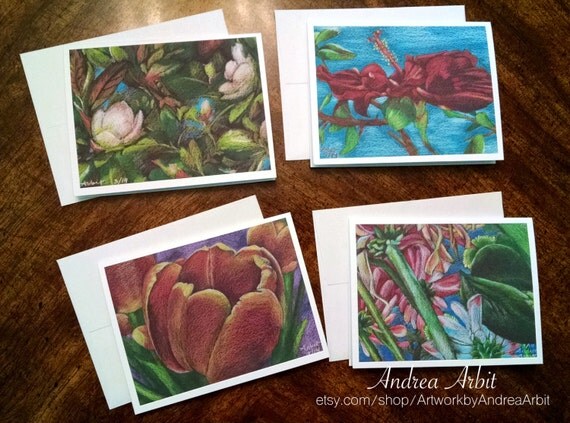
In any case, as much as I would like to say I have some new designs available as notecard sets, that's simply not the truth. I do, however, have many other colored pencil drawings, acrylic paintings, and watercolors available as notecard art prints. I recently restocked my notecards at PCCA in Rochester, MI, and I also have all notecards available through my Etsy shop. These make great gifts (and Mother's Day is just around the corner)!

Tuesday, July 19, 2016

Millennials Living at Home

Listening to the radio on the way to work recently, I heard the morning deejays bring up the topic of so-called "Millennials" (people born between about 1980-2000, depending on who you ask) still living in their parents' homes. The conversation was specifically about older Millennials (those who are between 25-35 years old), an age group which currently is living with their parents at a greater rate than any 25-35 year old group in history, since the U.S. census began collecting data in the late 1800s.

The conversation followed a pretty predictable pattern. The DJs, who themselves are probably just too old to be considered Millennials themselves, lamented the sorry state of such a world. They cited two reasons for the increased number - the economic downturn/increased student debt dilemma, and the fact that people are getting married later - but seemed to think that such reasons were 1) only "excuses," 2) temporary issues that would eventually fix themselves or cease to be problems/influences on young people's life decisions, and/or 3) not "good enough" to justify the "horror" of living at home. One DJ in particular started pulling the "Entitlement Generation" nonsense, citing his younger brother, who lived at home with his parents despite earning a six-figure salary. Clearly, financial problems were not a factor in all cases; you know those entitled Millennials - they never learned to grow up/they just want everyone else to take care of them/they're dependent and whiny and want the world handed to them on a silver platter.

Then - also predictably - came the calls from listeners. Millennial after Millennial who tried to explain their situation to the DJs: Outrageous student loans. Mental illness. Few job prospects. The DJs "sympathized" with them when they called - but their general thesis remained the same: it is a travesty to be living at home after age 25, even if someone has solid reasons for making such a choice. In a perfect world, everyone would go off to college at 18, "find themselves"/become self-confident/self-actualized, become immediately socially, emotionally, and financially independent, and never have to live at home again. They would move into their own place after graduating college, and start their "own" lives. They would be perfectly happy and well-adjusted, even far away from everyone else they've ever known.

I'm sorry, but that's bullshit.

First of all, Millennials are no more entitled than any other generation, and the trope of "this newest generation reaching adulthood is the worst one we've ever seen" is literally repeated every single time the previous generation spawns the next one. For that matter, "Millennials" and generational boundaries in general aren't actually a real thing. They're just societal stereotypes used for click-bait, created to sell books. People between the ages of 25-35 are about as similar to each other as they are to people of any other age group. It's like we're all individuals or something.

Second of all, everyone takes their own path. Some people are more independent and are probably ready to "live on their own" at fifteen; others take a lot longer to feel comfortable being alone, or never get there. Some people get along great with their families and want to stay near them; others may also get along great with their families but yearn for distance from their relatives and the town in which they grew up. Some people are lucky enough to be interested in a field that has lots of job openings and high salaries; others choose to study other subjects, pursue other degrees, or pursue no degrees at all.

One of these paths is not better than the other; they're just different.

To say that there is a "right" way to be living life is not only ridiculous, but insensitive/borderline shaming to the people who choose a different way. Some Millennials live at home because they can't pay rent yet for a place of their own; some because they rely on the social support of their families; and yet others for other reasons. Some probably don't have any reasons at all; having no particular reason to move out, they simply never did.

What's so wrong with that??

Why do we insist on shaming adults who "still" live at home? There is implicit and explicit judgment in that question: it asks, "What went wrong in your life/What did you do wrong, that you would be living in the house you grew up in?"

Why don't we instead ask, to the Millennials who do move out, "What went wrong in your life/What is wrong with you, that you can't get along with your parents, or that you feel entitled to self-confidence or independence or an entire apartment all to yourself? Isn't that wasteful?"

There is a stigma attached to relying on other people; in a different era or a different area of the world there could just as easily be a stigma attached to NOT relying on other people and thinking that one can live life alone. There is nothing inherently wrong with living with your family, no matter what age you are. There just happens to be a social stigma attached to it if you are of a certain age.

Humans are social creatures. It is not a bad thing to want to live with other people, to want to stay close to your family, to rely on others for help, or to stay around to help others.

I am a 27-year-old Millennial. I don't live in the house I grew up in. But if I didn't have my husband, I probably would. I did not graduate with a job. It took me years to find ways to make any sort of steady income; for a long time I relied on my husband's salary and contributed only sporadically to our finances - as is often the way for those of us devoted to creative fields. Without my husband, there is no way I could afford my own place, let alone the nice house my husband and I live in. I was lucky enough to find the person I wanted to marry while I was still in college. We got engaged before we graduated. We made plans to move in together and start our life together right after college - as many past generations did. If I had not been a statistical anomaly for my generation - getting engaged at 20 and married at 22 - I'd be in the same boat that many Millennials are.

My brother, who is 28, does still live at home with my parents. My 89-year-old grandmother also lives there with them. He struggled for a long time to pay off student loans while he worked night shifts at Kroger, stocking groceries, but finances were not the only reason he stayed behind. He is not very social and has a hard time forging connections with people, so it's nice that he has a built-in social support group in my parents and grandma. Furthermore, he helps out around the house. My dad is turning 62 this year and looking ahead to retirement. He has always had poor eyesight and has never had a driver's license; my grandma also decided to give up driving and sold her car when she moved in with my parents a couple years ago. If my brother weren't living in the house, my mom would be the only driver, and it would fall to her and only her to drive my dad to the bus stop every day so that he could go to work, or to drive my grandmothers (the one who lives with them and the one who lives 2 miles away in an independent senior living facility) to their doctor's appointments, or to drive to the grocery store, or to any other errands that needed doing. It's not like my parents are frustrated that he's still there and begging him to leave. Everyone has fallen into a rhythm, and no one is desperate to disturb it. Even if they're not thrilled, they seem content, or at least content enough. If none of them are upset about it, why does it matter? Why can't my brother just live there forever if that's what he and my parents all want/agree on?

I know so many Millennials who are living at home. They do so because they need to, because they want to, because it just makes sense. Often, these people are not in long term relationships and have no built in support system other than their families; if they didn't live at home they would be so much worse off. In some cases, their families would be worse off, too.

Some case examples:

1) A, now 27 years old, who lived at home and commuted to college for most of his undergraduate degree, because he felt more comfortable doing so than trying out the dorms or an apartment close to campus. As a senior, he finally moved out and shared an apartment with a roommate. For his Master's degree, he moved halfway across the country, prioritizing the prestige of the program he was in over his own comfort. He struggled to be so far from his family and people he knew, and had trouble feeling like he belonged. When he finally finished grad school, he moved back home, severely depressed. For the last few years, he has continued to live at home, fighting depression/anxiety and OCD. It is difficult for him to get a job because of the particular field he is looking in/the economy, but also because of his mental illness(es) that prevent him from feeling confident or capable of holding a full-time job.

2) A's younger brother, now 19, who recently graduated high school and decided not to go to college. He has a part-time minimum-wage type job in the service industry, and lives at home. He obviously cannot afford his own place on his current wages, but at least doesn't have student loans to worry about. He also has a history of anxiety issues, though as far as I know they've been under control for awhile. But he's close with/gets along with his parents and brother, and I'm sure likes still living at home with them.

3) B, now 27. She graduated college at 21 and got a great job in computer programming right out of college - her dream job. She also made pretty good money at it - or at least, it always seemed to me that she did, for a just-out-of-college gig. Still, she lived at home for a few years after graduating, commuting to work from her parent's house. They had two houses because they had moved a few years prior and were never able to sell their old house during the recession. She used her salary to help them pay for those two mortgages they were working on, rather than moving out and putting her money into rent for an apartment. She could've lived in the old house (it was just across town - only adding an extra 10 minutes or so to her commute to work) but she chose to live in the house her parents were living in. She got along great with her family and her brother; when her brother moved out to go to college/etc., and her parents finally sold the old house across town, she did finally move out and get her own apartment. I wonder how much of that is because she wanted to or how much was because she felt shamed/was teased at work for still living with her parents.

4) C, now 24. He has a history of epilepsy, and had several surgeries done. Sometime in college or soon thereafter, he had a mental breakdown with severe depression - to the point of hallucinations and an almost schizophrenic break with reality. He lives with his mother now because he literally can't take care of himself anymore, and is severely dependent on her to help him get through daily life amid the fog of his mental state and the medications he is taking. He is also a suicide risk. He will probably be living at home for the rest of his life - unless he is moved to a care facility, or his situation greatly/miraculously improves.

5) C's younger brother, 22. He just graduated college and is living at home with C while working a minimum wage job. He is studying for entrance into a program to become a police officer, and is in no financial place to move out at the moment - though perhaps he can also be of some help to his/C's mom, who is juggling a full-time job with taking care of C and their grandparents, who also live with them.

6) D, now 30. She has completed two degrees and is about to start working on her third - a PhD in History. She will be going to school for at least six more years. When she is at school, she lives on her own near campus, but whenever the school is on a break or she is in between degree programs, she moves back home. She is an only child and gets along well with her family. She likes spending time with them, helps them with a lot of chores around the house (her mom has chronic back pain), and has helped her dad get a new business off the ground.

7) E, now 36. She married a man from Columbia and they moved back in with her parents while her husband finished schooling, practiced his English, and took the necessary medical exams to be qualified to practice as a doctor in the U.S. Her parents helped take care of their two young children while she supported her husband and looked into jobs for herself. He applied for residencies all over the country - willing to accept wherever would take him. For a couple years, he found work as a doctor in Mexico and they both temporarily moved there with their son (their daughter wasn't born yet). When he next got an assignment far from her parents - first in New York, then in Puerto Rico - she decided to stay behind with her parents. Now that they had two children, it was just too difficult to keep moving around and adapt to a new city/state/country as a single mother while her husband put in long hours at work/school. Her children are now 8 and 6, and she is still living with her parents, and working as a middle school teacher. They made their long-distance relationship work for awhile, but are now divorced.

8) F, now 23. When F was in college, he was diagnosed with testicular cancer and temporarily stalled his college studies to move home for treatment. He has since returned to school, but did, for a time fall into the "Millennials Living At Home" category.

9) G, now 27. She was not married when she got pregnant at 21; because she was still living at home while she pursued job/school options, she simply continued living there while she was pregnant and after the baby was born. As a single mom, it was a huge help to her to have her parents around to help her care for her son while she was at work and battling a custody case with her son's father. The son is now 6, she has a new boyfriend, and they just last week moved out of her parents' house and into a new house with her boyfriend.

And these are just the people whose stories I know.

Sometimes we need help. Sometimes we want company. I don't think it's a Necessarily Bad Thing to live at home as long as it's something you and your parents are comfortable with and genuinely want to do. If you're there only because you feel like you have no other options, and want nothing but to leave as soon as you can - yeah, there can be some resentment there, which doesn't lend well to an ideal living environment. But it still might be the best solution, at least on a temporary basis. And for many Millennials, living at home is a relief, because there is that built-in support system they can't get anywhere else.

It is not the same living with roommates or friends, even if you know each other well. By definition you are trying to live your own lives and explore your options; living together is not seen as a permanent solution or even ideal solution, but a necessary/temporary one. When you fall sick or injured (physically, emotionally, mentally, financially), they are not obligated to help, nor often willing. They have their own jobs, their own relationships, their own lives they are also juggling, and even if they are willing to help with your problems, they may not be able to. Family, on the other hand, do help. Whether by obligation or choice or a little of both, they help. Part of that is because it is often easier (logistically) for them to do so - an employer would easily let someone come into work late to drive her son to chemotherapy treatments; not so much if you have to schlepp your roommate/friend to an appointment. The urgency just isn't there. There would undoubtedly be questions - why is your friend all alone? where is his family? Parents don't stop being parents when their children turn 18; they are, to some extent, expected to help their offspring when they come into trouble, no matter what age their offspring are.

When you get married, your spouse basically becomes an additional parent. You're agreeing to help each other in sickness and health: to drive each other to the hospital when one of you falls sick, to hold the brunt of financial obligations for a time if your partner is unable to contribute, to be there - physically, emotionally - if someone is going through a hard time and needs support overcoming/enduring depression or anxiety.

But if you aren't married or in a long-term relationship, who do you have to rely on in times of distress other than your family? Your parents, your siblings. This is your support system. And it is perfectly okay to rely on them, or go to them for help. There should not be so much stigma attached to asking for help. It is not a sign of admitting defeat. It is a sign of strength. It is not always easy. But sometimes it has to be done.

(Neither is the solution just to "get married," by the way. Not only is "finding someone" easier said than done; it's often impossible when you're already juggling low-paying jobs, financial stress, debt, and/or mental illness - not to mention an entire society of people getting married later in life to influence your decisions. Furthermore, to have someone to dump all your problems on is probably NOT a good reason to get married; the being-able-to-dump-your-problems-on-them comes at the cost of you also having to help them with their problems. And further furthermore, a lot of people don't actually want to get married - nor should they have to want to. Just because you are single, whether by choice or circumstance, does not mean your worth is diminished, that it's "your fault" for not having another support system, that you don't need support systems, or that you don't deserve them.)

One last point: It is often a relief to get help - but that does not mean that someone feels entitled to a stress-free existence and is living at home just to be taken care of. They're living at home so that they have a support system while they learn how to take care of themselves - unless it is a case (like person C, above), where they literally can't take care of themselves and do have to perpetually rely on other people. I don't know any Millennials who are living at home because they love Mom and Dad cooking them dinner and doing their laundry; even if their parents do cook them dinner and do their laundry, that is NOT the reason they are home.

And often their parents are cooking them dinner and doing their laundry in the first place because the Millennials are helping out with other chores around the house (much like how egalitarian spouses divvy up household chores so that everyone chips in for one area or another), or because the Millennials are struggling with too many other things. If you knew someone was going through a shitty time and that bringing them a dish of lasagna or a plate of cookies might make them feel better and a little less stressed - wouldn't you bring them a freaking lasagna? This is what we do for other people when we don't know what else to do. We bring recent widows food, we bring cancer patients (or those caring for cancer patients) food; we offer to run errands for them, etc. We don't know how to solve their cancer, or their anxiety, or their OCD, or their depression; we don't know how to find them a job or help them gain self-confidence. But we can help them with their everyday tasks at least, so we do.

You don't know what people are going through. Depression is often invisible; it doesn't look the same in everyone, and often doesn't look like the gloomy people in Zoloft commercials on TV. Growing up is hard; figuring out life post-graduation is hard; doing these things in a sucky economy with a pile of student debt is even harder. There is more than just financial stress going on here. According to the National Alliance on Mental Health, more than 25% of college students have a diagnosable mental illness and have been treated in the past year. And what about all the ones who haven't been treated? Or the ones who crumble after graduation?

So can we stop shaming people already?

We don't all live the same life trajectory, nor should we.

Tuesday, March 1, 2016

Six Months

I started this blog six months ago. My (main) purpose in starting it was to utilize another platform to talk about my artwork - a supplement for Etsy, Instagram, Facebook, and Twitter, where I could write in more detail and show more photographs of my drawings, designs, and paintings. To this end, I have several posts featuring the artwork itself - the physical process that goes into their creation, as well as the finished work.

But I've also been writing posts that are more like standard journal entries - comments on my religious/spiritual beliefs and philosophy, anecdotes about my life (past or present), and "think pieces" on feminism, or feminist issues that I feel compelled to comment on (typically commentary on privilege and oppression, whether strictly feminist or not).

These posts might seem like they have very little to do with art, but they are certainly indicative of the sorts of thoughts that go through my mind, and these thoughts (whether consciously or not) do influence my artwork, simply because they influence me. That is why I include these posts on this blog - because I think they give a clearer picture of who I am as a person who creates things and as a person in general.

I try not to write too many such posts. For one thing, they often take a long time to write (though, some of my other posts take awhile too, especially if there are a lot of photos of an artwork in process that need to be uploaded and discussed). But mainly, my concern is that to do so would be to turn this blog into a daily account of my thought processes or endless think-pieces on feminism, and that is not my true intent. I am an artist. I am also a feminist, yes - and a writer. But there are already a hundred other blogs and websites dedicated to these topics - and written by those with a greater knowledge of them. And my main goal in creating this blog was to have a space to focus on my artwork - with the hopes that I could inspire readers to look at my Etsy store, strike up a conversation with me about my art, and maybe make a purchase or two.

I would love to be a working artist - that is, an artist who regularly makes a profit on her work. I am not yet at that place. I do make the occasional sale, but it is not regular or predictable, and rarely does it actually cover the cost I've put in - for the art supplies, for the Etsy listing fees, and for the time and effort I put in to the creation of the work and into the writing of these blog posts. There is probably more I could be doing to try to get to that place, and I am working on figuring out what those steps are and getting the courage to do them.

On the other hand, it is often these exact posts that get the most response. They are my posts that have the most page views, my posts that get the most hits or likes on Twitter. They do not spur Etsy sales, but they do bring traffic to my blog. And for this reason (and because of who I am), I will continue to write them.

But they are not meant to be specific. If you are looking for commentary on recent events or political candidates, you have come to the wrong place. I encourage you to follow me on Twitter if that is your aim - I often retweet or like articles there that I find well-written and well-informed. But I want this blog to be more timeless; I want to be able to send someone to this blog in five or ten years to read about my artwork and my journey as an artist without said future person having to sift through posts about things that are no longer current or no longer applicable. Because this is, first and foremost, a blog about me and my artwork, and not about current events. So when I do write such posts, they will be about broader topics - i.e. systems of privilege and oppression. They may cite specific examples, but the aim is more far-reaching.

This is how my blog has evolved in the six months since I started it; this is the way it is now, or the way I want to be. I'm pretty proud of myself for posting an entry every single day for six months (that's a lot of work!), but I have seen a lot of hits because of this, so I think it's worth it and for now will continue to set daily posts as my goal.

As always, if you are interested in viewing my artwork, visit my Etsy shop: etsy.com/shop/ArtworkbyAndreaArbit. You can also follow me on Twitter and Instagram at the handle @afrownfe.

Thanks to all of my readers! I love seeing my page views climb!


Friday, January 22, 2016

Studying Art in College

Art is one of those subjects that you really don't have to go to college to learn - because so much of it is just based on practice and doing some art experimentation every day, there's a lot you can do at home. And with the rising costs of college (at least here in the U.S.), it can start to seem a little futile to go spend all that money (and likely go into debt) to study something that will bring you little job prospects. (The term "starving artist" doesn't exist for nothing.)

Creative writing is another field like this. There's a big debate among contemporary literary writers about the importance of the MFA - some insist that a good MFA program is crucial to learning how to write good stories; others insist that it's not necessary.

I can certainly see both sides. I pursued a BFA in watercolor and graphic design at EMU, and can speak to the great experiences I had there that I wouldn't have gotten anywhere else. Of course, on the other hand, I'm currently writing a novel (without ever having pursued an MFA), and thus hope that I can find success with my writing without going through this step.

A lot of it depends, I think, on your financial situation. Given today's economic climate, I don't know if I'd recommend going into massive debt for either sort of degree. The financial pay out will likely not be worth it. On the other hand, if you have the resources to cover it (or most of it), there are definitely positive aspects to pursuing higher education in a field you love. The networking opportunities (if you take advantage of them) will likely be helpful, as well as opportunities for building up your CV.

My CV would be a lot shorter if I didn't have all my projects at EMU to showcase - from the yearly symposiums I talked about in recent posts to the senior art exhibitions EMU set up in its student and university galleries. Furthermore, because I wanted to graduate with "highest honors," I wrote a senior honors thesis - which has probably given me the most exposure of anything, due to its free availability online. I got to do that interview for the Montreal TV series "L'art Erotique" because the producers found and read my thesis online, and I have also been contacted by others (college students, fellow artists, fellow feminists, etc.) from around the world who have read it.

I was lucky enough to have scholarships to attend EMU, and to have family (my uncle in particular) kind enough to help pay for many of my remaining expenses, including room, board, textbooks, and art supplies. I did accumulate a small amount of debt - but it was small enough that I was able to pay it off soon after graduation (despite having no steady income). I realize this is not the case for everyone (which is why I am hesitant to say "Go to college! It's worth the cost!" without knowing others' specific situations). But I did give a lot of thought to my finances in choosing to attend EMU. I also got accepted into the University of Michigan - a school with a vastly greater reputation, but a higher tuition. It was difficult to turn that down - especially given that many of my high school friends were attending U of M. But U of M did not give me the amount of scholarships EMU was willing to (EMU gave me a full-tuition scholarship for four years), nor did they promise the same sorts of opportunities. At U of M, I would've been a small fish in a big pond. At Eastern, I was a big fish in a small pond. I was guaranteed opportunities to showcase my artwork at the symposiums every year. I chose EMU because I knew it would mean I could skate by with very little debt; if I had chosen U of M, that might've (probably would've been) a different picture.

I do have to say - one of the drawbacks of the amazing opportunities at EMU was that I got a little spoiled. So many things were offered to me without my having to put forth much effort to seek them that I had very little experience scouting opportunities after I graduated, and little confidence to try. College is a beautiful, protective bubble - which is great while you're there, because it gives you room to try new things, figure out what you really want to study, and begin to define who you are. But it's not so great after graduation, because then you're faced with a rude awakening when you enter the real world.

It was harder to stick with art once I didn't have assignments to complete, or quotas or deadlines to meet. I didn't have professors (or anyone else) expecting artistic output from me. It was also harder to find ideas, harder to find critique groups, and harder to find places to show my work or try to sell it. This is also true for writing. Though I didn't take advantage of many creative writing classes in college (I only took one), I'm sure if I'd prioritized it, there would have been greater opportunities to find in college than outside it. Critiques would be built into classes, and fellow writers would be easy to find and befriend. Outside that protective college bubble, none of that is the case anymore.

For awhile, I didn't really try to find places to show my art, or try to network much at all. I just didn't know what to do, or where to start. And so now there's this gap on my CV, between when I graduated in 2010 and when I started trying to put myself and my art out there more this past year. I wish I'd made more connections earlier, talking to local art councils or art galleries. But at least I'm doing it now.


Wednesday, January 13, 2016

Why Are You So Quiet?: A Modern Double Standard

It used to be that men had no qualms about verbally disparaging (or physically abusing) womenfolk if they spoke "out of turn," voiced opinions, or socialized - with other men, or even with each other. A well-behaved woman was meek and silent; like a child, she was allowed to speak only when spoken to, or only in certain places. The specific customs varied depending on location and historic era, but a popular one was that women could only speak at home, and that their voices were unwanted in public.

In the Bible (1 Corinthians 14:34-35), for instance, Paul said: "Women should remain silent in the churches. They are not allowed to speak, but must be in submission, as the law says. If they want to inquire about something, they should ask their own husbands at home; for it is disgraceful for a woman to speak in the church." (NIV)

In some religions or cultures even today, women are discouraged from speaking. An overly loud, gregarious, or social female is seen as dangerous, unruly, and impolite. Often, it is a seen as a reflection of other "moral failings," such as sexual promiscuity. A woman who speaks freely also probably has sex freely; a sociable woman is therefore a bitch and a whore.

This is an extreme opinion. It is not usually said so harshly - at least in modern America - and yet some of this idea remains and permeates our culture more subtly. Women do not generally fear physical abuse or being called a whore if they were to voice an opinion in public or interrupt a man - and yet it's statistically observable that in many gender-integrated public spheres (classrooms, business meetings), women are less likely to raise their hands or speak up. They're less likely to be called upon to speak up. And they're less likely to interrupt their male counterparts, compared to how often women are interrupted by men. Women don't participate in public in the same way that men do - because we've been conditioned not to. We've been raised that interrupting others is impolite.

The standards of "good behavior" are different for girls and boys - "boys will be boys," we're told, and so they are allowed physical and verbal freedoms like running through the house, making a mess, interrupting each other, and speaking loudly. I could see how someone might even try to argue that it is the boys who are discriminated against with such cultural allowances - because girls are seen as more capable of good, polite, restrained behavior, at a younger age, and so are given a higher standard. A boy is going to have a hard time believing he has a capacity for patience to wait his turn or to sit still in his seat if such behaviors are not modeled for him or encouraged, or if he is met with a laugh or a shrug or a "oh well, we tried" attitude when he missteps from this desired behavior. He comes to believe instead that he can't help fidgeting, that he can't help playing rowdy, that it's in his very nature to do so. When he gets away with interrupting others, he comes to believe that his words are important, that his opinions are important. He learns that a louder voice can be heard over a softer one, and if he speaks up, if he yells, if he interrupts, people will pay attention.

Similarly, girls often learn that their gender is predisposed to politeness, to empathy. They care about others, and so they care about listening to what others say, and they're willing to put others first. They will listen to someone else complete his or her thought before voicing a response. They have the capacity to wait their turn, to be patient - and indeed embody the positive qualities of their gender when they do so.

I've said it before, and I'll say it again - gender roles hurt both genders. Boys who are not loud or rambunctious might feel ashamed for not acting like a boy is supposed to; he may then purposefully act like the other boys to fit in. And girls who are too harsh or too loud or too opinionated or too rambunctious are called tomboys or bitches.

Of course, at a certain age, these prejudices about how boys act more or less fall away. Men are expected to conduct themselves with politeness and good behavior in college lecture halls and business meetings. While they may get away with interrupting colleagues on occasion, it would be noticeable (and potentially worthy of an HR write-up, or a chat with the boss) if he interrupted constantly, or acted particularly rudely when doing so.

Furthermore, while there is an expectation that women are quieter than men in professional settings, there are other public settings where women are expected to be more talkative than their male counterparts. When surrounded by other women, women are in fact "known" for their socializing. There are myriad jokes and (derogatory or derisive) phrases about their tendency to talk: gossiping, chatting, prattling, "clucking hens." In private, it's a well-known trope that wives "nag" their husbands, or just in general try to talk to their husbands about their day. (It's no wonder men are so reluctant - they spent all day at work getting a chance to talk, and now that they're home, they only want quiet, relaxing time.) At parties, women often engage both sexes in conversation, often doing the brunt work of moving a conversation forward, trying to engage those at the fringes of conversation, prompting others with questions about how they're doing, etc. If there is a person in your family who takes on the role of keeping track of everyone and updating the rest of the family on the goings-on of the others, chances are it's a woman - a mother, a grandmother, an aunt, a female cousin.

Even as girls, females are expected to be social - but only during "social times." I went to three different elementary schools growing up, and anytime I started at a new building and had to make new friends, I would go through a period of transition where I would be particularly quiet and shy. Recess monitors came up to me that first week to ask if something was wrong. Why wasn't I talking with or playing with the other girls? I was shamed for not talking, for not being social. Yet later, after I made friends, I was told off for being too social. For those who know me now, it may be hard to believe - but my third grade teacher in particular had so much trouble keeping me quiet during class that she regularly kept my assigned seat away from those of my other friends. I have the report card to prove it - she wrote in the comments section that I talked too much in class, when I wasn't supposed to.

To be fair, I don't think this is necessarily gendered - we all have to learn growing up when we are and aren't allowed to do things. There is a time and place for socializing; this is true for everyone, regardless of gender. Additionally, I think the lines become more blurred, more subtle as we age. Men and women don't talk or act so differently as adults as they do as children. We all interrupt each other sometimes, we all speak loudly sometimes, and we all stay silent sometimes. We find our own rhythm, and it's often more individual and based on where and how we feel comfortable, than about gender specifically. I'm very reserved with strangers, or in large groups, but I'm comfortable talking a lot with my husband and other close friends and family members.

Yet what I do think is gendered is the policing of one's decision of where and when and how to socialize or speak up. A man can speak as loud and ardently as he wants with few repercussions; a woman does not have the luxury of always speaking her mind unless she's comfortable with being called a bitch. A man can also be as quiet and reserved as he wishes with few repercussions - if a man isn't social, he's painted as the "strong, silent type" (stoic, unemotional, manly), or it's assumed that he has "better things to do"; he's not talkative because he's busy, he's tired, he's been working hard all day. A woman who isn't being social is seen as out of the ordinary. "Why aren't you talking?" "Is something wrong?" "Are you unhappy?"

I would be remiss here if I didn't make this discussion more intersectional. A white man probably gets away more with voicing opinions and speaking loudly than a black man does. When a white man interrupts, he's eager and has strong convictions; when a black man interrupts, he's being a bully or a thug, or his parents never taught him proper manners.

I speak from my own experience when I write of quiet women being called out on their quietness; it happens to me all the time. It's not always a question. ("What's wrong?" "Are you okay?" "Why are you so quiet?" "Do I intimidate you?") Sometimes it's a statement. ("You're so quiet." "You're so reserved." "You don't have to be scared to speak up.") But the questions are still there, still implied. It's wrong, it's weird for someone like me to be quiet or reserved. It must mean something's wrong. I must be unhappy, or uncomfortable, or scared. Maybe I'm just shy and thoughtful. Maybe I'm more comfortable with silence than with talking just to talk, with saying nothing just to fill space; maybe you're the one making me uncomfortable now that you've pointed out my "unnatural silence." I hate when people say these things. What? You think this is news to me? I know I'm quiet; you don't have to tell me.

I suspect that many people point out that I'm being quiet because they wish to draw me into conversation. Instead, it often makes me retreat more, because pointing it out makes me self-conscious about how quiet I was being, and I turn even quieter to reflect on how I was acting or how I am being perceived.

On the other hand, other people may point out that I'm being quiet because they are uncomfortable with my silence - and, for some reason, think their discomfort is my problem. What they're really saying is: "I didn't expect someone who looks like you to be quiet, and you not being how I expect you to be is making me uncomfortable - which is your problem, not mine, so please get around to fixing it and acting more like how I expect you to act, so that I can be comfortable again."

Many women complain that they are told to smile - by complete strangers. They are policed on their apparent happiness and told to smile - not because the stranger is trying to make the woman feel better or feel happier, but because the stranger is uncomfortable and wants the woman to smile, to pretend that she is happy or at ease, so that the stranger can feel secure. I don't think this has happened to me; I can't think of a time (other than when I was child throwing a pity party or a temper tantrum) when I was told by someone to smile, or act happy. I certainly can't think of a time that a stranger has approached me to harass me about not smiling. But I do hear a lot of comments about how quiet I am (from people close to me and strangers or near-strangers alike), and I think these are related. Maybe it's a level worse than "not smiling." I'm not smiling and I'm not talking, not engaging socially with the world, and it's the worst offense that people pick up and try to call me out on.

I wonder, too, if it's not because I'm blonde. I'm a 20-something blonde woman, and young women and blonde women are particularly stereotyped as social, as extroverted, as talkative, as friendly, as perky, as happy. We're supposed to all be cheerleaders, sorority girls. I'm sure Black and Hispanic women who are quiet, introverted, shy, or bookish have similar stories. Because these groups (like blondes) are particularly seen as loud, extroverted, and social, with a love of raucous parties and/or dramatic displays of emotion, a Black or Hispanic woman who does not embody the expected stereotype might hear similar "concerns." What's wrong? Why aren't you friendly? Why aren't you talking? Asian women on the other hand, are not expected to be loud or talkative, so they probably don't see similar surprise from strangers when they act quiet and reserved. I can't imagine an American woman in a hijab being told: "You're so reserved. I hardly ever hear you talk." But someone like me does.

Being a woman - even an American woman - is not a universal experience. Double standards are going to be slightly different among different groups of women. But as a young blonde white woman, I am exposed to these double standards:

- If I talk a lot, I'm seen as gossiping and idly pilfering time on silly chats; yet if I'm quiet and choose not to take advantage of opportunities for small talk, I must be unhappy or uncomfortable, because a blonde anti-social female is unnatural.

- If I'm too friendly, I'm a social butterfly, a ditz not to be taken seriously - or, even worse, a flirt, a whore, a slut, sexually promiscuous, "asking for it," begging for attention; yet if I'm not friendly enough - if I prefer solitude to parties, if I'm reluctant to smile or share personal stories - then I'm uptight, uncool, rigid, old-fashioned, I have a "stick up my ass" or my "panties in a wad," I'm a prude, a tight ass, a virgin, a bitch.

- If I interrupt someone else (especially a man, especially in a professional setting), I'm rude, I'm selfish, I'm impolite, I'm a bitch; yet if I never speak up, I'm seen as weak, scared, intimidated, and unwilling or unable to stand up for myself: a doormat, a wimp, a pussy.

- If, in the process of continuing or sparking a conversation, I ask too many "personal" questions, I'm a nag, I'm nosy, I'm a bitch; yet if I don't play this role and inquire how others are doing - or if someone else were to ask for an update on my life and I were to give what they consider a short, unrevealing answer - I'm a brat, I'm snotty, I'm not feminine or empathetic enough, I'm rude, I'm uptight, I'm a bitch.

Double standards are, by definition, a "damned if you do, damned if you don't" situation. Because there is no way to win, I've gravitated over the years to one end of the spectrum. I decided it was safer or more comfortable for me to be thought of as uptight or unfriendly than it was to be seen as sexually promiscuous or flirty, or seen as a frivolous, vapid, unintelligent ditz. I decided I'd rather be too quiet than too loud. I was okay with being thought of as snobby or rude; I told myself I was being mysterious and unknowable, that it was a virtue, that men get away with it all the time. And so I played up my introversion more. I policed myself, I made myself quieter. I think I was predisposed to some shyness and reserve, but I definitely became more shy, more reserved, and more quiet, starting in high school and college.

I've taken the Myers-Briggs personality test a few times, and though I've nearly always come out at INFJ (and always I, in particular), for many years the amount of "I" I was on the Extroverted-Introversion spectrum only increased. I went from being like upper-60s% Introverted to high-90s% Introverted from the beginning of high school to the end of college. No wonder I seemingly lost my ability to make new friends and started giving off more austere and less friendly first impressions.

I'm not trying to be rude or impolite, and I'd rather not be called a bitch (who would?) - but what hurts me more is when my reserve is interpreted as me being a doormat, or weak, or scared, or intimidated, or sad. Maybe because there's a bit of truth in there, and that's why those words hurt more. I don't see myself as rude (on the contrary, I think I'm one of the nicest people I know); but I do worry that I don't stand up for myself enough, that I don't think enough of myself. I do worry that I'm too sad, or too anxious, or too easily intimidated. Isn't the whole reason that I became more introverted because I was afraid? I was afraid of being seen as a ditz, as unintelligent, as flirtatious, as "asking for it." Being quiet seemed like it could be my protective shell.

So to all of those who have ever asked me "Why are you so quiet?" - feel free to pick your favorite answer from the ones provided below:

- Because being quiet often feels safer to me than the alternative.

- Because being quiet often feels more comfortable to me than the alternative.

- Because by now being quiet is a habit.

- Because I'm tired of being asked why I'm quiet.

- Because I'm just tired in general.

- Because I'm mysterious and unknowable. Because still waters run deep.

- Because you wouldn't ask me that question if I were a man and I'm silently protesting your belief that you have the right to police whether or not I engage you in conversation.

- Because I'm actually not paying attention to the conversation and have zoned out and am thinking about my novel or some other much more fascinating thing.

- I actually don't owe you an explanation at all. And I suspect you weren't really looking for a thoughtful response anyway - you just wanted to get me to say something in response.