Showing posts with label rape. Show all posts

Tuesday, October 15, 2019

Say the Word

Trigger warning: Discussion of miscarriage and pregnancy.

***


It's hard to believe it's already been a year since I "went public" about my September 2018 miscarriage, but it's true - once again it's October 15, Pregnancy Loss Remembrance Day. And while this one obviously feels different from the last - thanks both to the passage of time, which dulls all grief, and to the fact that this year I'm pregnant with a healthy pregnancy - I do still have some things to say about pregnancy loss, and my experience in the months that followed mine. Today seemed an appropriate day to share those thoughts.

Throughout the fall and winter immediately following my miscarriage, I had a lot of people reaching out and checking in with me, throughout my Facebook post, my blog, private social media messages, texts, emails, snail mail cards, phone calls, and in-person conversations. These efforts made me feel loved, listened to, and so lucky to be surrounded by such a wonderful support system.

And yet, there was something about many of those interactions that I found curious (and, if I'm honest, a little annoying at times) - something I hesitate to bring up for fear of seeming ungrateful:

People really don't like using the words "miscarriage"* or "pregnancy loss." In fact, they often go frustratingly out of their way to avoid them, using all sorts of superfluous and downright mystifying phrases instead.

Over those several months, I heard my miscarriage referred to as - and this is a non-exhaustive list - "that time" and "last fall" (as if autumn is inherently a challenging time of year), "the pain and difficulty you went through," "that thing that happened to you, which I read about on your blog," and even the ultra-vague "recent events." (That last one particularly confused me, as it was said to me in February - an entire five months after my miscarriage. If it weren't for other context clues, I wouldn't have had any idea what they were referring to.)

Then there were other people who just trailed off in the middle of a sentence, unable to think of a synonym for the word they were desperate to avoid: "How have you been doing since...?" or "I know someone else who also had a... you know..."

It was hard to ignore the pattern, and it was hard not to take it a bit personally. When it happens time and time again, with a dozen different people, you begin to wonder: Is it something about me? Are they pitying me? Do they think I'm "too fragile" to hear them use the actual word? It's not a great feeling.

At the very least, their avoidance signaled to me that they were uneasy talking about it - and that put me in a bit of an awkward position. Whether they were asking me how I was doing because they felt socially obligated to, or because they genuinely wanted to know, they hardly encouraged me to give them an honest answer or start up a lengthier conversation when the topic appeared to make them so uncomfortable. I often ended up giving the answer it seemed they wanted to hear ("I'm doing fine, thanks for asking") and leaving it at that. They got to feel good about reaching out, but I ended up feeling rather alone.

(This isn't to say I needed or wanted to talk about my miscarriage all the time; I usually didn't. But there were times when I would've liked to know the option was there if I wanted to talk, and when people refused to call my miscarriage a miscarriage, it felt like it took away the option.)

I noticed this tendency to avoid the label more in people who hadn't experienced their own miscarriage. Some couples who've been through pregnancy loss of their own also avoid using the word of course (and in a society that still sees the topic as taboo, and frequently discourages showing vulnerability, it's no wonder), and there were certainly those who hadn't been through a miscarriage who were still willing to use the terminology. But more often than not, I realized that if someone was unafraid to use the word in front of me, it was because they'd been there. They knew what it was called; they knew what they called theirs. What's more, they knew that refusing to label an event does nothing to change the event itself - and that embracing the label can actually be incredibly empowering.

It reminds me (as so many things do, let's be honest) of the Harry Potter books. As soon as Harry learns about his parents' death in Book 1, after ten years of being denied the truth surrounding that night, his instinct is to refer to it every time thereafter as what it really was - murder at the hands of Voldemort - even while that decision shocks everyone around him.

"You said You-Know-Who's name!" said Ron, sounding both shocked and impressed. "I'd have thought you, of all people - "

"I'm not trying to be brave or anything, saying the name," said Harry. "I just never knew you shouldn't."

Except that Harry did know - Hagrid had already told Harry that most wizards call Voldemort "You-Know-Who" or "He Who Must Not Be Named." And as the book continues, Ron has to repeatedly ask Harry to stop saying Voldemort - because Harry keeps doing it, despite Hagrid's explanations and Ron's protests. At 11 years old, Harry hardly has the words to describe why he feels the need to do this (and J.K. Rowling doesn't come out and say it either), but I think it's because to say anything else, or to avoid speaking Voldemort's name out loud, would feel dishonest and dishonoring to both his parents and his own journey of grief. He was mad that the truth about his parents' deaths had been hidden from him for so long, and now that he knew what had really happened, he wasn't going to go back to lies, omissions, or spreading misinformation. In any case, at the end of the book, Harry's choice (and mine) is vindicated when Dumbledore tells him, "Always use the proper names for things. Fear of a name increases fear of the thing itself."

As I've said in previous posts, one of the best ways to grapple with trauma is to take ownership of it - to take something that happened to you, and make it happen for you instead. The first step in this process of moving on is often getting past denial by naming and defining your experience. Using the appropriate, Google-able terms furthermore gives you access to information about what to expect (a great help in reducing fear of the unknown), and connects you with others who've gone through something similar (paramount to helping you feel less alone in your experience and provide you with a useful support system).

On the various "What to Expect When You're Expecting" miscarriage/pregnancy loss boards, and similar boards on other apps and online forums, accurate labels are in fact so common that shorthands are used instead. MC = miscarriage, MMC = missed miscarriage, CP = chemical pregnancy, EP = ectopic pregnancy, MP = molar pregnancy, BO = blighted ovum, etc. Spend any amount of time on those boards, and you quickly figure out what all those abbreviations mean.

Granted, all of those posters are on there because they want/need a space to talk about it - and there are many who experience pregnancy loss and don't want to talk about it at all - but isn't it telling that of those eager to share their experiences, none of them choose to talk about it in euphemisms? We know the deeper truth: it happened, regardless of what creative phrase you come up with to describe it - so you might as well just call it what it is. To do otherwise just compounds unnecessary confusion and misunderstanding at best - or perpetuated fear, shame, oppression, and isolation at worst.

My doctors, too, never beat around the bush - I assume from some combination of not having time or tolerance for euphemisms. My medical chart says everything: in between comments about my high-risk status due to my diabetes, there are phrases like "incomplete abortion" (the medical term for missed miscarriage) and "multigravida" (meaning that I've had more than one pregnancy). And so, every time I saw a new doctor (or one I hadn't seen in awhile, since the start of this pregnancy), the doctor would both congratulate me on my new pregnancy and acknowledge that my first had ended in loss: "We're so glad to see you back here with a healthy pregnancy!" or "That first one was just a fluke; I hope you aren't worried. Everything looks great this time!" During an appointment early in my second trimester, when a doctor was trying to find my baby's heartbeat with a Doppler wand and having a bit of difficulty, he apologized. "I know it's hard when we can't find it right away for you, after everything you've been through. But babies just hide sometimes! I'm sure I'll find their heartbeat in a minute - ah look, there it is! Strong and healthy, at 150 beats per minute."

I assumed the people who took great pains to circumnavigate the words "miscarriage" or "pregnancy loss" in my presence meant well. They likely did it because they were afraid of offending, embarrassing, or upsetting me, or because they themselves found the words offensive, embarrassing, or upsetting to say. I don't think they did it to purposefully incite shame. But when they treated those words as if they were potentially offensive or embarrassing, that's exactly what they were doing, wasn't it? Even if they didn't mean to. They were treating my miscarriage like something I should be ashamed of, something I should take offense to others knowing about and acknowledging, something that shouldn't be said out loud.

There are a whole bunch of other words like miscarriage: rape, assault, depression, suicide. They are things that our society is afraid of and uncomfortable with, and words that erroneously have connotations of blame attached. We all want to believe that there's a reason these things happen, and ways of preventing them - and the easiest way to do that is by blaming the person it most affects. (And for trauma like rape and pregnancy loss that disproportionally affect women, this impulse is all the more frequent.) But the truth is, acts of violence can happen at any time to anybody, regardless of what that person does; mental illnesses and other chronic disorders affect otherwise healthy people indiscriminately and unpredictably; and miscarriages, which occur in at least 1 in 4 pregnancies, are nearly always just a matter of horribly bad luck. These are not things that can be prevented, as much as we wish they were, and they are not things we should let anyone feel ashamed of.

If someone says they're on medication for the treatment of their depression (or anxiety or bipolar disorder or OCD or anything else), don't call it their "condition," implying that it's some nebulous, vague, unknowable disease - use the label that they and their doctors and therapists use. And if someone has publicly proclaimed that they were raped or sexually assaulted (as so many have in this era of #MeToo), don't try to find another phrase to use instead ("nonconsensual sex," "forced sex," "taken advantage of," etc.) - use the words they use: "rape" and "assault." To do anything less is to disempower the survivor who has chosen to use that word to describe their experience.

This isn't Victorian times anymore. It doesn't do anybody any good to force these topics or words into secrecy.

Of course, I'd be remiss if I didn't admit my own faults. There were times when I wanted to use the word "miscarriage" (or at least obliquely refer to mine, even without using the word), but shied away from doing so... As I've found with so many things that open us up to vulnerability, it's easier to write it in a blog post than it is to say it out loud.

My impulse to mention my first pregnancy didn't go away once I was pregnant for the second time - in fact, it was something I often wanted to do during those first few weeks. It felt weird to me to tell people I was pregnant without acknowledging what I'd been through; I always wanted to tack on the word "again": "I'm pregnant again!" I was also frequently compelled to compare my two experiences - how did my symptoms this time stack up to what I'd felt during my first pregnancy? But I did my best to curb those impulses and keep such observations mostly to myself - even while doing so felt like lies of omission and hypocrisy, perpetuating shame and stigma just as I accused others of doing.

I was worried what others might think of me if I kept bringing up my miscarriage. Would they be concerned or even disappointed in me, that even when I was getting a second chance at pregnancy I was still "complaining" about what had happened the first time? Would they think I was somehow doing a disservice to my unborn child by refusing to let them be their own person, with their own pregnancy, untainted by what I'd experienced previously? And what if someone heard me say these things who had experienced more than one miscarriage, or someone who struggled with infertility, and was still waiting for their rainbow baby, or their first positive pregnancy test to arrive - would I come across as ungrateful, would my words spark jealousy in their hearts? I knew how difficult it could be to hear about someone else's pregnancy when you were hoping and trying so hard for your own, and I didn't want to inadvertently cause anyone else that sort of pain.

I was also worried about making other people uneasy by reminding them, in the same breath as telling them my happy news, that life also brings loss sometimes. This acknowledgement did not temper my own excitement - I would argue that knowing the worst that could happen and holding that concurrently with my hopes and dreams for my new pregnancy actually made me appreciate and value my pregnancy even more. But I was worried that others might not feel the same way I did, and think me adding that "again" to the end of "I'm pregnant!" was in poor taste.

I'm trying to be better. I'm trying to care less what others think of me, and to feel less responsible for the reactions that others might have to the things I say and do. I'm trying to prioritize myself, and say the things I want to say (even if for now that means mostly just posting them on here). I want to be a role model for my future child(ren), and exemplify the traits of self-confidence, honesty, authenticity, and openness to vulnerability that I so value and admire when I see them in others.

I hope anyone reading this post will try to be better, too. And if, in the meantime, the best you can do is ask someone "How are you doing since...?" - at least that's something. In the end, I was always touched when someone took the time to contact me, and - as stated before - felt extremely grateful that so many did.

I'd much rather someone reach out clumsily than not at all.


***

*To be fair, there is some debate about the appropriateness of the term "miscarriage" - given that when you break it down into its components ("mis" and "carry") it seems to put blame on the one who was carrying the baby-to-be in their womb. Still, I think it's safe to say that if someone uses the word "miscarriage" to talk about their experience, you can assume they aren't offended by the term, and feel free to use that word yourself when talking to them about it. If you do want to avoid that particular word, "pregnancy loss" (or even just "loss") is a good substitute.

Personally, I find "pregnancy loss" to be both a more and less accurate description of my experience - it feels more accurate, in that I quite literally lost a pregnancy, and certainly didn't incorrectly carry the child I was hoping to have; it feels less accurate in that "pregnancy loss" is an umbrella term that encompasses stillbirths (losses after the 20 week mark) as well as miscarriages (losses before the 20 week mark), and I feel a bit like a fraud when lumping in my experience with others who quite literally labored and birthed a baby who may have even breathed outside the womb for a few short minutes or hours, and whom they may have had the chance to hold, however temporarily, in their arms as well as in their wombs and hearts. So while I do use both "miscarriage" and "pregnancy loss" interchangeably, I tend to default to "miscarriage" more often - just to avoid that constant internal debate with myself. (Not to mention that "pregnancy loss" just sounds clunkier in everyday conversation.)

To put an even finer point on it, I use other terms as well... I use "my miscarriage" or "my pregnancy loss" to refer generally to the weeks-long process of noting diminishing pregnancy symptoms, learning at my 8-week ultrasound that my baby had stopped growing, getting a D&C six days later, and the weeks of physical and emotional recovery that followed. But sometimes it's more convenient to reference a specific date rather than an entire process - and when that's the case (as it often was when we were trying to conceive again), I chose September 13 and called it "my D&C" (e.g. "this is my Nth menstrual cycle since my D&C"). More often, I think of the entire pregnancy, not just the end of it (and sometimes not the end of it at all), and I refer to it as "my first pregnancy" or "my last pregnancy" ("last" meaning previous, not final). Even when I was not yet pregnant again, I always used one of those qualifiers; trying to conceive requires a certain optimism and forwardness of perspective that assumes another pregnancy is just around the corner, if not already begun.

I don't care which of those terms you use with me - miscarriage, loss, pregnancy loss, your first pregnancy, etc. All of them are true, better than the verbose "that painful, difficult thing that happened to you last fall, which I read about on your blog," and refreshing to hear.

And if you're not sure what someone else wants their experience to be called - ASK THEM! I know it can be awkward and nerve-wracking, but if you want others to feel safe enough to be emotionally vulnerable around you and tell you how they're feeling, you might just have to be emotionally vulnerable around them, too. :)

Thursday, December 31, 2015

2015 Media Roundup - Books

This list of my favorite books of 2015 is not necessary books that were published this year; some were from previous years that I only this year got around to reading. In any case, I had a Goodreads challenge of reading 85 books in 2015 - and succeeding in that goal - and of those 85 books, these were my absolute favorites.

Some of these reviews are reposts from my previous "Feminist Books" entry.

In alphabetical order by author's last name:

-

Me and Earl and the Dying Girl 
by Jesse Andrews [YA]

My husband and I read this book and watched the movie this year; both were fantastic and the movie stayed very true to the book. I don't often laugh out loud when I'm reading, but this one totally had me laughing. It doesn't seem like a topic that would be funny - and the topic itself is not - but the voice is so authentic, refusing to shy away from teenage emotion and awkwardness, and the teenage boy narrater is often funny in an attempt to deal with the tragedy of a cancer-stricken friend.

-

Quiet: The Power of Introverts in a World That Can't Stop Talking 

by Susan Cain [Non-fiction]

This was a really interesting read, not least because I am incredibly introverted (as are most of my family, friends, and people I know and love). I especially appreciated Cain's acknowledgment that modern America is made for extroverts, and that being introverted can often be difficult and harrowing - in relationships, in business, in careers, in society - not because it reflects a deficiency in character but only because our society values extroversion more. Indeed, introverts have a lot to offer, and this book makes the case for why.

-

My Education 
by Susan Choi [Fiction]

Here's the review of this book I wrote for Goodreads:


I loved this book. I didn't always love it when I was in the thick of it, and it wasn't an particularly fast or easy read, but both the language and the story itself have stayed with me long since returning it to the library - indeed, my ability to identify and sympathize with the protagonist, Regina, seems only to increase with added distance. She represents all young intellectuals, all self-assured college students, all those who have felt passionate about something or someone, all those who've fallen in love.

The basic plot of the novel is a common one - Regina has fallen for a married professor, and soon the two embark on a lustful, life-changing affair. What's new is (view spoiler)

Now, as for the writing itself -

My first clue that I might simultaneously love and ridicule the prose came upon reading this beautiful and accurate blurb on the back cover: "She (Choi) has written lines that could be framed and displayed at a sentence festival." As expected, the language often walked a fine line between lovely linguistic calisthenics and ostentatious rhetoric. I especially laughed at the odd, formal descriptions of graphic sex scenes - but then when I read aloud some choice paragraphs to my husband to share its absurdity, I found myself defending her pretentious prose. "It makes sense, though," I said, suddenly believing every word, "because of who the characters are. They're professors and English majors." Regina is twenty-one, barely out of adolescence, yet desperate to be seen as older and wiser; of course she's going to adopt an attitude of self-righteousness, of course she's going to choose flowery narration in a misguided attempt to project worldliness. As soon as I interpreted the language through that lens - that it was the language of the character(s), not necessarily Choi herself, I loved it all. So what if there were days when I didn't read a word because I wasn't in the right mind set, wasn't awake enough or engaged enough to adequately slog through the page-long paragraphs? It was brilliant. Let it take readers longer to read. I didn't mind.

-

The Circle 
by Dave Eggers [Dystopian/Satire]

This book was satire at its finest. If you think any part of our contemporary social-media-loving, surveillance-accepting, terms-and-conditions-ignoring, "like"-obsessed world is amusing, absurd, or potentially dangerous, this book is for you. It isn't hard to imagine Eggers's America, because we're practically already living it. Are there any downsides to a lack of privacy? Will social media go to far? Are people entitled to know everything? 

What I thought was most interesting, actually, is that a "lack of privacy" is really nothing new - it's just compounded by the Internet, making even privileged people feel its effects. I feel like women, and people of color, and other minorities or disadvantaged groups throughout history often are refused privacy because people with privilege feel entitled to taking it. How many pregnant women have been asked by a stranger how far along she is, what the baby's gender is, if the stranger can touch her stomach? How many black people with natural hair have had their hair touched by strangers without even asking for permission, just because white people are amused by their "exoticness" and want to fetishize it? How many people with visible physical handicaps or birthmarks or skin conditions have been asked "what happened?" How many transgender individuals have been asked what genitals they have or don't have? How many gay people have been asked how they have sex, and what position they use, and "who wears the pants" in their relationship? How many women accusing a man of rape have been questioned about their own sexual history, and what clothes they were wearing, and how much they'd had to drink? How many women are asked if they have children or are planning to have children soon or how they balance families and careers? 

Sure, some of those questions might fall into the category of "small talk" - but the fact is that for oppressed groups of people, "small talk" is often more intrusive than it is for privileged groups. Perhaps the better question is - how many white cisgendered heterosexual men have been asked such questions or similar ones? The answer is - not many, at least not until the Internet and social media became what it is. The Internet is "the Great Equalizer" because it gives everyone the same access to information and communication (assuming one has the Internet connection) regardless of location, race, ethnicity, gender, sexuality, and so many other factors. But with that, more and more people feel entitled to all of that information, from anyone they might connect with. When we're all equal (or more equal anyway - let's not pretend Internet bullying doesn't happen), we all start to demand transparency from everyone, and not just the underprivileged. 

This book is sort of a case-study for what might happen if everyone (white cisgendered heterosexual men included) were treated as if their lives were available for monetizing, objectifying, and reclaiming by strangers and cooperations. Guess what happens? Some people put up with it and try to adapt; some make it work to their advantage as best as possible; and some fucking hate it - especially the white cisgendered heterosexual men unused to such treatment. (I'm thinking of one character in particular, who would rather commit suicide than be forced to adopt the social media platforms in this book.) A fascinating read, to be sure.

 -

Big Magic: Creative Living Beyond Fear 
by Elizabeth Gilbert [Non-fiction/Advice]

There is so much I could say about this book. In fact, if I have the time some day I plan to write a longer post about this book specifically - so I won't get into all of the goodies it has now. Suffice it to say, if you ever find yourself struggling with following a passion, investing in a hobby, indulging your creativity, or taking on a big project that you're excited about but anxious about attempt, you'll find some good advice in this book.

-

The Girl on the Train 
by Paula Hawkins [Psychological Thriller]

The review I posted on Goodreads:

"The holes in your life are permanent. You have to grow around them, like tree roots around concrete; you mould yourself through the gaps."

"You can't step directly into a cold shower of water, it's too shocking, too brutal, but if you get there gradually, you hardly notice it; it's like boiling a frog in reverse."

Told from the point of view of three women - Rachel, the scorned ex-wife; Anna, the new wife; and Megan, the neighbor - "The Girl on the Train" raises familiar questions about the lives we live behind closed doors and the destructiveness of secrets. Rachel rides the train past her old house every day - the house where her husband now lives with his new wife and their child. She doesn't look at her old house; instead, she focuses all her attention on Megan, whom she imagines is named "Jess," and the seemingly loving relationship she has with the man Rachel silently names "Jason," because she wants what they have.

Of course, as readers we know that not all is what it seems. We see each of these women struggling with their lives and flailing in their relationships - some more than others. And then Megan goes missing, her face shown on every television set, her name in every newspaper. Rachel wants to figure out what happened, but she doesn't know who she can turn to, who she can trust. She's not even sure if she can trust herself. As readers, we are caught up in the same mystery, reading the different women's points of view for hints of the truth - the real truth - underneath their lies and secrets and doubts. 

I don't often read "psychological thrillers" - or thrillers of any kind, really - so my endorsement might not mean much to true connoisseurs of the genre, but I present it here nonetheless. "The Girl on the Train" has everything you would expect from this type of book - intrigue, mystery, misdirection, characters that are simultaneously sympathetic and distasteful, and a fast-paced plot that keeps you turning the pages - and it does all of these things very well. I particularly liked the complex character of Rachel, a struggling depressive alcoholic who wants exactly what all of us want in life - to love and be loved in return, and to have a secure home and family.


-

When We Wake & While We Run 
by Karen Healey [YA, Dystopian]

These books have diversity, and the second book was even better than the first. I expected to relate most to Tegan (the white Australian female), but often found myself drawn to the staunch atheism, insightful mind, and deep empathy of Abdi (the African male). The first book is Tegan's POV; the second one is Abdi's. Watching Abdi's reaction to Tegan being appropriated for the mouthpiece of a rebel group was like getting to see The Hunger Game's Mockingjay installment from Peeta's POV - except that Katniss disagrees with how she is being used in The Hunger Games but lets them get away with it, and Tegan doesn't let anybody push her around. There is also a rape story line in the second book that was NOT used as a ploy to develop the female character, which was an interesting subversion of how it's typically utilized. 

The general premise is a little out there (like any dystopian book), but the character's dialogue and reactions felt very authentic. I liked that they cared about religion and had existential discussions/arguments with each other, and weren't just stuck in love triangles and doing their makeup and other typical "teenage" fare. Kids are people too, and they're just as prone to existential crises as the rest of us.

-

The Buried Giant 
by Kazuo Ishiguro [Adult Fairy Tale]

My Goodreads review of this book:

I am frankly astonished that this doesn't have more 5-star ratings on here. This story captivated me. The plot was entertaining, the characters a pleasant band of familiar fairy tale stereotypes, and the premise thought-provoking. I finished this book at midnight - and I was still wide awake at 1:30 AM, internally debating profound questions.

- Can true love only exist long-term when couples learn to forget past quarrels? Or is a relationship without a remembered, shared past inherently dishonest and not "real" love at all?

- Are there times when memories are better forgotten?

- Is peace won by magical trickery and deceit unstable, undeserved, and intrinsically temporary? (Do the ends justify the means?)

- How do we rationalize hating an entire race of people even while acknowledging exceptions in those we've come to intimately know as friends, even while acknowledging that every race has blameless innocents?

- Is it possible to completely bridge the gap between those with different customs? Or do cultural differences and a history of antagonism prevent the possibility of harmony?

- Is vengeance ever an acceptable course of action, or is forgiveness always the better choice?

I was reminded at times of Harry Potter. (Just because something is in your head doesn't mean it's not real. It can be comforting to stay ignorant of the wrongs of the past or present, but near impossible to maintain this ignorance long-term and remain a good person. The world is not divided into good people and Death Eaters. Death is not something to be feared but something that welcomes us and reunites us with those we've already lost when it is our time to go.) 

It also reminded me of The Hunger Games. (Particularly Katniss's decision to reinstate the Games with the children of the Capital, to make the Capital atone for their mistakes, to perpetuate the cycle.)

(And I don't compare The Buried Giant to these two series lightly; they are perhaps my favorite two book series of all time.)

This might just be the best thing I've yet read in 2015; it's certainly a book I want to own, so that I can read it again and again.


-

The Disreputable History of Frankie Landau-Banks 
by E. Lockhart [YA]

In this fun Young Adult novel, sixteen-year-old boarding school student Frankie is absolutely unwilling to act "appropriately" for her gender. She hates being excluded from her boyfriend's all-male secret society - especially when she knows she's smarter than any of them - and uses both her intellect/creativity and the boy's utter dismissal of her to her advantage to plan a series of pranks with socio-political commentary right under their noses.

-

A Tale for the Time Being 
by Ruth Ozeki [Historical Fiction/Contemporary/Philosophical]

This book is about strong women spanning generations: an elderly Buddhist Japanese nun, her Japanese-American granddaughter Nao, and a Japanese-Canadian novelist named Ruth (very meta) who finds Nao's diary washed up on the shore of her Vancouver island residence and believes it's an artifact carried across the Pacific by the 2004 tsunami. But what really makes it feminist is the struggles Nao goes through at her Japanese high school, where she is mercilessly bullied.

-

Aristotle and Dante Discover the Secrets of the Universe 
by Benjamin Alire Saenz [YA]

From my Goodreads review:


What this book does well:

- Demonstrates healthy family dynamics and stresses the importance of familial physical affection.

(I still can't get over how Dante's father actually kissed his son's cheek on the regular. We need more dads like that in the world.)

- Demonstrates how family and friends can help you figure out who you are/who you want to be.

I feel like so many YA books, especially those that are LGBT, treat LGBT teens like they're in some kind of vacuum, where they have to figure out who they are (and who they are attracted to) and come to terms with it all on their own, or with their closest friend/significant other and that's it. This book, on the other hand, shows how family relationships can play an important and POSITIVE role in helping adolescents figure out who they are. It can be so hard to understand ourselves from the inside; getting outside perspectives from a strong support system is so crucial - both for adolescents AND adults.

- Demonstrates how the real significance of discovering one's sexuality is not the "coming out" to OTHER PEOPLE but the "coming out" to YOURSELF.

It's about being true to yourself and comfortable with yourself. If you have that, it doesn't matter if you're an outcast at school or in your family or wherever (well, it does matter, of course it matters, but it's easier, I think, to deal with if you know that this stage of your life is temporary and you'll have further chances in life to make meaningful connections and friendships with those who accept you). What I'm trying to say is that it's called SELF-discovery. And I think a lot of books either focus on that too much (and leave off the important relationships that the kid DOES have, like relationships with family and friends, as discussed above), or not focus on that ENOUGH, and make the story more about how the kid fits into his world, instead of how his world fits in with HIM. This book strikes the perfect balance between those two extremes, succeeding where many stories fall short.

- Demonstrates how to be the best possible parent

Seriously, I think every adult should read this book and strive to act like Aristotle's parents and Dante's parents. Dante's parents seem to be the "better" set - but perhaps only because Aristotle is our narrator, and so he can't see all of what goes on in Dante's home when he's not around. And any faults that Aristotle's parents have are mitigated by the fact that when they become aware of these faults, they do their darndest to try to CHANGE and grow as people. So many adults/parents forget to be open-minded, forget that all relationships are two-way streets, including those with their children. Of course parents influence children, actively molding them, trying to make them good people, good human beings. But kids do that, too, or try to, and parents should listen to their kids, should accept that their kid might have some useful opinions and advice of their own that could help the PARENT be a better person.

- And it does all this with a genuine, heartfelt voice.

I realize that a lot of the reasons that I loved this book are from an adult's perspective - and I guess that means I'm actually an adult now, if it's the parents I am most influenced by and enamored with and relate to, rather than the kids - but there is so much good that can be said about this book from a teenager's point of view, as well, I am sure. This book was recommended to me by a friend who is a high school teacher, and she knows teenagers who have read and loved this book just as much as I do (and she does). It's all about the voice. Aristotle's voice is, as I said, completely genuine. My heart broke for him when he was feeling down; my heart leapt for him when he was happy. He read like a genuine teenager struggling with life and love and self-discovery.
-

Station Eleven 
by Emily St. John Mandel [Dystopian]

From my Goodreads review of this book:


There is a lot that could be said about this book. In this review, I will stick to how it made me feel, because that's what has stayed with me most in the week or so since I finished it.

"Survival is insufficient."

For a book about the end of the world, there's a lot of hope to be found in these pages. It's apparent right from the book flap description - in a world whose population is drastically reduced by pandemic and roving bands of murderers and looters, there are still those who devote their lives to art, to theatre, to music, to entertainment, and to the preservation of the best accomplishments of the human mind. It's a romantic notion not unlike that presented by Robin Williams in "Dead Poet's Society": "We don't read and write poetry because it's cute. We read and write poetry because we are members of the human race. And the human race is filled with passion. And medicine, law, business, engineering, these are noble pursuits and necessary to sustain life. But poetry, beauty, romance, love, these are what we stay alive for." Because this is the crux of the book, it reads differently than most post-apocalyptic tales. I found that even in moments of true danger - moments of separation from the company of others, moments of attack, moments of near-death - I never felt afraid or upset or lost, for myself or for the characters I'd grown to know. I felt reassured. Not that everything would "work out" for our protagonist, or that everyone whose names we'd learned might survive, but that it wouldn't really matter one way or the other. Humanity would continue. Humanity would persevere. Shakespeare would be read or recited or heard; music would be played and appreciated. Life would go on.

"Hell is the absence of the people you long for."

In a world like the one portrayed in this book, everyone has lost someone. Everyone has been displaced from their families or their homes (or both) and has to make a new life. Some succeed where others do not, but an overwhelming majority of them at least try. Humanity is resilient. It does not give up easily. In part, this book is about the way humans fail each other; the way humans fall and break and die. But more than that, it's about the way humans survive and thrive, the way humans overcome adversity, the way we love and care for each other, the way we look fondly back on our past, and the way we hope, always hope, even in the bleakest circumstances, for a better future.

-

Golden Boy 
by Abigail Tarttelin [YA]

From my Goodreads review:

Max is a fifteen (soon to be sixteen) year old intersex kid growing up in an English suburb. He has a penis and a vagina. He identifies as male. His parents (lawyers both, and a father who's considering running for political office) don't like to talk to him about his intersexuality.

**Trigger Warning: This book has a very graphic, heartbreaking rape scene. (This is not a spoiler. It happens in the first twenty pages or so.)

There is a lot of fallout from this sexual assault. Because Max doesn't know much about his body. Because he has so little experience with sex. Because he doesn't know what to think about it, and himself, in the aftermath. He has to make a lot of important, adult decisions (not least of which is: Do I report my rapist to the police even though he's a family friend?) that no kid (and hell, no adults) should have to make.

This book is told from many different perspectives. Max was my favorite voice. Daniel, his ten-year-old brother, was another great one. There's also a doctor (whose sections allow for important expositions), a girl Max likes, Max's mother, and (only toward the end of the book,) Max's father. Seeing what his parents are thinking is crucial to our full understanding of Max, but his mother's voice also creates some of the most aggravating chapters in the book. Do I understand why she does what she does? Yes. Does that mean I can forgive her? Well... Maybe not.

I've been reading a lot of GREAT books recently, but this one stands out even among these great books as my current 2015 frontrunner. Here's why:

First of all, I think the subject matter is Very Important. (Think Middlesex but more personal and less "sweeping family epic." Instead of decades upon decades of story to mine, there's just a single school year of Max's life.) There should be more books that raise these kinds of questions about identity and gender and trauma and love and society.

Secondly, it made me sob. It reminded me of The Language of Flowers in this regard; both books have some beautiful, real moments about families and the way they communicate with each other and love each other that broke me (in the best way).

There's a quote on the book jacket that describes this as a "read in one sitting" book. This is a lie. If you are anything like me, it is actually a book that you pick up and read in several smaller spurts. I did finish it in 24 hours. But I took breaks. I slept. I ate. I stepped away from it for an hour or two or three. I couldn't stay away long - the story haunted me until I picked the book up again - but I did need those breaks as I read, because it was too much to read straight through without taking the time to process, to distance myself, to breathe, and yes, to cry.

I don't care who you are and what you normally like to read - if you're looking for your next book, pick this one. It's important.
-

All My Puny Sorrows 
by Miriam Toews [Fiction]

From my Goodreads review:

"She wanted to die and I wanted her to live and we were enemies who loved each other."

This book is about sisters. The older one, a well-known concert pianist with a loving husband, is trapped in a cycle of failed suicide attempts. The younger one, a struggling author with two children from two different divorces, doesn't understand how the sister with the seemingly-perfect, easy life could be so intent to end it. And so begins this important book - a book that doesn't shy away from difficult questions, a book that proves mental illness can't be cured from will alone, a book that proves depression doesn't discriminate between the beautiful and plain, the talented and mediocre, the well-loved and the abandoned. 

The way it's written is almost as important as the subject matter. Like Etta and Otto and Russell and James (which is also from this year and also Canadian), the lack of quotation marks gives it a sort of lyrical, "stream of consciousness" feel and equalizes the dialogue and inner thoughts and action so that every part of the story is treated with the same weight and respect. Furthermore, for a book about a suicidal sister, there's a surprising amount of humor, of life in these pages. Life goes on, even around tragedies and heartbreak. 


-

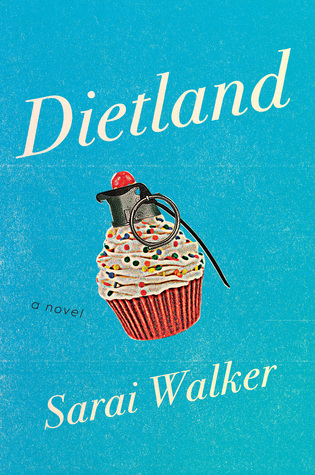
Dietland 
by Sarai Walker [Satire, Revenge Fantasy]

Plum Kettle has always believed her weight is an abomination - until she meets an underground community of women who live life on their own terms, and realizes she's been living the life others expect of her. Meanwhile, a dangerous guerrilla group called "Jennifer" is terrorizing a world that mistreats women, slicing this fast-paced and often funny satire with delicious moments of revenge fantasy.

-

My Sunshine Away 
by M.O. Walsh [Fiction]

From my Goodreads review:

I was concerned (both before starting this book, knowing what it was about, and while actually reading, worrying where it was going to go, worrying what we might find out about our narrator in the end) that this topic might be dealt with too insensitively or problematically. I was worried that a male author using a male narrator (a grown man, looking back on his years as a preteen/teen growing up in Louisiana) would not be able to discuss the rape of a teenage girl (the narrator's neighbor and childhood crush) without pissing me off. I am pleased to say that I needn't have worried. 

The rape was NOT used to sexualize violent sex or to simply give the female character flaws or an emotion-wrought backstory. She was a well-fleshed-out character despite (not because of) her rape; she was a person in the present, not just a woman with a trauma in her past. Furthermore, it was clear that the greatest suspects in the crime (for most of the book addresses the neighborhood trying to figure out who her rapist was, even as the girl herself tried to put it all behind her) were men who had forgotten how to be people in their desperation to be men, to fulfill the gender role they had been assigned, to use their privilege and power to manipulate and frighten - and maybe even attack - those with less privilege and power. That is to say, by showing just how many men living on their street could have feasibly committed the crime, the narrator (and author) demonstrates how much rape is perpetuated by our culture as a whole, how we are all - to different degrees, but all of us nonetheless - partly responsible, because this is a culture we have all created. There are those of us who see things or hear things but don't report what we've seen or heard; those of who don't even realize there was anything bad in what we'd seen or heard, because it's something that so many people do or say; those of us who believe our need to grieve the loss of innocence is more poignant than the girl's need to deal with the trauma in her own way, even if that means pretending that it never happened; those of us who gossip about rape victims, or blame them. Men are mostly the ones at fault here - in this book, and in the real world at large - partly just because they are the ones with the power, with the privilege, and so whatever they do, right or wrong, has greater consequence than what women do. But women aren't blameless either; there is woman-on-women hate and slut-shaming, and we perpetuate our own oppression. We see this in the book too, most notably when the rape survivor loses her popularity when the school finds out the truth.

-

Looking forward to finding more great books to read in 2016! :) Bring on the New Year!


Tuesday, December 1, 2015

Donate to Stop Domestic Abuse & Assault

In the past, I've volunteered at Haven, a local women's shelter for families recovering from domestic abuse. Every year they do a holiday gift-giving event where they collect donations of new clothing, winter coats, toys, board games, beauty products, electronics, etc. and let anyone who has used their services in the past year come by and take free gifts for their families. They have everything from baby toys and onesies to sporting equipment and teen-appropriate gifts like bath soaps and selfie sticks. They also have small kitchen appliances like microwaves and coffee makers. And they have a ton of donated winter coats - enough that every child gets a free winter coat.

Besides the holidays, they accept donations all year round. They're always in need of diapers and feminine hygiene products. They have strollers and clothes and toys and laundry detergent. They run a shelter, so they have to supply the families who come - often with nothing but what they were able to carry out of their homes in their arms - with all of their daily necessities.

It can be hard to find time to donate - I only helped sporadically with watching the children's play room while the mothers were in a group session down the hall until my schedule just couldn't allow it anymore - but it's easy to donate necessary items or money. Haven is working on building a new facility right now that will combine all of their resources into a single building - instead of having the shelter at one location, medical help at another, therapy at another, etc. - but all of that, of course, takes money.

What I loved most about Haven was the emphasis it put on empowerment. They can't help anyone who doesn't want to be helped; they can't drag them away from their abusive relationships kicking and screaming. They teach women how to be empowered, and how to get themselves out of the situation (instead of relying on others for help). The shelter is only there as a temporary solution - a place where they can go for financial and emotional support while they figure out the next steps they're going to take.

To those who think - but I live in a nice neighborhood, these things don't happen around me - you're wrong. I live in Oakland County, Michigan, one of the ten highest income counties in the U.S. with populations over one million people. We're surrounded by wealthy private and public schools, and colleges and universities. I don't have the specific numbers on education, but there's certainly lots of access to education for most Oakland County families. All races are represented (77% White, 13% Black, 6% Asian, 4% Hispanic/Latinx, 0.3% Native American). Oakland County has the 36th largest Asian population of any county in the country, and the 21st largest Jewish community in the nation. (All data from Wikipedia.)

As Oakland County's only comprehensive program for victims of domestic violence and sexual assault, Haven provides shelter, counseling, advocacy, and educational programming to nearly 30,000 people every year.

My point is - domestic violence and abuse doesn't care if you're poor or rich, Christian or Jewish or Muslim or atheist, white or black or Asian or Hispanic, gay or straight - it effects all of us. Because it's a problem with our culture, and it permeates all demographics.

I'm sure you all have your own charities you donate to this time of year (or throughout the year), but if you don't, or if you're looking for somewhere else to help, look to Haven, or other women's shelters. Find out where your local shelter is and what they need.

And if you would like more information about domestic violence, sexual assault, or child abuse - and what forms these things can take or what exactly it looks like, Haven has a great resource page.

Thursday, October 22, 2015

Feminist Fiction

I recently read a fantastic feminist novel called Dietland by Sarai Walker.


But perhaps it seemed particularly fantastic because I feel like I've read so few feminist novels at all. Philosophy texts and essays and memoirs and other nonfiction, sure - I took a couple Women's and Gender Studies courses in college, after all - but feminist fiction is so hard to find! And I love me a good novel.

In her author's note at the end of Dietland, Walker commented that she was inspired by feminist novels of the 1970s/80s (the second wave feminist movement). This immediately caused two questions to spring up in my mind -

1) What are these feminist novels of the 1970s/80s? I would like names please, so I can find them and read them!

And

2) Have there been feminist novels since the 1970s/80s? Where are the contemporary feminist novels??

Basically, I just want all the feminist novels. Gimme gimme gimme.

And if I don't know where to find these books (when I read 70-90 books a year), there must be others also struggling. So I decided I wanted to start a list, which I would come back through and update as I discovered more books to include. The list is pretty short now, but I will be adding to it periodically. Hopefully it'll grow into a much more comprehensive list!

--

Note 1: Checkmarks indicate which ones I have personally read. Mild SPOILERS may be in some of the descriptions.

Note 2: I am using an "umbrella" definition of feminism which includes all aspects of intersectional feminism, including discussions of racism, classism, ableism, homophobia, transphobia, etc. I am looking for books that make a CLEAR point about the importance of equality, either by setting up a utopian/dystopian world that comments on socio-cultural issues, or by following a character through an "awakening." Books that simply "have a strong female lead" (i.e. a woman who figures out how to balance her work and love life, or a woman who cleaves herself from dependence on a man) are not exactly what I have in mind, although I may include such books on this list if they do a *particularly* good job and attempt to raise social commentary on other feminist issue(s) as well.

Note 3: This list is organized by year (most current year first), and alphabetically by author within each year.

If you have a suggestion for something I'm missing that I should include, please let me know - in the comments below, on Twitter, etc.

--

FEMINIST FICTION

√ Ally Hughes Has Sex Sometimes - Jules Moulin (2015) [Contemporary, Romance, Mother-Daughter Relationships] - Single mother and college professor Ally Hughes does not have time for sex - but she makes an exception for Jake, a surprisingly mature student in one of her classes. Ten years later, Jake comes back into her life as her daughter's friend - at the same time that her grown daughter finds herself so desperate for a nose job her mother won't help pay for that she's willing to work as a "live sex cam girl." Reads like chick lit/romance, but does confront issues such as female sexual empowerment (though with the goading of a man) and some of the problems of the sex industry.

√ * Dietland - Sarai Walker (2015) [Contemporary, Humor, Satire, Revenge Fantasy] - Plum Kettle has always believed her weight is an abomination - until she meets an underground community of women who live life on their own terms, and realizes she's been living the life others expect of her. Meanwhile, a dangerous guerrilla group called "Jennifer" is terrorizing a world that mistreats women, slicing this fast-paced and often funny satire with delicious moments of revenge fantasy.

An Untamed State - Roxane Gay (2014) [Contemporary]

Americanah - Chimamanda Ngozi Adichie (2013) [Contemporary]

√ * Life After Life - Kate Atkinson (2013) [Literary, Historic, Philosophical, Reincarnation] - As Ursula Todd lives many lives, she suffers tragedies on a personal scale (rape, crude 1930s abortion, domestic violence) and international scale (World War II). Using the "practice makes perfect" mentality to adjust her existence, she confronts the changes that one person - herself - is capable of producing.

√ A Tale for the Time Being - Ruth Ozeki (2013) [Historic, Contemporary, Philosophical] - This book is about strong women spanning generations: an elderly Buddhist Japanese nun, her Japanese-American granddaughter Nao, and a Japanese-Canadian novelist named Ruth (very meta) who finds Nao's diary washed up on the shore of her Vancouver island residence and believes it's an artifact carried across the Pacific by the 2004 tsunami. But what really makes it feminist is the struggles Nao goes through at her Japanese high school, where she is mercilessly bullied.

Cinnamon - Samar Yazbek (2013)

The Round House - Louise Erdrich (2012) [Contemporary]

The Flamethrowers - Rachel Kushner (2012)

Why Be Happy When You Could Be Normal? - Jeanette Winterson (2011)

The Nightingales of Troy - Alice Fulton (2008) [Connected Short Stories]

√ * The Disreputable History of Frankie Landau-Banks - E. Lockhart (2008) [YA, Contemporary, Humor] - In this fun Young Adult novel, sixteen-year-old boarding school student Frankie is absolutely unwilling to act "appropriately" for her gender. She hates being excluded from her boyfriend's all-male secret society - especially when she knows she's smarter than any of them - and uses both her intellect/creativity and the boy's utter dismissal of her to her advantage to plan a series of pranks with socio-political commentary right under their noses.

The Dark Abode - Sarojini Sahoo (2008)

A Thousand Splendid Suns - Khaled Hosseini (2007)

Tales from the Town of Widows: And Chronicles From the Land of Men - James Canon (2006)

Snow Flower and the Secret Fan - Lisa See (2006)

The Joy Luck Club - Amy Tan (2006)

The Red Tent - Anita Diamant (2005)

√ * The Birth of Venus - Sarah Dunant (2004)

The Secret Life of Bees - Sue Monk Kidd (2003)

Y: The Last Man, Vol. 1: Unmanned - Brian K. Vaughan (2003) [Graphic Novel]

Fingersmith - Sarah Waters (2002)

√ * Speak - Laurie Halse Anderson (1999) [YA, Contemporary] - Melinda is cynical about high school. She has no friends, and she spends the entirety of her freshman year withdrawing into herself, refusing to talk about - or think about - the rape she survived over the summer. This heartbreaking book flawlessly demonstrates what the aftermath of such trauma looks like for many young women - women who are forced to relive the experience every day that they see their rapist walking the hallways of their school, and who struggle to process the event, pushing away family and friends at precisely the moment when they might need them most.

√  Matilda - Roald Dahl (1998) [Children's]

The Poisonwood Bible - Barbara Kingsolver (1998)

Push - Sapphire (1996)

√  * Wicked: The Life and Times of the Wicked Witch of the West - Gregory Maguire (1995) [Reimagining of The Wonderful Wizard of Oz]

So Far From God - Ana Castillo (1993)

A Thousand Acres - Jane Smiley (1991)

Dirty Weekend - Helen Zahavi (1991)

Paradise - Toni Morrison (1988)

√ * The Handmaid's Tale - Margaret Atwood (1985) [Dystopian] - This cautionary (and, unfortunately, prophetic) book features a world where a totalitarian Christian theocracy has overthrown the U.S. government and taken away the bodily agency of all women. Women are not allowed to do anything that would make them independent - they can't vote, have a job, read, or even own any personal belongings. Their finances and bodies are controlled for political purposes; they are turned into baby factories. Women who are sterile, lesbians, feminists, or politically dissident are labeled "unwomen" and exiled from society. The true horror comes from the realization of how easily this "speculative fiction" could become a reality.

House on Mango Street - Sandra Cisneros (1984) [Children's]

The House of the Spirits - Isabel Allende (1982)

√ The Color Purple - Alice Walker (1982)

Kindred - Octavia E. Butler (1979) [Sci-Fi]

The Bloody Chamber and Other Stories - Angela Carter (1979) [Short Stories, Magic Realism]

The Women's Room - Marilyn French (1977)

Kinflicks - Lisa Alther (1976)

Lover - Bertha Harris (1976) [Lesbian Romance]

Woman on the Edge of Time - Marge Piercy (1976) [Sci-Fi]

The Female Man - Joanna Russ (1975) [Sci-Fi]

Free to Be... You and Me - Marlo Thomas (1974) [Children's]

Fear of Flying - Erica Jong (1973)

Are You There God? It's Me, Margaret - Judy Blume (1970) [Children's]

The Left Hand of Darkness - Ursula K. Le Guin (1969) [Sci-Fi]

Wide Sargasso Sea - Jean Rhys (1966) [Re-imagining of Jane Eyre]

The Bell Jar - Sylvia Plath (1963) [Mental Illness, Semi-Autobiographical]

The Golden Notebook - Doris Lessing (1962)

√  * To Kill a Mockingbird - Harper Lee (1960)

A Tree Grows in Brooklyn - Betty Smith (1940)

A Room of One's Own - Virginia Woolf (1929)

The Age of Innocence - Edith Wharton (1921)

Moving the Mountain, Herland, & With Her in Ourland - Charlotte Perkins Gilman (1911-1916) [Sci-Fi, Trilogy, Utopian]

The Secret Garden - Frances Hodgson Burnett (1911) [Children's]

Sultana's Dream - Rokeya Sakhawat Hussain (1905) [Sci-Fi, Short Story]

√  * The Wonderful Wizard of Oz - L. Frank Baum (1900) [Children's]

The Awakening - Kate Chopin (1899)

The Yellow Wallpaper - Charlotte Perkins Gilman (1892)

--

FEMINIST MEMOIR

I know these aren't fiction, but I just had to include a space for memoirs, too. :)

How to Be a Woman - Caitlin Moran (2011)

Whipping Girl: A Transsexual Woman on Sexism and the Scapegoating of Femininity - Julia Serano (2007)

Zami: A New Spelling of My Name - Audre Lorde (1982)

I Know Why the Caged Bird Sings - Maya Angelou (1969)


Friday, September 25, 2015

Why Are We Wasting Time Talking About the "Gay Gene"?

My husband and I were recently talking about the idea that sexual orientation could be genetic. Neither of us are geneticists or scientists, and we aren't saying one way or the other on the validity of that claim. Nor are we saying that it's something that should or shouldn't be studied, that the human genome should or shouldn't be mapped. What we did decide was this:

The question of whether nature or nurture contributes to someone's sexuality, while perhaps interesting from a scientific curiosity standpoint, should have no bearing on the debate of whether or not the LGBTQIA community deserves fundamental human rights.

Because you could use either nature or nurture to argue either for or against LGBTQIA rights. Which makes the entire thing pointless.

-

Using Nurture to Argue Against LGBTQIA Rights

You could take the traditional Christian Conservative stance and say that to commit homosexual acts is a sinful choice, not unlike the sinful choice to murder or steal. Accordingly, it should be discouraged, if not outlawed completely.

But this fails to recognize two key things:

1) In America we have the freedom to be who we are as long as that doesn't infringe on others' rights to be who they are, and gay people aren't hurting anybody else by being gay (which makes homosexuality actually very different from murder and theft).

2) We don't make a distinction between the freedom to express who you are biologically (i.e. walking around with the skin color you were born in) and the freedom to express who you are by choice (i.e. using your right to free speech to spout rhetoric, or your right to assembly to choose to assemble).

This stance also suggests that somebody (preachers interpreting the Bible, the president, the Supreme Court, whoever) has the right to decide what are good choices and what are bad choices. And we all know how murky those calls can get.

Even things like murder that we globally agree on as being "bad" choices, we later make exceptions for. What constitutes "murder"? Is it okay to dole out the death penalty to criminals we've collectively decided are irredeemable? Is it okay to kill soldiers in the opposition army in times of war? I won't even get started on the topic of abortion, and what constitutes a "human life." For that matter, why do we make the distinction between different kinds of animals - deciding as a culture which animals can be raised for slaughter and consumed, and which are not to be murdered?

Do you really want to say that we need to be judged and tried on every choice we make - whether collectively as a culture, or individually in our bedrooms? And do we really want to give other people the power to do that kind of judging? What if we can't agree on which people to give that power to?

-

Using Nurture to Argue For LGBTQIA Rights

You could argue that there is nothing that makes us who we are more than our choices, and that people should not be kept from exploring their options, or discriminated against for doing so.

You could even bring religion/philosophy into this and say that God gave us free will, or that free will is an important part (perhaps the most important part) of the human condition, and that to strip someone of their free will would be to strip them of their humanity.

One of my favorite quotes from the Harry Potter series is when Dumbledore says, "It is our choices, Harry, that show what we truly are, far more than our abilities." Of course, the presumption often is that choices expose us for who we are because some choices are "good" and others are "bad" - that in making the choices we do, we face certain consequences, and those consequences shape us and help us find out place in the world. In Harry Potter, Dumbledore is referring to the difference between Tom Riddle (Voldemort) and Harry - that one has chosen the wrong path, the path of evil, while the others has chosen the righteous path, the path of courage and love.

Which brings me back to my earlier point about the subjectivity of "right" and "wrong" and who should get to decide such things.

And it also begs the question - why would someone willingly choose to be gay, knowing that to be gay is to be denied certain rights, to be discriminated against, to be ridiculed, maybe even to be tortured or beaten or murdered? Did a trauma in their past "turn" them gay? Can changing aspects of their current situation "turn" them back to heterosexuality?

We can all try to change (or repress) things about ourselves that we don't want. And with any nurture argument, that's where we end up. If we look at being gay as a choice, that inevitably leads to horrible things like conversion therapy - which is why LGBTQIA activists often reject the influence of nurture on orientation.

When you're looking at nurture, it's too easy to see it as something that can be formed and molded like a sand castle. Once a society decides on those subjective "right" and "wrong" choices, anyone who does something that was deemed "wrong" faces their motives being questioned.

Of course, it's more nuanced than that. (Isn't it always?) How much of our choices are actually our own? A lot of what we do is influenced by the environment we grew up in, and the systems of privilege/oppression we're a part of (regardless of what side we're on). We can try to change our environment and dismantle those systems, but 1) that's a lot of work, and 2) isn't even always possible.

And then, what if we don't actually have free will at all - because something like God, or Fate, or Science has determined our destiny for us?

If nature and nurture work together and I'm genetically predisposed to having a shy personality, I'm never going to make it over to the Super Extroverted side of the scale, no matter how hard I try. I have some say over how much I let my timidity run my life, but I can't vanquish it altogether.

And that's the appeal LGBTQIA activists see in using nature to back up their ideas. If there's a "gay gene," and someone can be predisposed to being gay, how can you fault them for something that's outside of their control? They can try to repress it, or change it, but they'll ultimately be unsuccessful in deviating too far from what has been determined for them.

Which leads me to the nature side of the debate...

-

Using Nature to Argue Against LGBTQIA Rights

You could argue that someone's genetics implies that they "deserve" discrimination. It's not a popular opinion - anymore - but it certainly has been popular in the past. Just look at the way "science" was used to historically justify racism.

Phrenology (the study of the shape of the skull, which was believed in the 19th century to reflect a person's character) was used to classify Africans as inferior to white races intellectually, culturally, and morally. Even Darwin's theory of evolution, which suggested that Europeans were related to Africans and that all humans were related to apes, saw the British at the top of the evolutionary scale of civility (source). Many Christian slave-owners argued that black-skinned people were biologically inferior - and that, because God decided our biology, they were merely upholding His will by subjugating these people to work their plantations.

It wasn't until after World War II that this so-called "Scientific Racism" was formally denounced; it undoubtedly still influences racist dogma around the world today. If the Holocaust hadn't happened, if Hitler hadn't been so systematic and obviously evil about the whole thing, this "scientific racism" (or, as the case is here, "scientific sexual orientation-ism") might indeed be the prevalent viewpoint, an undercurrent that impacts modern issues like the rights of gay people to marry or adopt children or live in the neighborhoods they want to live in. After all, gays were targeted by the Nazis and put in the interment camps with the Jews, and Gypsies, and others that were deemed "bad" enough to need weeding out of the genetic pool. If Hitler hadn't done it, would someone else have? Would we still be doing it (on a lesser, more internalized scale) today?

-

Using Nature to Argue For LGBTQIA Rights

Finally, you could say that because someone was "born that way" (to use Lady Gaga's phrasing), they are not responsible for their discrimination.

But this does the danger of implying that those who are discriminated against for things that are not biological are responsible for their station.

This logic does a disservice to those who face discrimination for their current economic situation, their religious beliefs, or the kinds of clothes they choose to wear. If there are people who think only things that are biologically ordained need to be tolerated, wouldn't they also have to believe that poor people are the only ones to blame for their poverty? And that if someone should choose not to believe in what they think is the "right" God, they deserve to be judged poorly or even killed for that decision? And that women who wear short skirts - even when they know that doing so marks them as promiscuous - are welcoming that sort of attention and therefore deserving of catcalls or rape?

Never mind that things are never clear-cut about nature vs. nurture, and that they often work in conjunction. Genetics are influenced by the environment (that's the whole idea behind natural selection). And someone's environment is influenced by their genetics. A woman can't help being female, and a black man can't help being black, but because of those biological traits, they're going to struggle with the way society treats them and what society expects of them.

Isn't the whole point of dismantling racism and dismantling the patriarchy the idea that everyone, regardless of their genetics, deserves equal rights and opportunities? Isn't the point to remove genetic's influence on our society as much as possible, to say that we're above all that, to say that we have the power to choose to make a change, to go against ideas that have been ingrained in our cultures for centuries? So why would you fall back on an old historic argument to uphold your case - this idea that science (which is to us what religion often was to our ancestors) can be used to decide who should or shouldn't have privilege (or if there should be systems of privilege at all)?

Is it not possible for us be tolerant of everyone - whether they're formed by their biology, their environments, or a little bit of both?

-

Which brings me back to my point. The question of whether nature or nurture contributes to someone's sexuality should have no bearing on the debate of whether or not the LGBTQIA community deserves fundamental human rights.

It is our responsibility (all of us) to respect and protect our fellow humans. Regardless of whether we have similar physical traits, or share a particular gene in our extensive genetic code. Regardless of whether we can understand the environment they grew up in, or whether we agree with their choices and modes of self-expression.

As long as our decisions do not infringe on the ability of others to make their own decisions, everything should be fair game.

LGBTQIA individuals deserve fundamental human rights because they are human. End of story.